

Puppigerus was an Eocene sea turtle with a narrow snout and an unusually long secondary palate. Skulls, shells and limb bones from England and Belgium show how those parts fitted together. A skull from Morocco extends the comparison to the sea turtles of North Africa.
Quick facts
| Group | Turtles, sea turtles |
|---|---|
| Age | Early and middle Eocene |
| Region | Europe and Africa: England, Belgium and Morocco |
| Type species | Puppigerus camperi |
| Lectotype | IRSNB R4, 51.5 cm carapace |
| Scientific name | Puppigerus |
| Diet | No direct evidence |
What can the fossils tell us?
The Belgian lectotype IRSNB R4 has a carapace 51.5 cm long. This measurement documents one individual and leaves the maximum size of the species open.
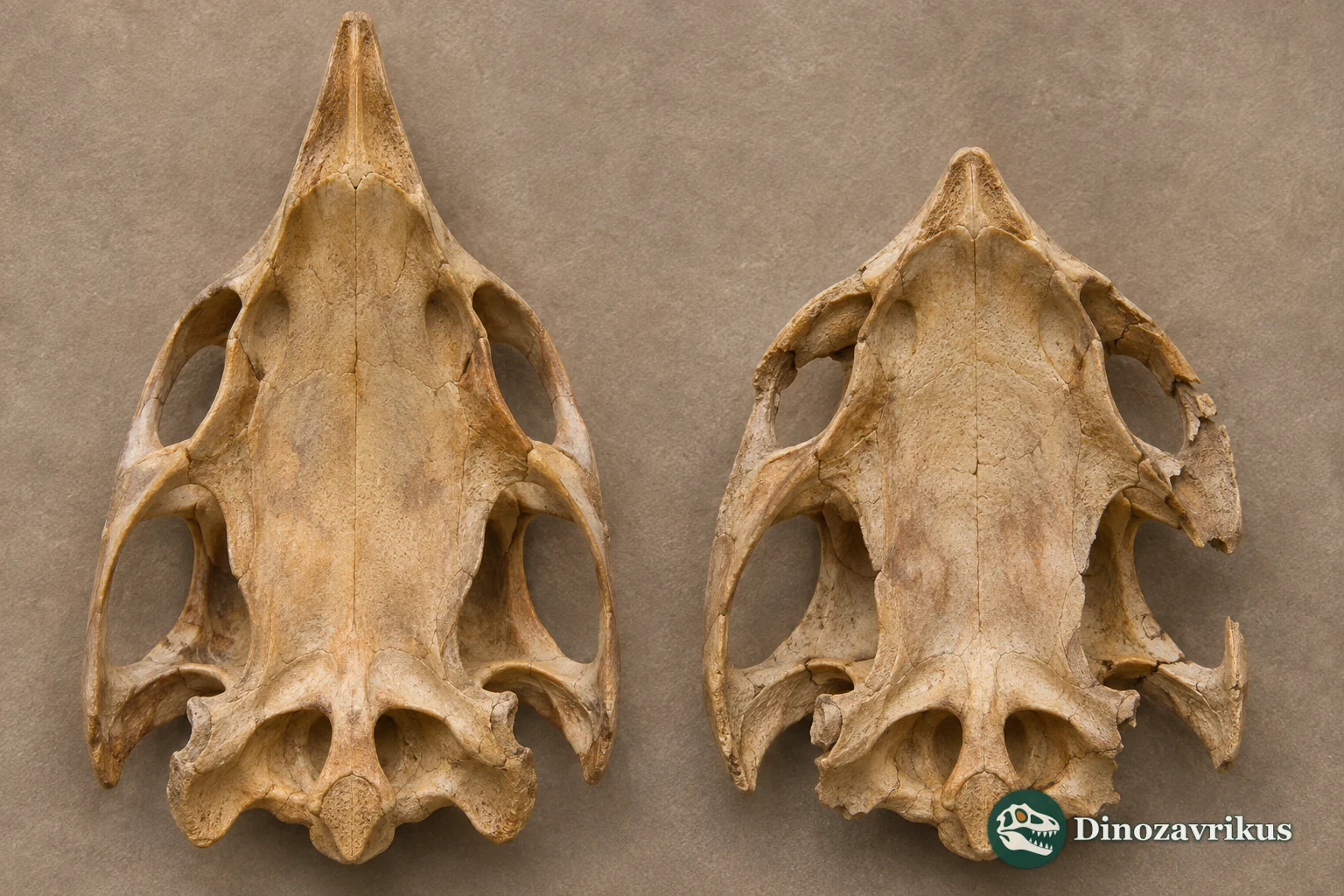
Several skull bones form the long secondary palate. Its outline helps distinguish fossil sea turtles, while diet requires evidence beyond this structure.
Researchers identified skull MAE 2005.1.1 from the Ouled Abdoun Basin as P. camperi. The fossil documents an occurrence and leaves routes between North Africa and Europe unknown.
English and Belgian skeletons
John Edward Gray named the species Emys camperi in 1831. It was later placed in Puppigerus, and Richard Moody revised the European material in 1974. Ypresian specimens from England include fossils from the London Clay of the Isle of Sheppey. Belgium has yielded middle Eocene material from several sites in Brabant.
The 51.5 cm carapace of the adult lectotype IRSNB R4 came from Melsbroek. Another Belgian specimen joins a skull with the rest of the skeleton, linking cranial characters to shell and limb anatomy. Openings between carapace bones nearly closed in adults, while the shape and arrangement of the first bones in the midline series varied among individuals.
An elongated secondary palate
The front of the adult skull tapers to a narrow snout. The premaxillae and maxillae extend across a long secondary palate. A shorter snout may indicate an immature animal, so identification also depends on the proportions of the palate and other bones.
The working surfaces of a fossil turtle’s jaws offer clues to how it handled food. The broad surfaces in Euclastes, for example, allow researchers to consider crushing as a feeding action. The shape of the bones in Puppigerus leaves the actual food items unresolved.
A North African record
In 2012 researchers described MAE 2005.1.1, a well-preserved skull from Ypresian phosphate beds in the Ouled Abdoun Basin, Morocco. They identified it as P. camperi after comparing the outline of the skull and the secondary palate. The find adds to the anatomical links between early Palaeogene sea turtle assemblages in North Africa and northwestern Europe.
Frequently asked questions
How do researchers recognise Puppigerus?
Adults have a narrow, tapered snout and a long secondary palate. Researchers compare those characters with age-related changes and with other parts of the skull and shell.
How large was Puppigerus?
The adult carapace IRSNB R4 is 51.5 cm long. That figure comes from a particular specimen.
Where have fossils been found?
England and Belgium preserve shell and skull material. A well-preserved skull has been described from early Eocene phosphate beds in Morocco.
What did Puppigerus eat?
Its palate and jaws can inform studies of how it handled food. Direct evidence of specific foods is unavailable.