

Eokochaspis was a Cambrian trilobite with a small two-lobed tail shield. Its type species was described from Nevada and has also been identified in Canada and Argentina. These occurrences show how the same species can divide marine rock successions with different levels of precision.
Quick facts
| Group | Trilobites |
|---|---|
| Age | Cambrian |
| Genus described by | Frederick Sundberg and Linda McCollum, 2000 |
| Type species | Eokochaspis nodosa |
| Holotype of the type species | Cranidium USNM 497818 |
| Type beds | Comet Shale Member, Nevada |
What can the fossils tell us?
The front edge and the furrows help distinguish the species. Compaction can mute the bend and obscure fine ornament.
The Mount Cap specimens have the characteristic broad lobes. Isolated tail shields do not show the trunk segment count.
Recognition of a combined biozone makes it possible to correlate the interval. Individual Nevada biozone boundaries need independent evidence outside that region.
A head shield from Nevada
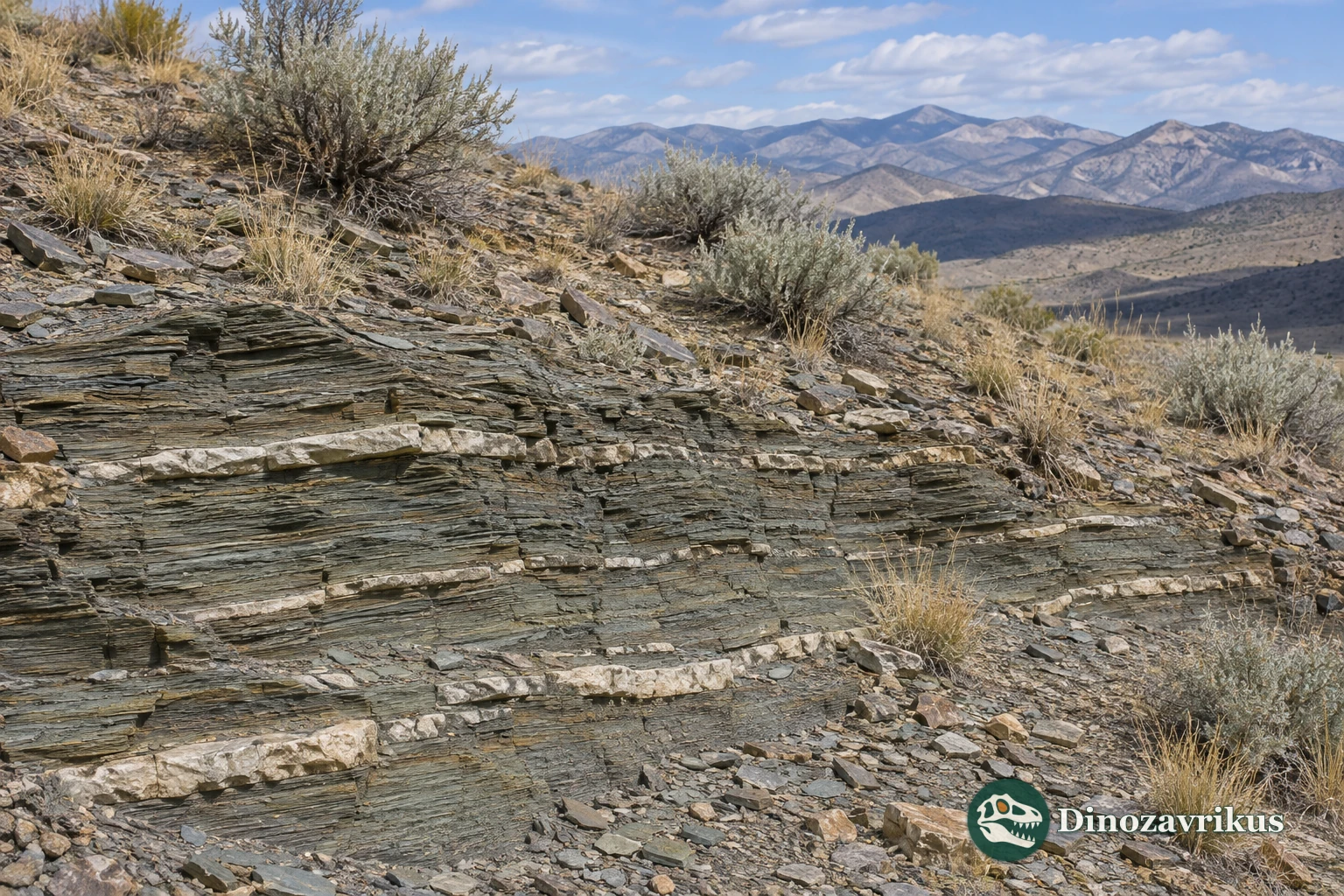
Frederick Sundberg and Linda McCollum introduced the genus in 2000. The holotype of Eokochaspis nodosa, USNM 497818, comes from the Comet Shale Member of the Pioche Formation. It is a cranidium, the central part of the head shield. Its anterior border and the furrows on the raised axis help distinguish related species.
Compression reduces the prominence of the bend in the anterior furrow and makes fine granulation harder to see. In some western Nevada specimens the shape of the frontal area also varies. The backwards-curving cheek spine helps distinguish Eokochaspis nodosa from forms with a spine deflected outward.
Thirteen segments and a two-lobed tail
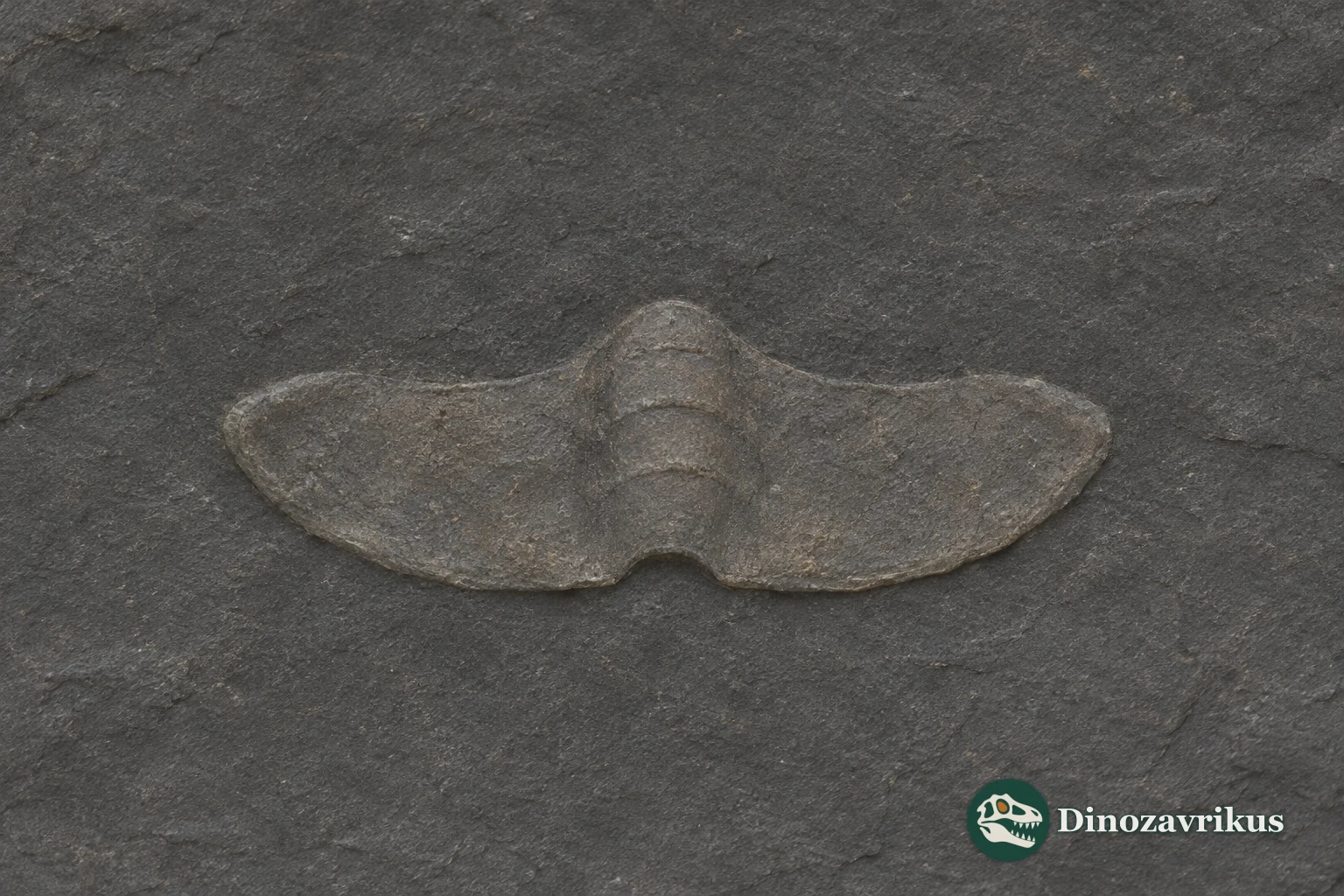
Articulated shells from Nevada preserve 13 movable trunk segments. The tail shield is short and broad. The Mount Cap Formation along the Little Bear River in northwestern Canada yielded two detached tail shields. Each has two axial rings. Together with the shape of the lobes, that count supports assignment to Eokochaspis nodosa. One of these fossils, GSC 142428, was illustrated in dorsal view.
What the Argentine section shows
In southeastern Nevada the Eokochaspis nodosa Zone lies below the Amecephalus arrojosensis Zone. In the Soldano Member of the La Laja Formation at Cerro El Molle, Argentina, their ranges overlap. There the authors recognised a combined zone named for both species.
Fossil zones allow sections to be compared across continents. In this case the wider interval can be traced, while the Argentine material cannot reproduce the finer subdivision established in Nevada.
Frequently asked questions
Where was the holotype of Eokochaspis nodosa found?
In the Comet Shale Member of the Pioche Formation in Nevada. The type cranidium is USNM 497818.
How many trunk segments are preserved?
Articulated specimens of Eokochaspis nodosa show 13 movable trunk segments.
How were the Canadian tail shields identified?
The broad paired lobes and two rings on the axis match Eokochaspis nodosa.
Why is a combined biozone recognised in Argentina?
The recorded ranges of Eokochaspis nodosa and Amecephalus arrojosensis partly overlap at Cerro El Molle.