

Eomorphippus was a South American notohippid, an extinct notoungulate known best from its teeth and jaws. Its original Patagonian material was sparse. Partial skull and jaw fossils later described from the Chilean Andes made it possible to compare three species more closely, while revisions of the fossil layers narrowed the reliable age of the genus.
The genus belongs in the ancient mammal catalogue. The younger notohippid Rhynchippus is useful for comparing dental specializations, but similarity in high-crowned teeth does not by itself demonstrate a direct ancestor-descendant line.
Quick facts
| Type species | Eomorphippus obscurus Ameghino, 1901 |
|---|---|
| Group | Notoungulata, Notohippidae |
| Other species in the 2018 revision | E. bondi and E. neilopdykei |
| E. bondi holotype | SGOPV 3046, a partial skull with upper teeth |
| E. neilopdykei holotype | SGOPV 2855, paired lower jaws |
| Documented regions | Patagonia, Argentina, and central Chile |
| Secure fossil age | Tinguirirican, early Oligocene |
What can the fossils tell us?
E. obscurus was founded on Patagonian dental material. Its crowns can be compared directly, but they do not record a coat, entire skeleton or exact body mass.
The E. bondi type SGOPV 3046 preserves a partial skull and upper dentition. The smaller E. neilopdykei type SGOPV 2855 preserves paired lower jaws. They clarify dental differences without proving identical body proportions across species.
Gran Barranca level GBV-4 and the Tinguiririca fauna support an early Oligocene assignment for secure records. That correlation does not directly date each separate tooth.
A Patagonian name and new Chilean material
Florentino Ameghino named E. obscurus in 1901 from Patagonian fossils. The old locality notation did not establish a precise modern stratigraphic position for every tooth. Later work associated original material with museum record MACN 10917 and noted manganese coating on some Gran Barranca fossils. That coating helps investigate provenance; it is not a clock for the individual specimen.
André Wyss, John Flynn and Darin Croft described E. bondi and E. neilopdykei from the early Oligocene Tinguiririca fauna of central Chile in 2018. The E. bondi holotype SGOPV 3046 contains part of the skull and upper toothrow. The smaller E. neilopdykei holotype SGOPV 2855 consists of paired lower jaws. Both yield more than an isolated crown, yet neither is a complete skeleton.
How the teeth distinguish species
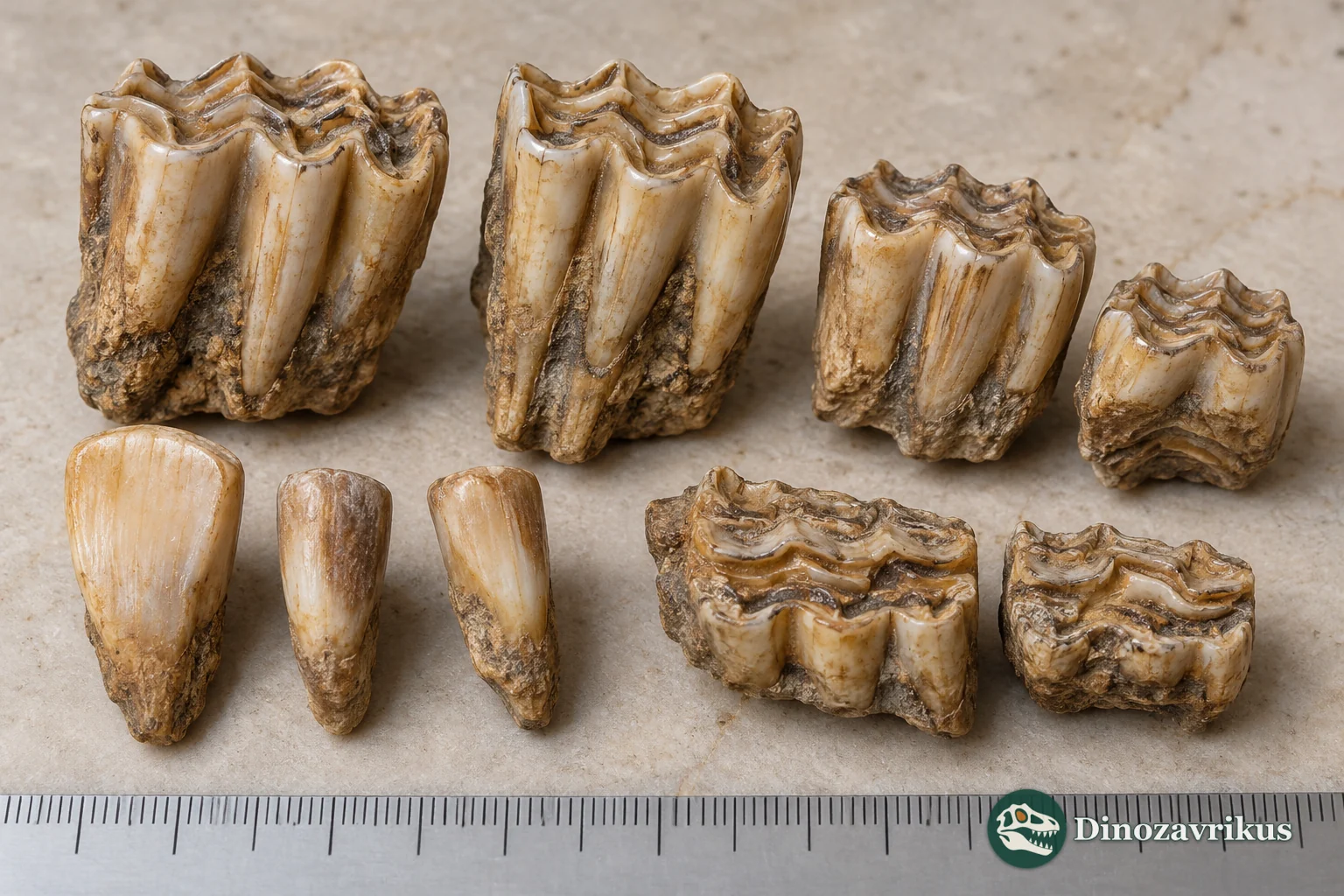
The genus combines relatively high-crowned incisors and cheek teeth with distinctive enamel folds and no external cementum coating. Some chewing-surface pockets disappear as the crown wears down. A worn tooth therefore needs to be compared with a tooth of a comparable wear stage, not judged by the top outline alone.
Most measured teeth of E. bondi are roughly one fifth larger than those of E. obscurus, while E. neilopdykei is smaller. These are dental comparisons, not measured body masses. High crowns indicate resistance to prolonged wear during plant feeding, but no stomach contents or identified plant remains establish a precise menu for the named types.
A revised age and a name removed
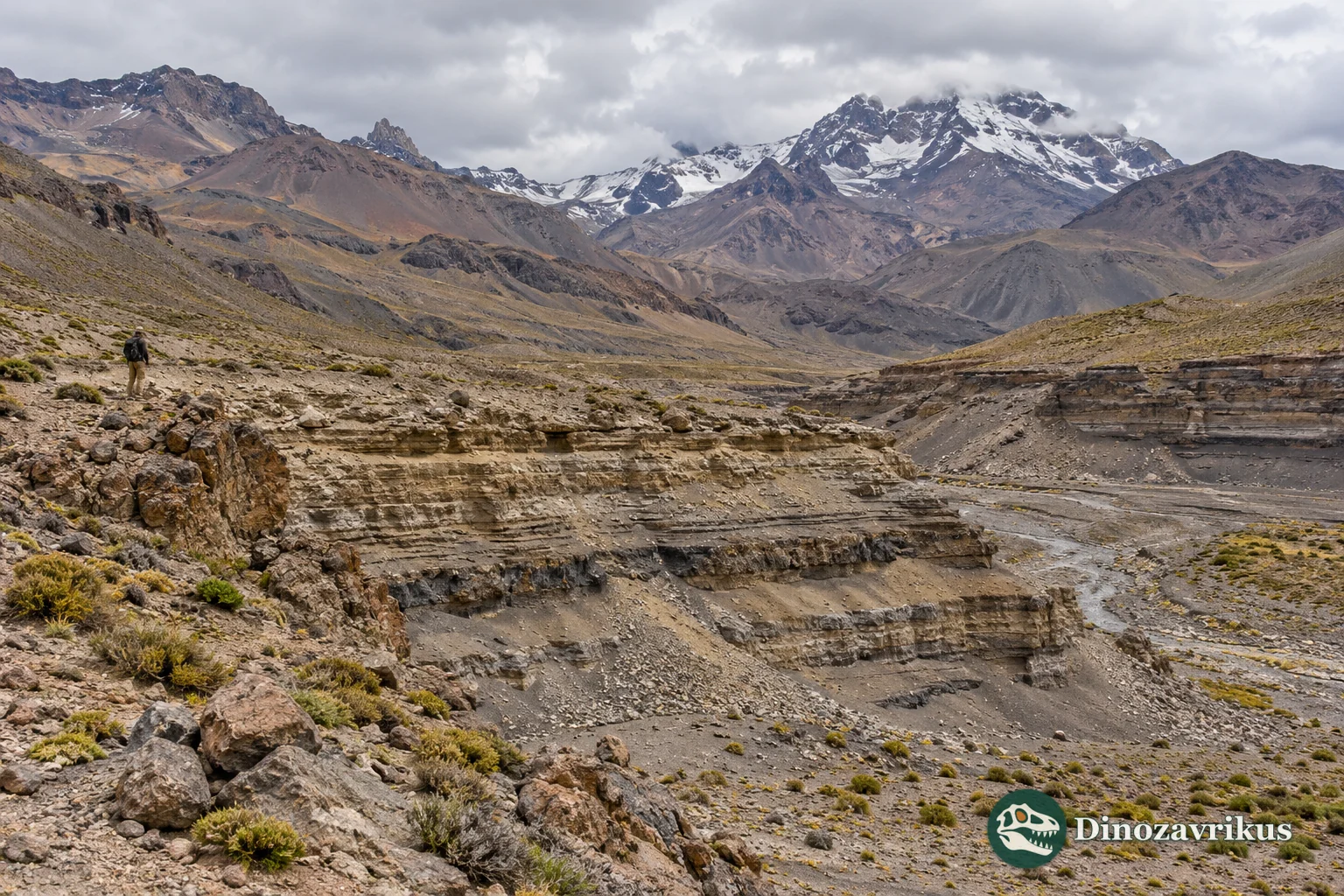
At Gran Barranca in Argentina, E. obscurus teeth and a jaw fragment occur at GBV-4, known as La Cancha. Chilean specimens come from volcaniclastic beds of the Abanico Formation near Termas del Flaco. Faunal and stratigraphic comparisons place secure occurrences in the Tinguirirican South American land mammal age, broadly early Oligocene, rather than giving each tooth a single absolute date.
The 2018 revision also removed the former ?Eomorphippus pascuali from the genus. Its much lower crowns and other dental differences led the authors to name Rosendo pascuali. They did not simply revive the poorly localized name Pseudostylops subquadratus, whose type is too limited for a secure match.
The cover offers a possible terrestrial notohippid silhouette. Ear shape, coat, tail and exact body proportions are artistic choices, not observations from an associated E. obscurus skeleton.
Frequently asked questions
Which species is the Eomorphippus type?
E. obscurus, named by Florentino Ameghino in 1901 from Patagonian fossil material.
What survives of the E. bondi holotype?
SGOPV 3046 is a partial skull with much of its upper dentition; it is not a complete skeleton.
Why was E. pascuali moved to Rosendo?
A 2018 revision found its lower-crowned teeth and other characters sufficiently different to name Rosendo pascuali.
Can its body mass be read from the teeth?
Dental measurements compare relative size, but a precise mass would require a tested model and more complete body fossils.