

Eorhinophrynus is an extinct frog known from isolated bones from the Middle Eocene of Wyoming. Palaeontologists compared its first vertebra and upper arm bone with those of burrowing toad relatives. The vertebra may record an early stage in the development of underground feeding.
Quick facts
| Group | Frogs (Anura), rhinophrynids |
|---|---|
| Age | Middle Eocene, Bridgerian |
| Region | North America, USA (Wyoming) |
| Type species | Eorhinophrynus septentrionalis |
| Scientific name | Eorhinophrynus |
| Diet | Exact prey is unknown |
What can the fossils tell us?
Material from Tabernacle Butte includes an atlas with a broad rear margin. An upper arm bone assigned to the species has a rounded head and a prominent lateral crest.
The elongated arch of the first vertebra resembles a feature associated with underground feeding in other rhinophrynids.
The living burrowing toad feeds on ants and termites. The bones of Eorhinophrynus leave the prey of this ancient relative unknown.
The Tabernacle Butte fossils
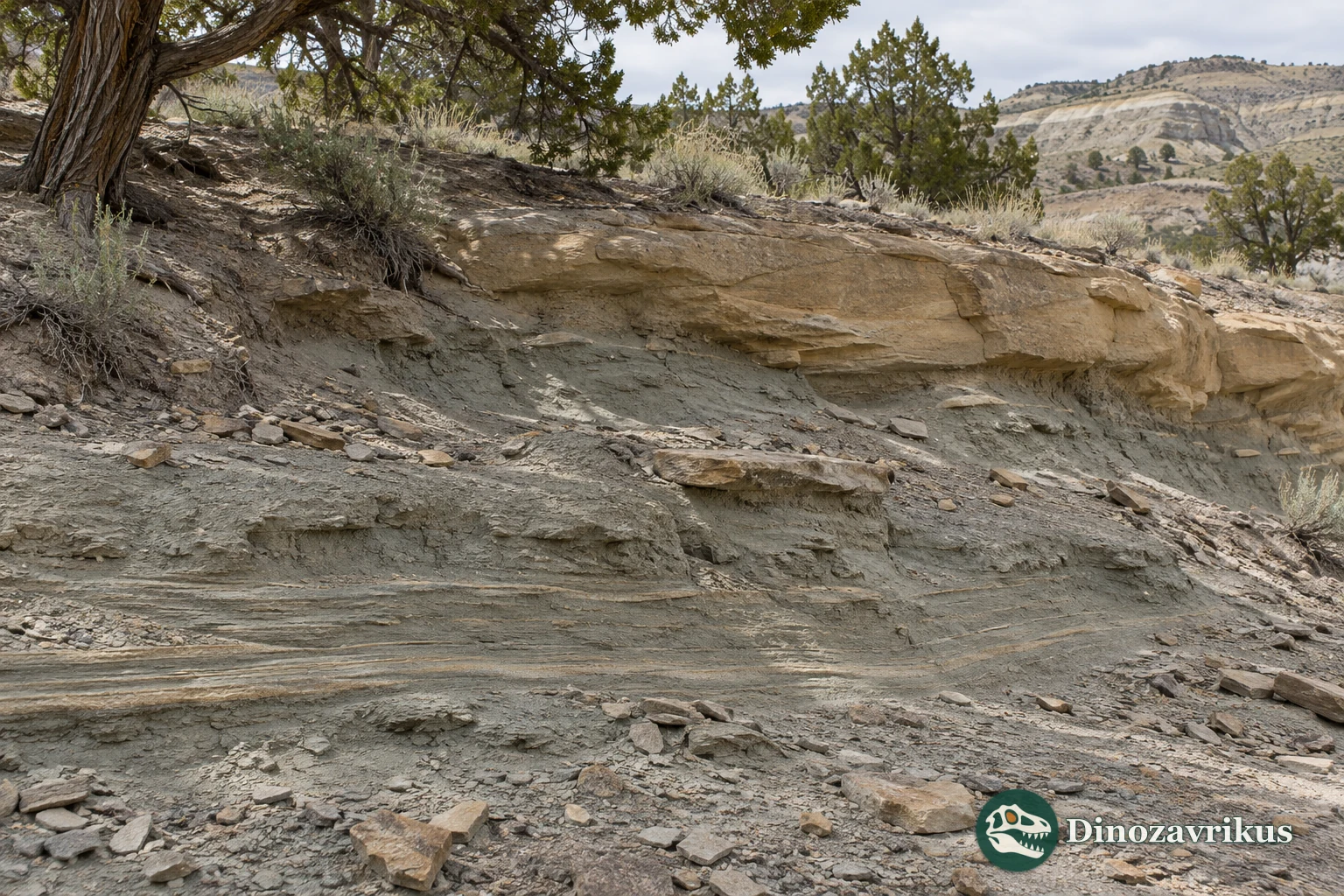
Max Hecht described Eorhinophrynus septentrionalis in 1959 from Tabernacle Butte, Wyoming. The locality belongs to the Bridgerian interval of the Middle Eocene. It lies north of the modern range of the family. Its living member, the Mexican burrowing toad, occurs from the southern United States into Central America.
How two bones distinguish a frog
The atlas is the first vertebra, where the spine meets the skull. In Eorhinophrynus its upper arch ends in a broad, nearly straight rear margin. The prominent lateral crest on the humerus is another difference from the living burrowing toad. Other fossil frogs leave a different set of clues. The Cretaceous Tyrrellbatrachus, for example, was identified from features of the upper jaw.
Feeding underground
The living burrowing toad uses a combination of head and body adaptations to feed below ground. Amy Henrici proposed that the long arch of the atlas in Eorhinophrynus could mark an early stage of a similar specialisation. Richard Estes assigned still older bones from the Late Paleocene of the Bighorn Basin to Eorhinophrynus sp. The species represented by those bones remains uncertain.
Frequently asked questions
When did the named species live?
Confirmed finds of the named species date to the Bridgerian interval of the Middle Eocene.
Where was Eorhinophrynus discovered?
The named species was described from Tabernacle Butte in Wyoming, USA.
Which bone suggests underground feeding?
The elongated upper arch of the first vertebra provided the basis for that hypothesis.
Did Eorhinophrynus also live in the Paleocene?
Late Paleocene material was assigned to the genus. It may represent a different species.