

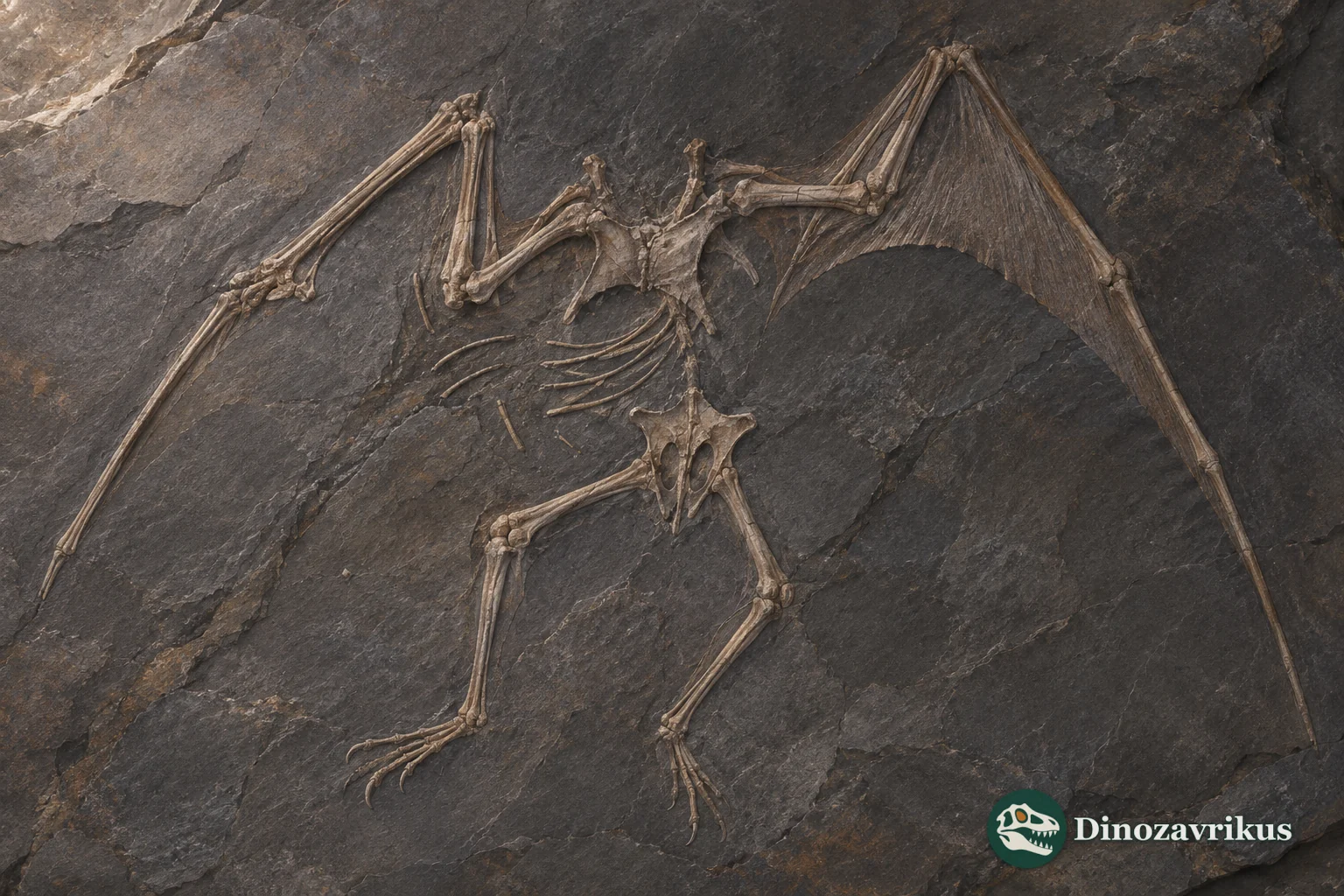
Eosipterus yangi was the first pterosaur described from western Liaoning. Its type fossil preserves body and wing bones but no skull or most of the neck; a second referred skeleton also lacks a head. This material can inform wing anatomy, yet it cannot reveal the teeth or feeding method. A later examination found artificially completed borders on some of the type's bones, requiring caution with older measurements. The head in the cover image is generic artwork.
Quick facts
| Scientific name | Eosipterus yangi, Ji and Ji, 1997 |
|---|---|
| Holotype | GMV2117, Geological Museum of China, headless skeleton |
| Referred specimen | D2514, Dalian Natural History Museum, also headless |
| Localities | Beipiao and Sihetun area, western Liaoning |
| Rock unit | Lower Yixian Formation, Early Cretaceous |
| Wingspan | About 1.2 m in the original estimate; measurements later questioned |
| Soft tissues | Traces along left wing finger and near gastralia of the type |
What can the fossils tell us?
GMV2117 and referred D2514 preserve bodies and wings, not heads. Teeth, snout and direct feeding evidence are unavailable.
A later inspection found slab joins and artificial extensions to some wing bones. Several original lengths and ratios should not be treated as precise measurements.
Parallel fibres near the left wing finger and different textured tissue beside the gastralia were identified. They do not map the complete wing outline.
The fossil is a pterodactyloid. Some studies favoured Ctenochasmatidae; the altered type and absence of skull restrict confidence in narrower assignments.
The first Liaoning pterosaur and a second specimen
Shu'an Ji and Qiang Ji named Eosipterus yangi in 1997 from GMV2117, a partial skeleton in the Geological Museum of China. It came from the lower Yixian Formation near Beipiao. The name combines an allusion to dawn with wing; the species honours Chinese palaeontologist Yang Zhongjian. Body bones, wing elements and gastralia survive, but the skull and neck are missing. An approximate 1.2 m wingspan in the first paper came from reconstruction, not a complete spread membrane.
Lü Junchang and colleagues described D2514 in 2006 as a second specimen of the species. The smaller skeleton from the Sihetun area is held at Dalian Natural History Museum. It preserves a different selection of bones, yet also lacks a skull. The team considered Eosipterus a valid ctenochasmatid. Without a head in either fossil, its tooth pattern cannot be compared directly with that of Pterodaustro.
What a later examination changed
A 2007 re-examination of GMV2117 found that several rock slabs had been assembled and that the borders of some bones were artificially extended before adequate preparation. Wing measurements are particularly affected. The pelvis is damaged, the femur length cannot be reliably recovered and no caudal vertebrae preserve a measured tail. These observations limit the original proportional diagnosis and wingspan estimate, rather than erasing the animal from the fossil record.
The same inspection documented unfused joints consistent with a subadult type individual. It also identified parallel soft-tissue fibres along the left wing finger and a differently textured area near the gastralia. This material supplies direct evidence of preserved soft tissue, though not a complete wing outline. A broken right first wing phalanx may reflect an injury before burial; it does not establish how the animal died.
Placement and a lake that does not reveal a menu
The original authors identified a pterodactyloid. Later studies variously placed Eosipterus closer to Pterodactylus or within Ctenochasmatidae. The 2007 authors accepted the broader placement but cautioned that the incomplete preparation, restored margins and missing skull make the narrower claim less certain. Beipiaopterus illustrates the variety of Yixian pterosaurs, not a source of Eosipterus head anatomy.
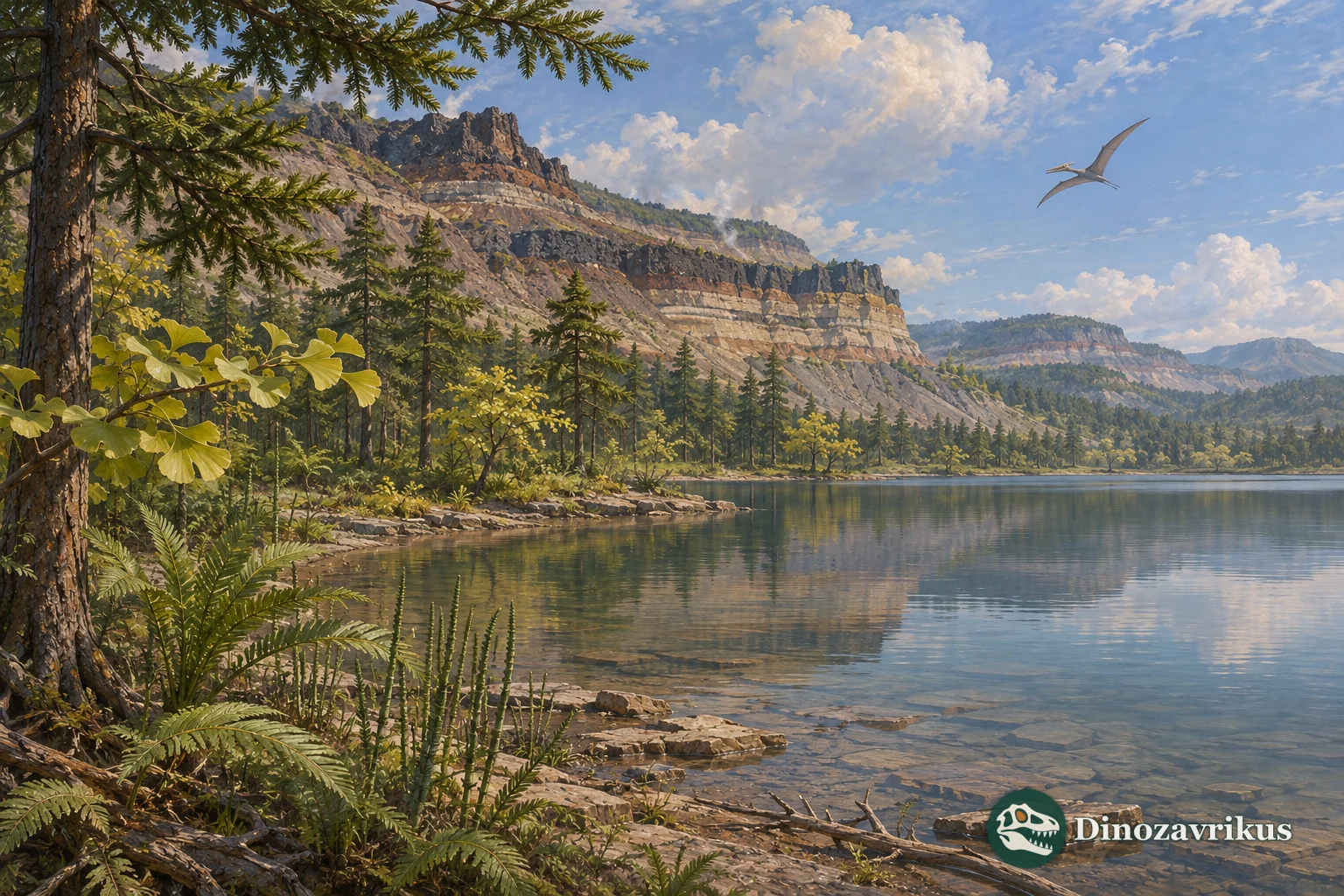
The lower Yixian Formation belongs to the Early Cretaceous. Its fine deposits can preserve delicate impressions such as wing membrane fibres. That preservation does not establish that Eosipterus filtered water, caught fish or preferred a particular shore. The volcanic lake scene here is a regional reconstruction, while the animal's feeding behaviour remains unrecorded.
Frequently asked questions
Is an Eosipterus skull known?
No. Both the GMV2117 type and the referred D2514 skeleton lack skulls. Exact teeth and head shape are unknown.
How many specimens are discussed?
The cited studies discuss the GMV2117 holotype and a second skeleton, D2514, held in different museums.
Why is the wingspan estimate uncertain?
The original estimate near 1.2 m reconstructed a wing from bones. Later inspection found artificially restored borders on some type bones, weakening precise measurements.
Do the membrane traces show what it ate?
No. They preserve soft tissue by the wing and abdomen. Neither skeleton includes the skull or direct food remains needed to test a diet.