

Eosphargis was a marine turtle from the early history of the leatherback lineage. Its bony shell was already much reduced. A Danish specimen of E. breineri preserves a much rarer kind of evidence: patches of fossil skin containing eumelanin.
Quick facts
| Group | Turtles, leatherback lineage (Dermochelyidae) |
|---|---|
| Age | Late Paleocene and Early Eocene |
| Region | Europe (England, Belgium, Denmark), North America (United States) |
| Type species | Eosphargis gigas |
| Key specimen | FUM-N-1450, holotype of Eosphargis breineri |
| Skull length | 22.7 cm as preserved in FUM-N-1450 |
| Scientific name | Eosphargis |
| Diet | Exact diet unknown |
What can the fossils tell us?
FUM-N-1450 from the island of Fur includes a skull and parts of the body. The preserved skull measures 22.7 cm. Total body length has to be estimated from the incomplete skeleton.
The carapace retained midline and rim bones. Their anatomy is better known than the soft tissues spanning the open spaces.
Chemical analysis detected eumelanin in FUM-N-1450 alongside microscopic pigment structures. The sampled patches confirm dark pigmentation in those areas but leave the overall pattern unknown.
From the London Clay to the island of Fur
Richard Owen described a large turtle from the London Clay of the Isle of Sheppey as Chelone gigas. In 1889 Richard Lydekker established Eosphargis after noting its cranial resemblance to the living leatherback. Fossils referred to the British species are also known from marine deposits in Belgium.
Mads Breiner Jensen collected a skull below the Knudeklint cliff on Fur in 1957. Eigil Nielsen named it Eosphargis breineri in 1959. Two more concretions from the same stretch of shore brought to light bones of the body and limbs, which were attributed to the same individual. The 2014 work dated the Danish fossil to the Early Eocene. Earlier stratigraphic studies had proposed a latest Paleocene age for its bed.
A reduced shell and specialised front flippers
The carapace retained rim bones and a series of bones along a low central ridge. The broad rib plates that close much of the carapace in other turtles were absent. Slender plastral bones framed a large central opening. Later leatherbacks could have a mosaic of small separate bones, as seen in Psephophorus.
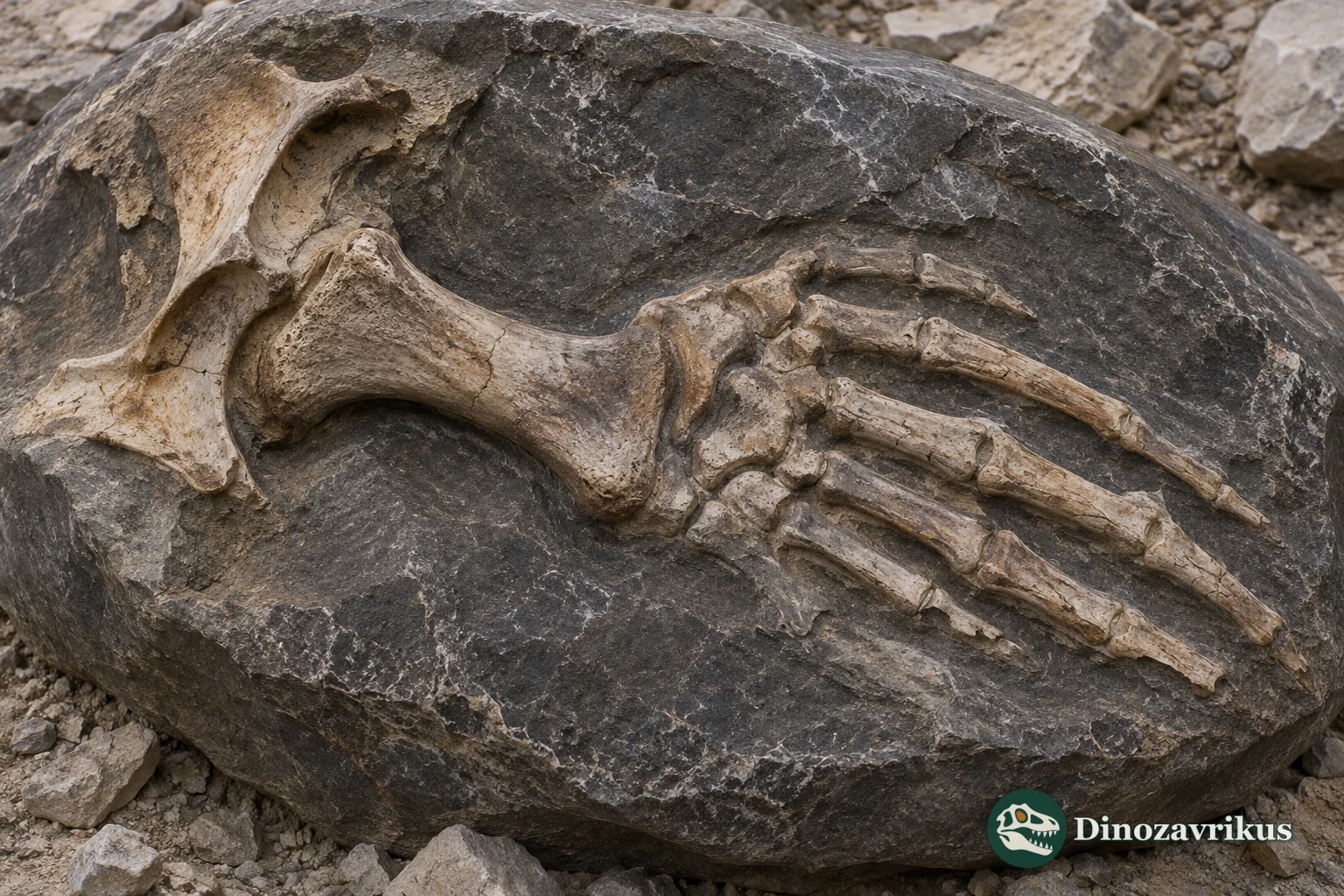
The Danish specimen preserves the humerus and several bones of the left front flipper close to their original positions. The association provides a better basis for reconstructing the forelimb's proportions. Its exact motion in the water is harder to determine.
Chemical evidence for colour
In 2014 Johan Lindgren and colleagues analysed dark soft-tissue traces on FUM-N-1450. The chemical signals matched eumelanin. Under the microscope the team identified structures interpreted as melanosomes, the organelles that contain pigment. The results document dark pigmentation in the sampled patches. Their distribution across the living turtle remains uncertain.
Records across the Atlantic
In 2014 Robert Weems assigned a North American species, Eosphargis insularis, to the genus on the basis of the front rim of the carapace. The material comes from Late Paleocene strata in the United States. Early Eocene fragments from the Nanjemoy Formation have been compared with E. gigas, but their species-level identification remains provisional.
Frequently asked questions
Why is Eosphargis placed in the leatherback lineage?
Features of the skull, forelimbs and reduced bony shell support that placement.
What pigment survived in the Danish specimen?
Chemical analysis detected traces of eumelanin, a dark pigment, in fossil soft tissues of FUM-N-1450.
Where was the type species discovered?
The name Eosphargis gigas is based on material from the London Clay of the Isle of Sheppey in England.
Do the fossils reveal what Eosphargis ate?
Its precise diet remains unknown. The feeding habits of living leatherbacks provide a comparison, while the fossil skin and bones leave the question open.