

Eotheroides is a genus of Eocene sea cows in the order Sirenia. Fossils assigned to it come from Egypt and Madagascar and span different intervals. Its type species is known from a far more limited specimen than some later congeners: the holotype of E. aegyptiacum is a natural cast of the cranial cavity, not a complete skull or skeleton.
The genus appears in the ancient mammal catalogue. The earlier sirenian Prosiren offers a useful comparison for aquatic adaptations, but one genus should not be used as a stand-in for another.
Quick facts
| Scientific name | Eotheroides Palmer, 1899 |
|---|---|
| Type species | E. aegyptiacum (Owen, 1875) |
| Group | Sirenia; family Dugongidae |
| Age | Eocene; species span separate intervals |
| Range | Egypt and Madagascar; some other referrals are debated |
| Type specimen | NHMUK PV OR 46722, natural endocast with part of the basicranium |
| Lifestyle | Fully aquatic; details vary by species |
| Open question | Whether all assigned species form a natural genus |
What can the fossils tell us?
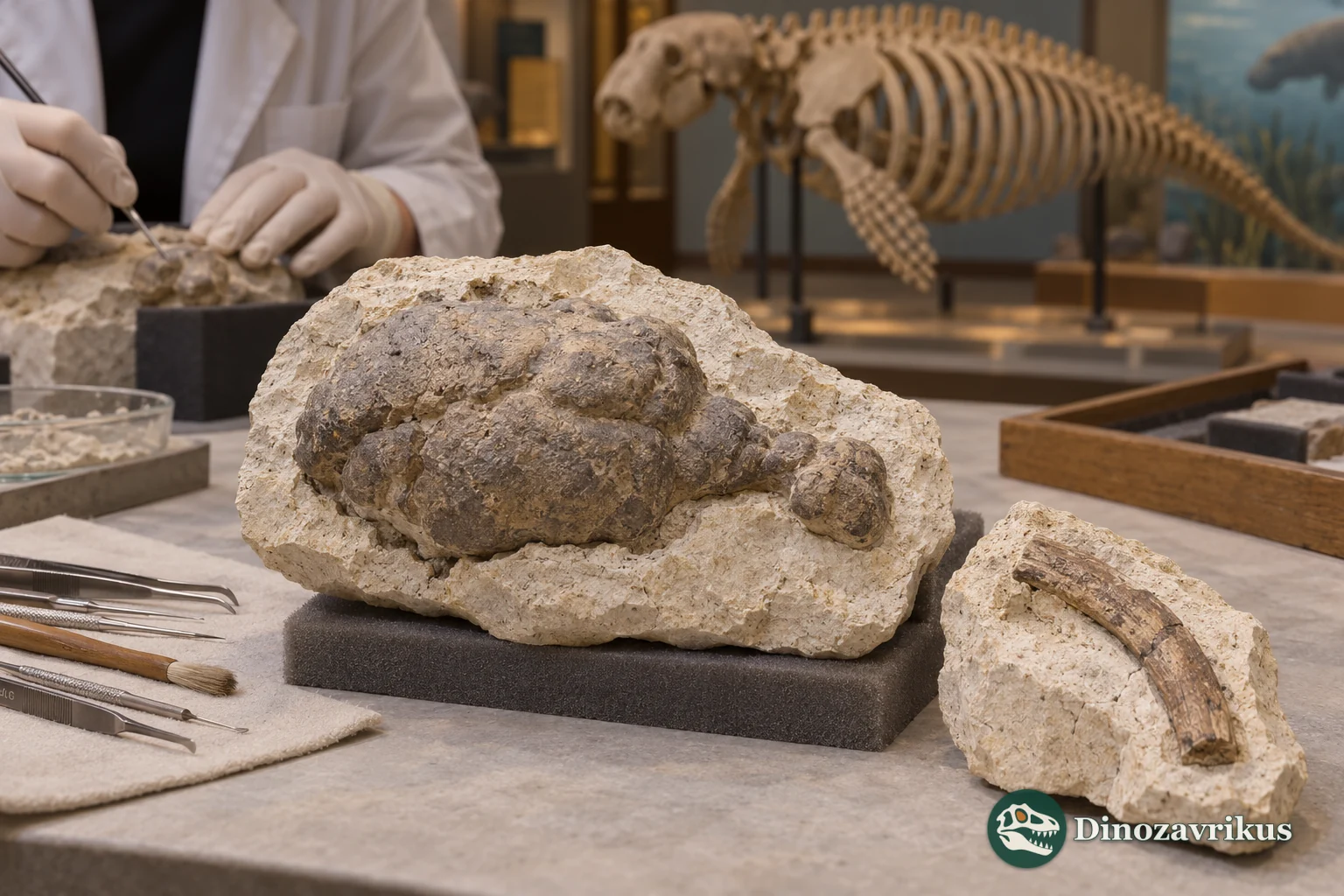
NHMUK PV OR 46722 is a natural endocranial cast with some basicranium preserved. It came from the Lower Building Stone Member of Egypt’s Mokattam Formation, dated to the Lutetian.
E. clavigerum and E. sandersi from Wadi Al Hitan preserve cranial and postcranial material. Their anatomy cannot be transferred without qualification to the type species.
Dense, robust anterior ribs, a reduced pelvis and small hind limbs are described for better-preserved sirenians. These features support fully aquatic life but are not all visible in the E. aegyptiacum type.
A 2022 phylogenetic analysis separated the type species from a weakly supported group of three later congeners, raising a question about genus monophyly rather than settling it.
From Eotherium to Eotheroides
Richard Owen named Eotherium aegyptiacum in 1875 from an unusual natural cast of a skull cavity found in Egyptian Eocene deposits. The generic name Eotherium was preoccupied, so Theodore Palmer proposed the replacement name Eotheroides in 1899. The species is now called Eotheroides aegyptiacum.
The holotype NHMUK PV OR 46722 is held by London’s Natural History Museum. Its catalogue record places it in the Lower Building Stone Member of the Mokattam Formation and the Lutetian. A natural endocast can preserve selected contours of the braincase, but it does not reveal the animal’s full head, teeth or limbs.
Later Egyptian skeletons
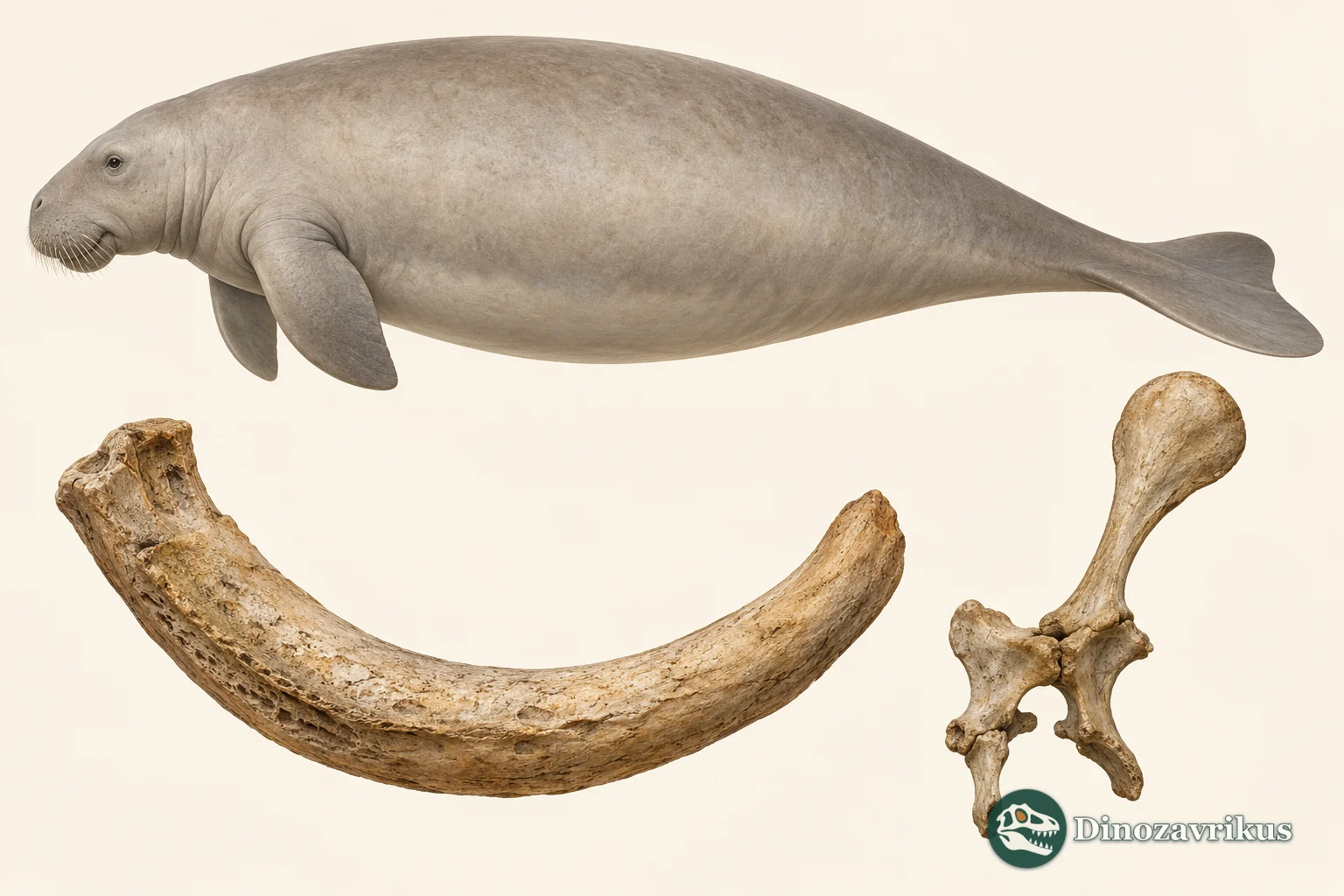
Zalmout and Gingerich described two later Eocene species from Wadi Al Hitan in Egypt in 2012: E. clavigerum and E. sandersi. Their material includes cranial and postcranial bones, providing far more anatomical information than the type of E. aegyptiacum. These species are younger and distinct; their skeletons do not enlarge the holotype of the type species.
The better-preserved specimens show broad skulls, dense and robust anterior ribs, a reduced pelvis and small hind limbs. Tail vertebrae indicate a fluke. Together, these features support fully aquatic life. Published body-length estimates of roughly 1.5–2.5 m refer to some of these later forms and depend on reconstruction; they are not direct measurements of every species or of the type specimen.
Habitat and feeding
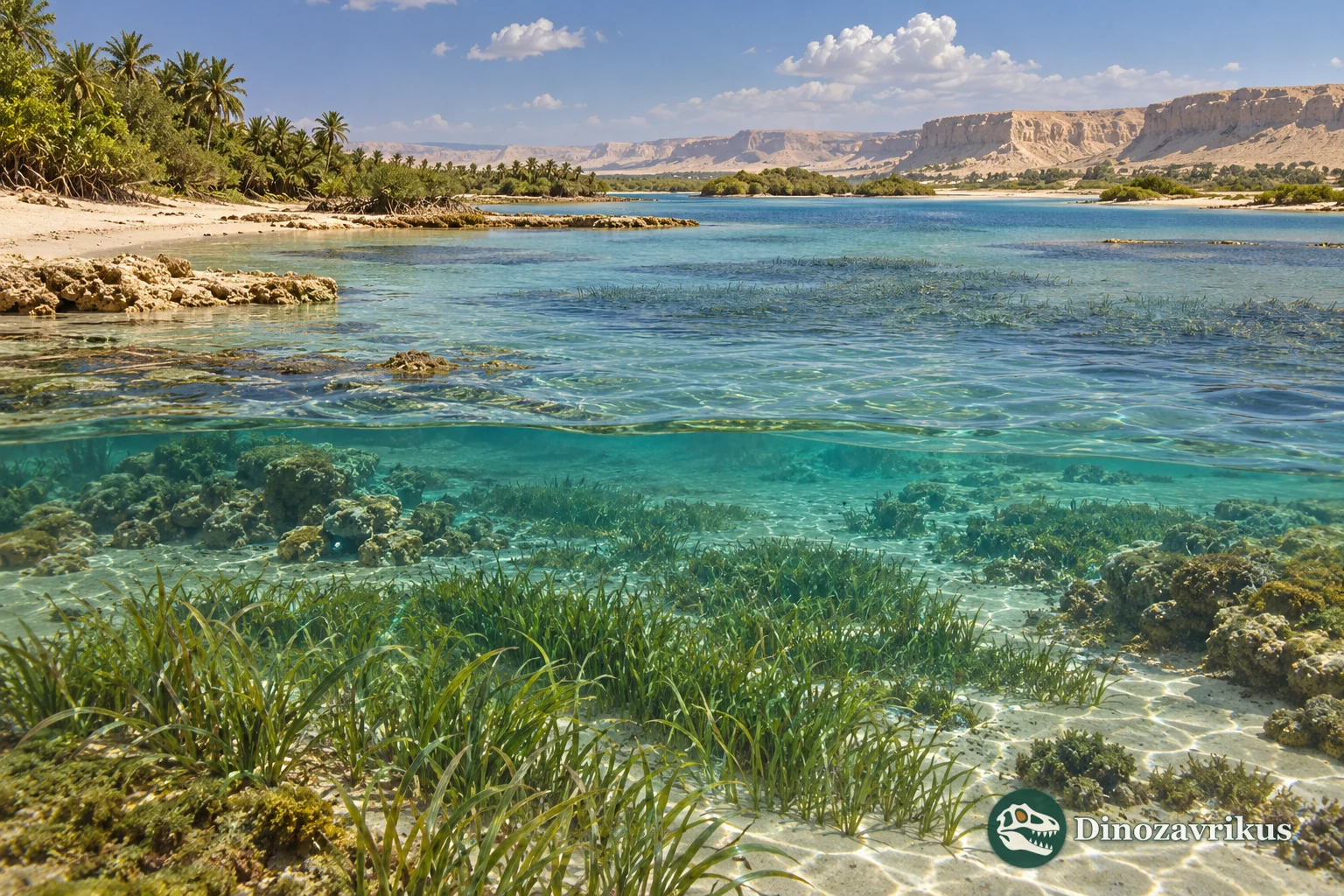
Wadi Al Hitan preserves marine deposits and a diverse late Eocene fauna. The geological context and sirenian anatomy are consistent with coastal shallows, lagoons and estuarine settings. Seagrasses or algae are plausible foods, but the available fossils do not establish a precise menu through preserved gut contents.
Teeth and jaws can constrain how vegetation was cut and chewed, yet they do not identify a plant species. Dietary inferences are especially limited for E. aegyptiacum, whose type material is an endocast. Broadly speaking, aquatic plants fit the ecology of sirenians, while the details should be assessed species by species.
Geography and the limits of the genus
Named species include the Egyptian type species, the later Egyptian E. clavigerum and E. sandersi, and the middle Eocene Malagasy E. lambondrano. They differ in age, locality and fossil completeness. Historical combinations and reassigned names record taxonomic changes, not necessarily new species or populations.
A 2022 phylogenetic analysis placed E. aegyptiacum apart from a group containing the three later named congeners. That triad was recovered as a branch with weak support, and the position of the type species raises a question about whether all these forms belong to one natural genus. The analysis does not by itself invalidate the names; it identifies relationships that need more testing.
Some North American sirenian remains have been proposed as Eotheroides, but the referrals are not an uncontested extension of the genus range. Egypt and Madagascar provide the core documented geography; other assignments should retain their caveats.
What the type does not tell us
The natural endocast confirms cranial material of an Eocene sirenian, but it cannot provide a body-length estimate, limb anatomy or exact diet. Better-preserved later species reveal much more about aquatic adaptations and broaden the genus-level story, while leaving open how closely every named species is related.
Illustrations can use the later skeletons to inform a cautious sea cow reconstruction. They cannot be presented as photographs of a museum type, as exact portraits of E. aegyptiacum, or as records of specific ancient behaviour.
Frequently asked questions
When did Eotheroides live?
Its species come from different Eocene intervals. The type species is Lutetian, while E. clavigerum and E. sandersi are later forms from Wadi Al Hitan.
What is the type specimen?
NHMUK PV OR 46722 is a natural endocranial cast with part of the basicranium, not a complete skull or skeleton.
Why was the name changed from Eotherium?
Owen named Eotherium aegyptiacum in 1875, but that genus name was preoccupied. Palmer proposed Eotheroides as a replacement in 1899.
Are all Eotheroides species equally well known?
No. The type species is anchored by an endocast, while later Egyptian species preserve substantially more cranial and postcranial anatomy.