

Eretiscus was one of the small penguins of prehistoric Patagonia. Foot and wing bones from marine deposits in Argentina distinguish it as a separate genus. These modest remains do not provide an exact portrait with known feather colours or a measured standing height.
Quick facts
| Group | Penguins |
|---|---|
| Region | Chubut, Argentina |
| Deposits | Gaiman Formation, Early Miocene |
| Size | Small penguin; exact height unknown |
| Genus named | Storrs Olson, 1986 |
What can the fossils tell us?
George Simpson described the species in 1981 under a different genus name. Renaming it did not establish a second species.
A cast of humerus MEF-PV 507 measures 42.2 mm in a 2024 comparison table. This is bone length, not the bird’s height.
The Hakataramea humerus differed anatomically. In 2024 it was included in the newly named genus Pakudyptes.
Two names for the same penguin
George Gaylord Simpson described Microdytes tonnii in 1981 from separate bones collected around Trelew and Gaiman in the Chubut River valley. The name was based on a tarsometatarsus, with a fragmentary humerus also assigned to the species. These were dissociated finds, not an articulated skeleton.
Microdytes was already occupied by a beetle genus. Storrs Olson therefore supplied Eretiscus as a replacement in 1986. The species epithet tonnii remained: the two combinations refer to the same species, not two similar kinds of penguin.
What the Chubut fossils reveal
Additional humeri were subsequently studied in the collections of the Museo Paleontológico Egidio Feruglio. The material is associated with Bryn Gwyn and the Gaiman Formation. Older descriptions used a Late Oligocene age; the conclusion of the 2004 study assigned the known Argentine material to the Early Miocene.
Eretiscus combines very small size with distinctive features of its tarsometatarsus and humerus. A comparison table published in 2024 gives a length of 42.2 mm for a cast of left humerus MEF-PV 507. Its general size was comparable to small living penguins, but that measurement cannot be converted into an exact standing height without assumptions about proportions.
Why New Zealand is no longer part of its known range
A small humerus, OU 21977, from Hakataramea in New Zealand was once attributed to Eretiscus. Direct comparison in 2004 revealed differences in joint surfaces and muscle attachment regions: similar size was insufficient to establish identity. In 2024, the specimen was included in the description of Pakudyptes hakataramea.
Secure Eretiscus records therefore remain Argentine. The episode shows why accounts of individual fossil penguins, including the Australian Pseudaptenodytes, must be tied to particular specimens and localities. A tiny penguin on another shore of the ocean need not represent the same species.
Swimming without an invented menu
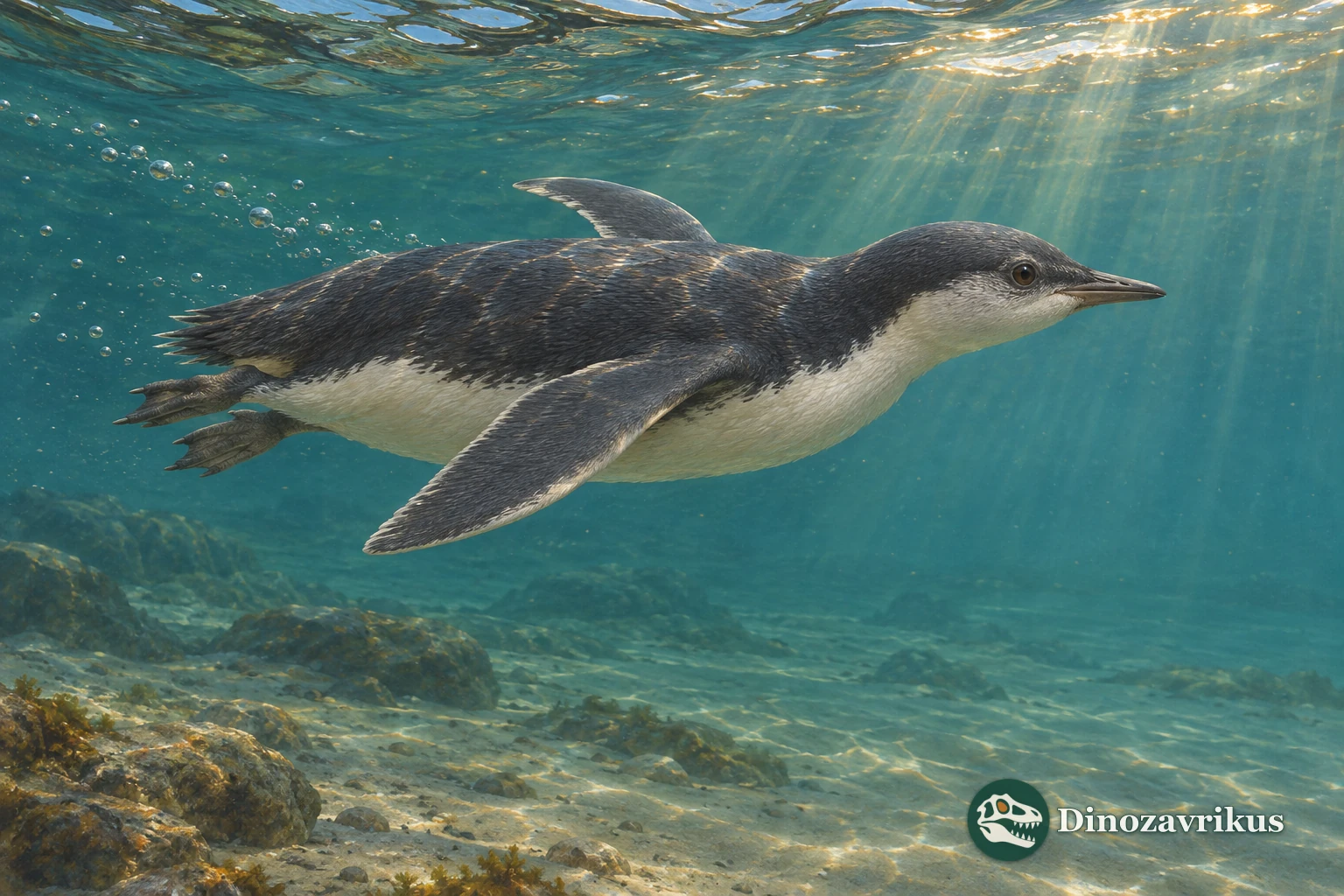
Penguin affinities and wing anatomy support a bird propelled through the water by flipper-like wings. Marine sediments are consistent with that way of life. However, its diving depth, particular prey and nesting arrangements have not been established. The colours shown in the illustrations are artistic choices rather than preserved features.
Frequently asked questions
Was Eretiscus the smallest penguin?
It belongs among the very small fossil penguins, but an absolute record is not secure. Comparisons involve individual bones, while complete body dimensions remain unknown.
Why is the species dated 1981 but the genus 1986?
Simpson’s original genus name was already occupied. Olson replaced that name in 1986 while retaining the species Simpson had described.
Did it live on an icy coast?
The fossils come from marine deposits in Patagonia. There is no specific evidence requiring an ice-covered shoreline for this penguin.
Has a complete skeleton been discovered?
No. The account rests on separate foot and wing bones, not a whole skeleton with a skull and preserved feathers.