

Ergilemys was a fossil tortoise from Mongolia. Bones of the upper and lower shell document its type species. One Ergilin Dzo specimen preserves 55 cm of the lower shield. Older accounts treated the fossil beds as Oligocene, while current studies place them in the late Eocene.
Quick facts
| Group | Turtles, land tortoises |
|---|---|
| Age | Eocene, late Eocene for the type species |
| Region | Asia: Mongolia, southeastern Gobi |
| Type species | Testudo insolitus |
| Type material | AMNH 6275, disarticulated shell bones |
| Scientific name | Ergilemys |
| Diet | No direct evidence |
What can the fossils tell us?
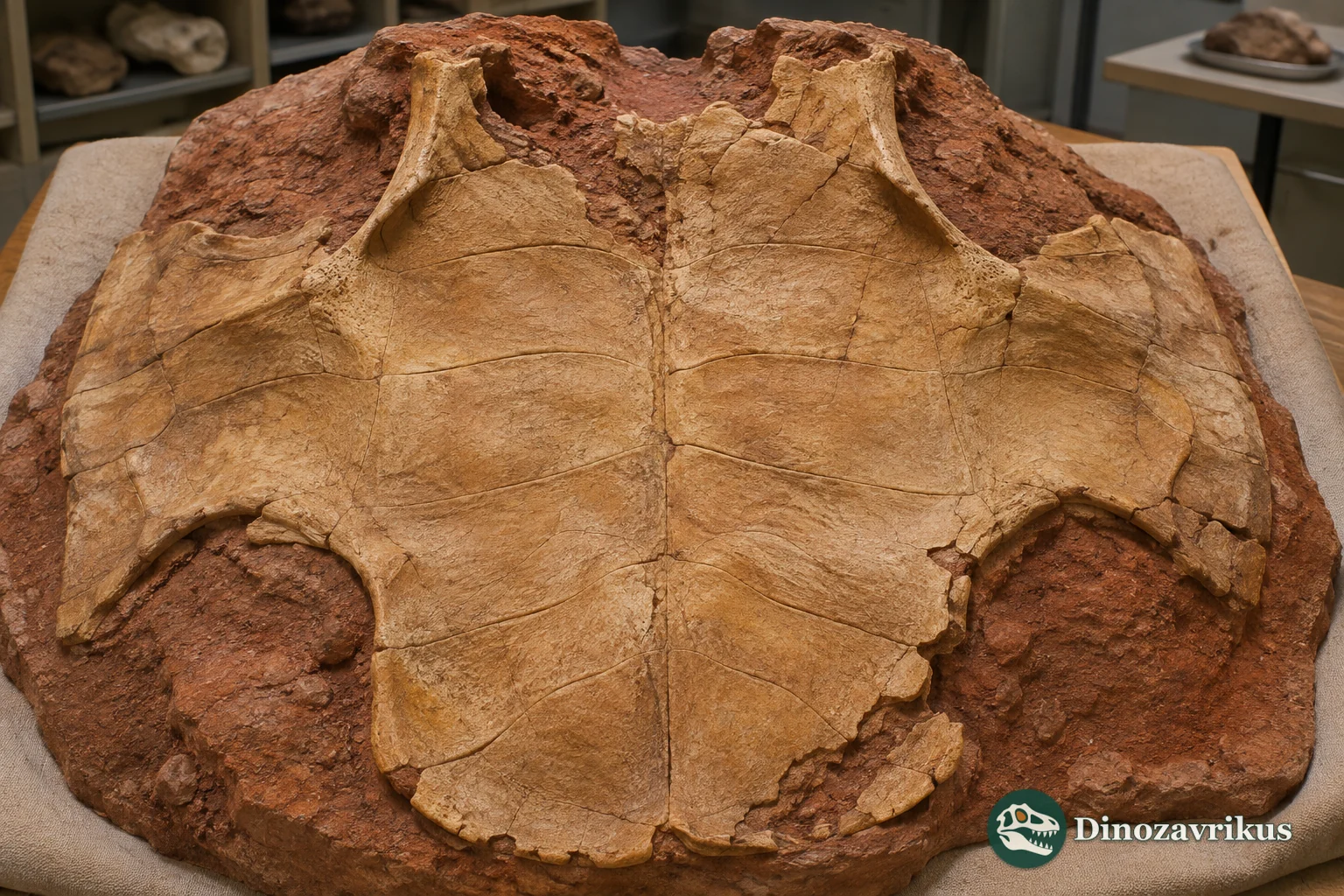
Several carapace and plastron elements are recorded under this number. They reveal the thickness of the bony shell. Its complete outline must be reconstructed.
The preserved portion of the plastron measures 55 cm in length. The author described rigid connections between the preserved bones.
Early accounts called these beds lower Oligocene. Current studies place the formation and type species in the late Eocene.
How the name and date changed
William Diller Matthew and Walter Granger named Testudo insolitus in 1923. The type material AMNH 6275 includes peripherals, a piece of a costal and parts of the plastron. Marian Młynarski compared it with specimens from a Polish–Mongolian expedition in 1968 and used the name Geochelone. V. M. Chkhikvadze established Ergilemys in 1972.
Historical studies placed the Ergilin Dzo beds in the early Oligocene. A revised correlation based on the fossil fauna and stratigraphic sequence places the formation in the late Eocene. This accounts for the different dates in studies of the same tortoise.
The thick lower shell
The preserved part of plastron MgCh/11 measures 55 cm long and 37 cm wide across the bridge. In places the bone reaches 5 cm thick. The surface preserves scute grooves and fainter sutures between the bones. The joints show a rigid lower shield.
Młynarski estimated a total shell length of about 65 cm for large individuals from the incomplete material. More complete shells of Paleotestudo offer an example where lengths could be measured from a series of individual fossils.
Which fossils belong in the genus?
Remains from Kazakhstan, Georgia and western Europe have been compared with Ergilemys. Assignments of Asian species have changed in different studies, and western European fossils differ in the shape of the front edge of the plastron. The boundaries of the genus remain open to revision. The Mongolian type material is the reference point for those comparisons.
Frequently asked questions
Where was Ergilemys found?
The type material comes from Ergilin Dzo in southeastern Mongolia.
When did the type species live?
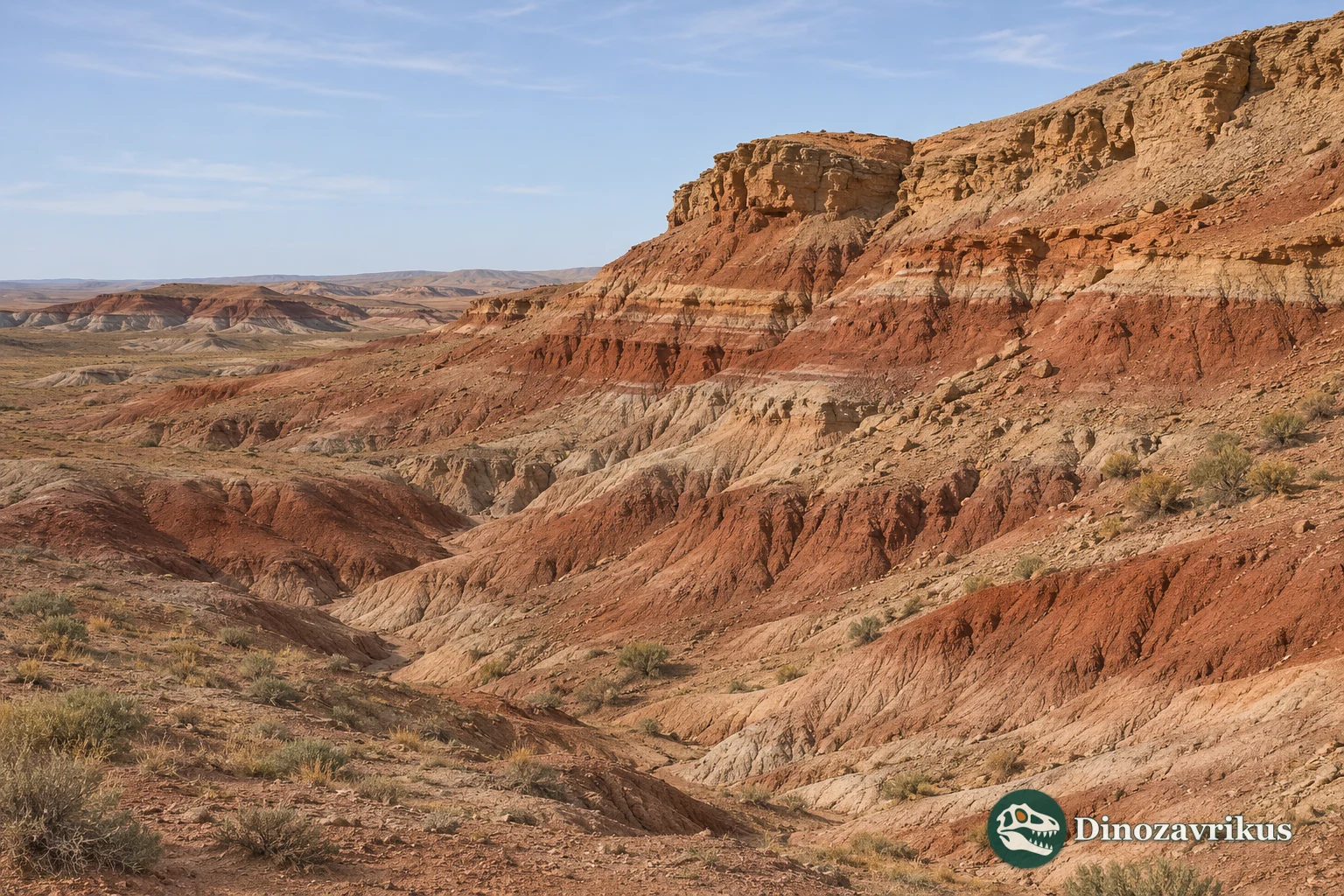
The current age of the Ergilin Dzo Formation is late Eocene. Earlier accounts dated the beds to the early Oligocene.
What could researchers measure directly?
The preserved portion of specimen MgCh/11 measures 55 cm long. The length of the full shell was estimated from incomplete material.
What did Ergilemys eat?
The fossils chiefly consist of shell bones. Direct evidence of its diet is unavailable.