

Euptychaspis is a late Cambrian trilobite genus often identified from separated shell pieces. Head fragments from far-apart areas were once assigned to the same species. Better material from Utah and Nevada made it possible to compare the central head pieces, free cheeks and tail shields in detail.
Quick facts
| Group | Trilobites |
|---|---|
| Age | Late Cambrian |
| Genus named | Edward Ulrich, 1931 |
| Type species | Euptychaspis typicalis |
| Type beds | Eminence Dolomite, Missouri |
| Utah reference specimen | Cranidium SUI 97685 |
What can the fossils tell us?
In E. lawsonensis a furrow crosses the raised centre of the cranidium. The front lobe of the type species is less expanded.
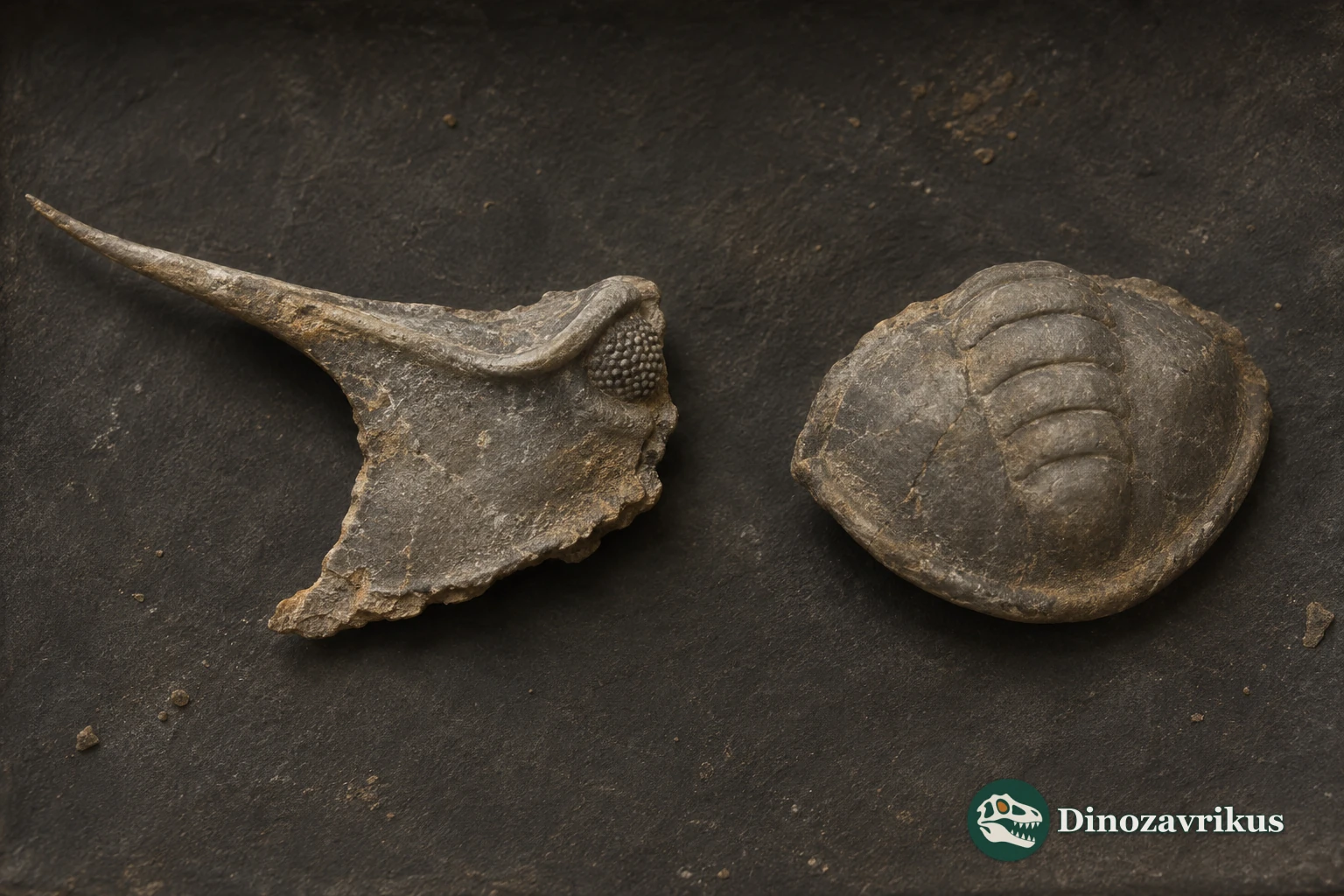
The free cheek from Utah bears a long tapered spine. The Nevada species has three clearly defined rings before the terminal piece of its tail axis.
The appearance of specimens once given a single name does not automatically mark the same boundary in different sections.
The Missouri material
Edward Ulrich named the genus in Josiah Bridge's 1931 publication. Its type species, E. typicalis, was described from the Eminence Dolomite of southern Missouri. Jonathan Adrain and Stephen Westrop reillustrated the original specimens and selected USNM 83493a as the lectotype. It is a partial cranidium, the central part of the head shield.
Early descriptions relied on a small number of comparable fragments. Where two cranidia have a similar outline, other characters are needed to test if they belong to the same species.
The Utah and Nevada fossils
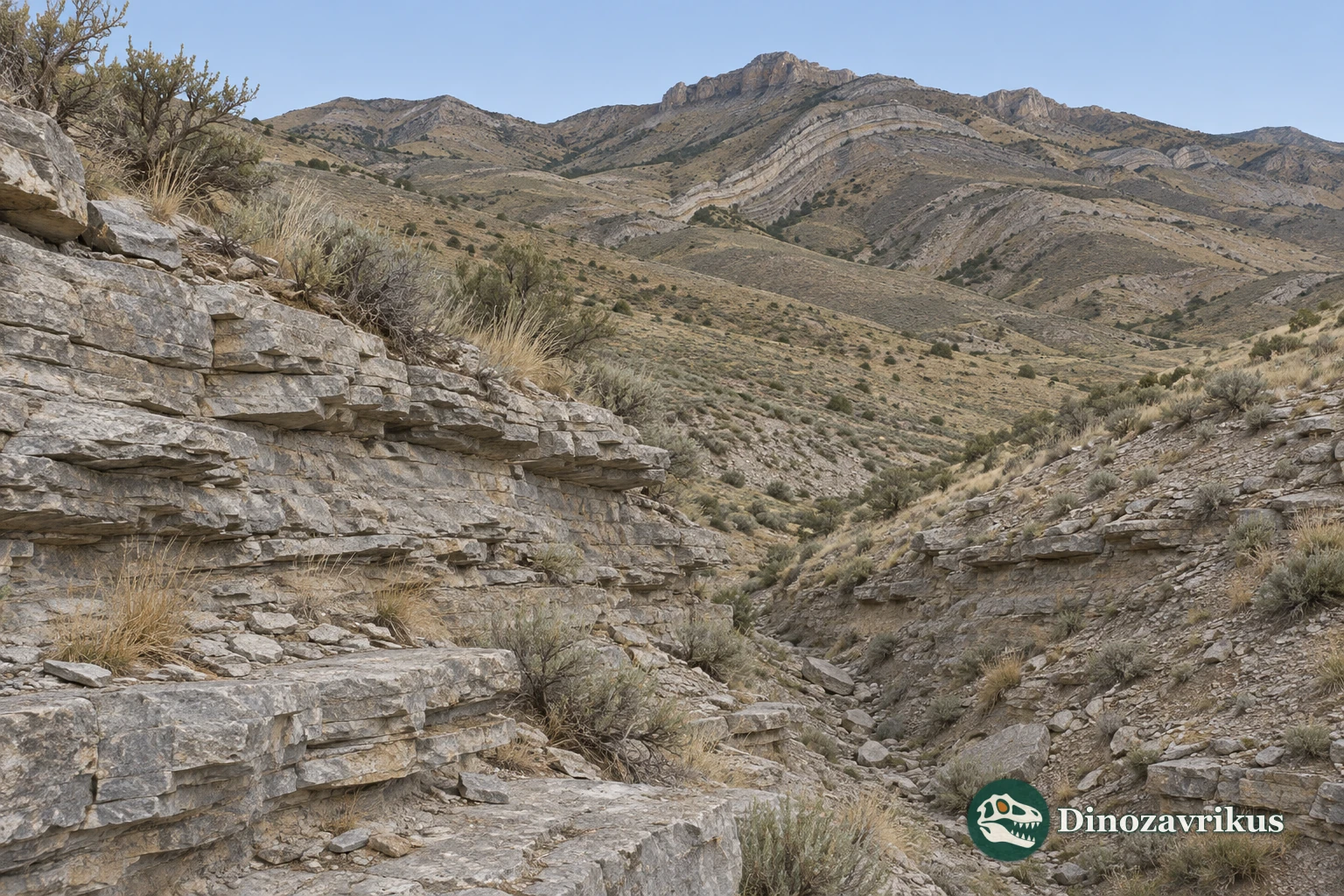
In western Utah, Adrain and Westrop named E. lawsonensis from the Notch Peak Formation. The holotype cranidium SUI 97685 comes from Lawson Cove. This species has a bulb-shaped glabella with an expanded front lobe, and its second glabellar furrow crosses that raised central part of the head. The same fossil series includes separate cheeks with long tapered spines and separate tail shields.
In E. dougali, from Nevada's Windfall Formation, the second glabellar furrow is expressed as a pair of marginal notches, with no connection across the centre. Its tail shield has three clearly defined axial rings before the terminal piece. The difference is seen when several parts of the shell are available for comparison.
What a revised name changes in a rock section
Some of the Utah finds had previously been called E. kirki. The revised material demonstrated that they represented another species. In Texas and Oklahoma the first records assigned to E. kirki had been used as a proxy for the base of the Saukiella serotina Subzone. The validity of that marker depends on the identity of the fossils at each locality.
The fossil ranges of Eokochaspis illustrate a related problem. The identification and order of finds need to be checked in each section before matching the boundaries of its intervals.
Frequently asked questions
What is the type species of Euptychaspis?
Euptychaspis typicalis, based on material from the Eminence Dolomite in southern Missouri.
What does the holotype of E. lawsonensis preserve?
The cranidium, or central part of the head shield. SUI 97685 comes from the Notch Peak Formation at Lawson Cove, Utah.
How is Euptychaspis dougali distinguished?
Its second glabellar furrow forms two lateral notches, and its tail axis has three clear rings before the terminal piece.
Why were old records of E. kirki reassessed?
Fossils from different regions assigned to that name proved to differ in anatomy. Their occurrences cannot automatically mark a single boundary.