

Excalibosaurus costini is an Early Jurassic ichthyosaur from the Somerset coast of England. Its upper jaw extends conspicuously beyond the lower one, producing the sword-like profile behind the name. That resemblance is anatomical; no fossil directly records swordfish-style hunting.
The type is partial, but a second, nearly complete skeleton later provided much more of the body and fin anatomy. Keeping the specimens separate matters when weighing the genus's diagnosis.
Quick facts
| Type species | Excalibosaurus costini McGowan, 1986 |
|---|---|
| Type specimen | BRSMG Cc881, skull and partial skeleton |
| Additional fossil | ROM 47697, nearly complete skeleton |
| Age | Sinemurian, Early Jurassic |
| Place | Somerset coast, England |
| Group | Leptonectidae |
| Feature | Upper jaw projects beyond the lower jaw |
What can the fossils tell us?
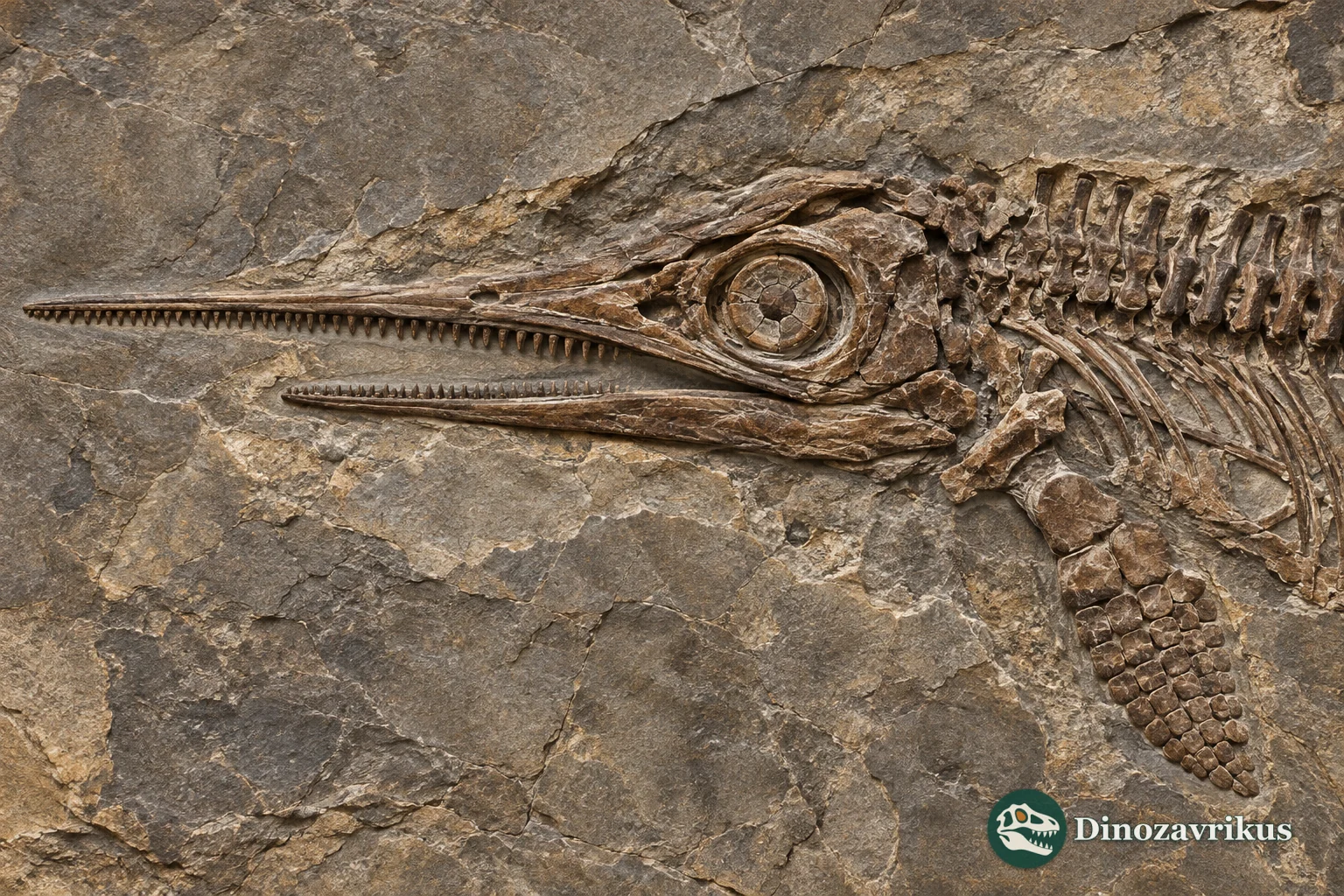
BRSMG Cc881 preserves the skull, a forefin, girdle fragments, vertebrae and ribs. The extended upper jaw is skeletal evidence, not a painted invention.
A more complete later specimen gives body and flipper proportions. It is a separate individual and does not become the holotype.
A 2000 review merged the genera. Examination of the more complete Excalibosaurus skeleton supported a distinct genus in later work.
The original Somerset fossil
The first specimen was found near Lilstock in 1984. Christopher McGowan named Excalibosaurus costini in 1986, honoring finder David Costin. The type BRSMG Cc881 includes the skull, a forefin, parts of the shoulder girdle, vertebrae and ribs. It is not a complete whole-body skeleton.
The fossil-bearing Somerset rocks are Sinemurian, Early Jurassic. McGowan compared the projecting upper rostrum with that of the later Eurhinosaurus and proposed an evolutionary connection. Geological order and anatomical resemblance support a hypothesis, not a direct ancestor-descendant observation.
A fuller skeleton and taxonomic reassessment
The later specimen ROM 47697 from the English coast is nearly complete. McGowan described it in 2003, bringing more of the trunk and fins into comparison. It remains a referred specimen; the type designation stays with BRSMG Cc881.
Maisch and Matzke had treated Excalibosaurus as a synonym of Eurhinosaurus in 2000. The more complete anatomy helped McGowan argue for separation, and a 2010 systematic review retained Excalibosaurus as a valid genus. Similar long snouts do not erase differences in flippers and other proportions.
What the jaw can and cannot reveal
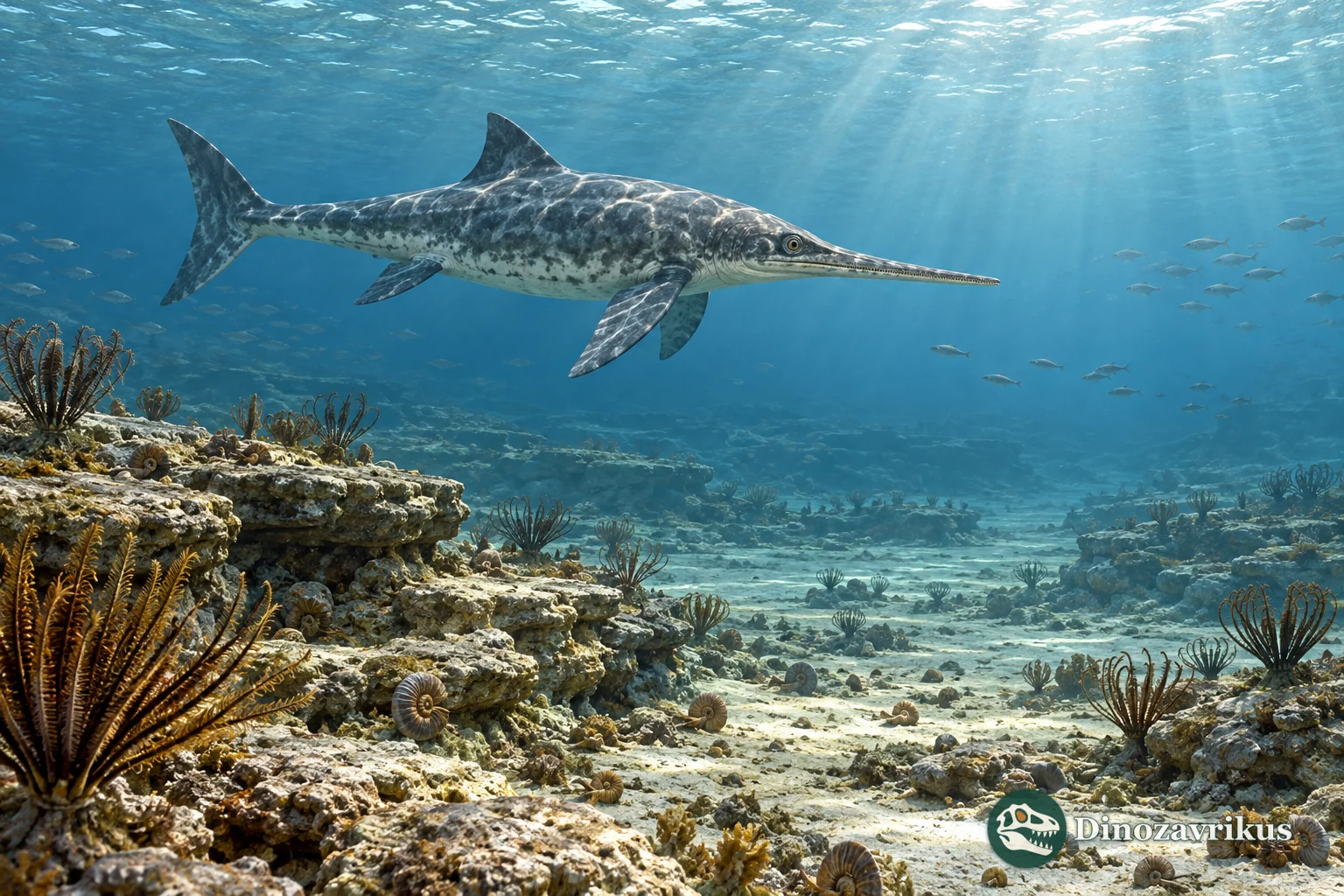
The bony upper jaw really did extend past the lower jaw. Its precise use in feeding is less secure. Similarity to a living swordfish does not document striking prey with the snout. Forefin bones and the second skeleton support proportional comparisons but do not directly measure swimming speed or body mass.
Other Early Jurassic ichthyosaurs such as Stenopterygius and Temnodontosaurus show how much this group varied. Their anatomy cannot be substituted for missing parts of the Excalibosaurus holotype; the cover's skin colors are artistic choices.
Frequently asked questions
Why is Excalibosaurus compared with a swordfish?
Its upper jaw extends well beyond the lower one. The resemblance does not establish the same hunting behavior.
Where was its type found?
BRSMG Cc881 came from the Somerset coast near Lilstock in Sinemurian marine deposits.
Is ROM 47697 the holotype?
No. It is a separate, more complete specimen described later; BRSMG Cc881 remains the name-bearing type.
Why was it once merged with Eurhinosaurus?
Their long snouts suggested close affinity, but the fuller Excalibosaurus skeleton supported recognition of separate genera.