

Foumtizia is a Paleogene catshark genus known from small isolated teeth. The type species was named from Morocco, while later comparisons used English and Trans-Ural material. Crown sculpture helps diagnose species, but the teeth do not preserve the body. The spotted shark on the cover is a cautious artistic interpretation, not a recovered specimen.
Quick facts
| Genus | Foumtizia Noubhani and Cappetta, 1997 |
|---|---|
| Type species | Foumtizia abdouni, Thanetian Morocco |
| Group | Carcharhiniformes, Scyliorhinidae |
| Known material | Small isolated teeth |
| Trans-Ural species | Foumtizia zhelezkoi Malyshkina, 2006 |
| Ural holotype | PIN 5088/03, a lateral tooth |
| Ural age | Priabonian, Late Eocene |
| Body length | Not established from the teeth |
What can the fossils tell us?
Noubhani and Cappetta named F. abdouni in 1997 from Thanetian Ouled Abdoun phosphate deposits. The generic name is anchored by tooth material.
PIN 5088/03 is the lateral-tooth holotype of F. zhelezkoi, while PIN 5088/04 is a paratype. Neither is the Moroccan generic type.
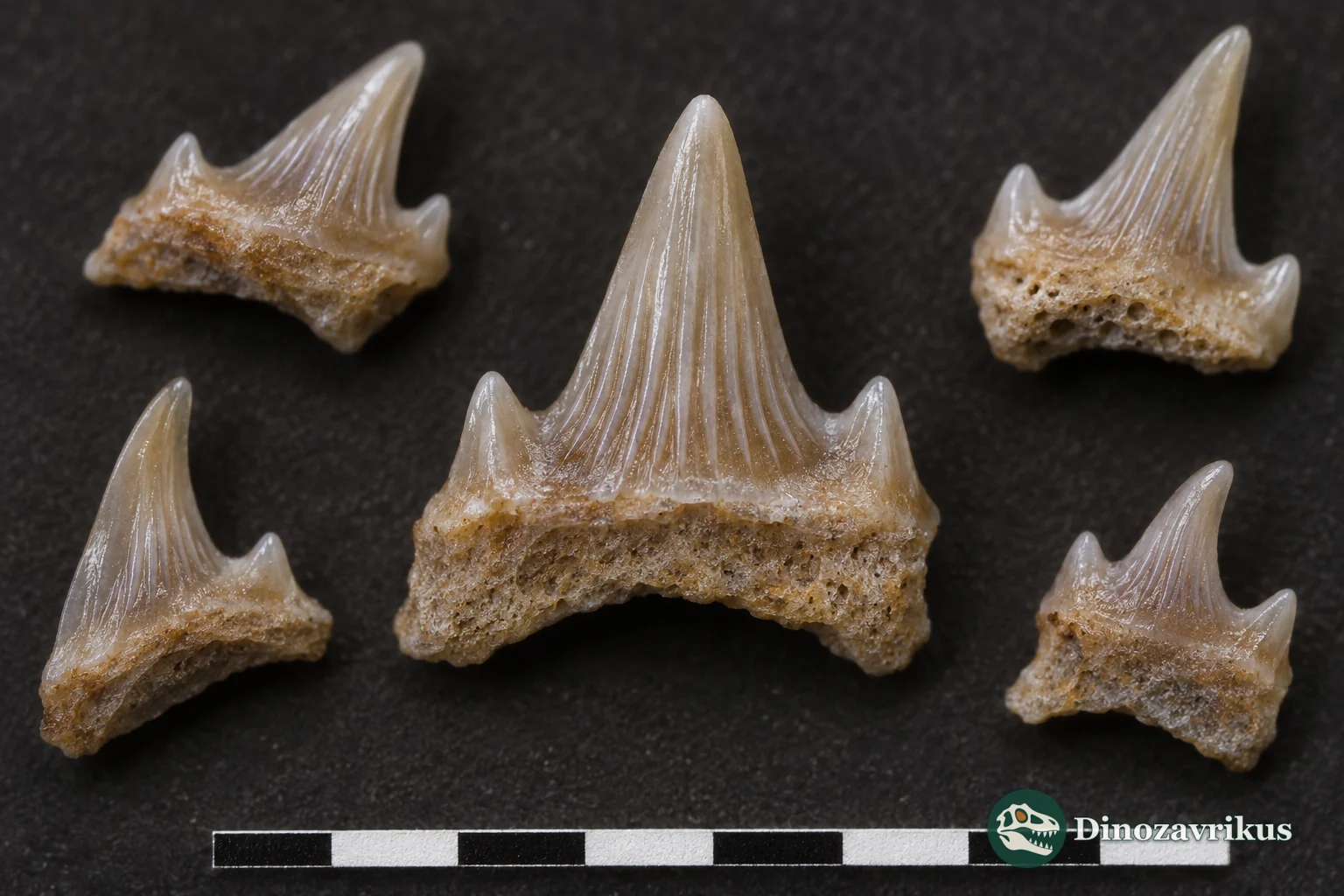
Malyshkina described a stout cusp and conspicuous folding in F. zhelezkoi. Similar English and Ural teeth do not necessarily prove the same biological species.
Body size, fin proportions, colour and prey are not directly established. The cover uses the broad catshark body plan as an artistic guide.
A Moroccan name based on teeth
Aziz Noubhani and Henri Cappetta established Foumtizia in 1997 while studying elasmobranchs from Morocco's phosphate basins. F. abdouni, from the Thanetian Ouled Abdoun Basin, is the type species. Teeth with a main cusp and smaller side cusplets supplied the diagnostic material; no complete body accompanies them.
Other early species were described from Danian deposits. Their crown thickness, enameloid folds, cutting edges and root shapes differ in fine detail. These differences do not supply a direct image of the animal's skin or fins. Abdounia also occurs in Moroccan Paleogene deposits, but shared geography does not imply an identical life habit.
A later species from Kurgan
In 2006 Tatiana Malyshkina named F. zhelezkoi for geologist and fossil-shark researcher Victor Zhelezko. Holotype PIN 5088/03 is a lateral tooth from the Tavda Formation at Kurgan; PIN 5088/04 is the paratype. The study recorded eleven Kurgan teeth and two from Derney. A tooth count is not an individual shark count.
The Ural crowns are relatively robust and carry strong enameloid folds over much of their outer and inner faces. The author used those combinations to distinguish them from the Moroccan F. abdouni and English F. pattersoni. Kurgan clays are Priabonian in age. At Derney older Paleogene teeth were redeposited into younger river sediments.
An English comparison, not a settled identity
The same Ural study assigned additional teeth to F. pattersoni, originally described from English Ypresian material. Their close shape supports comparison, but their separation in place and time leaves open whether every similar population represented the same biological species.
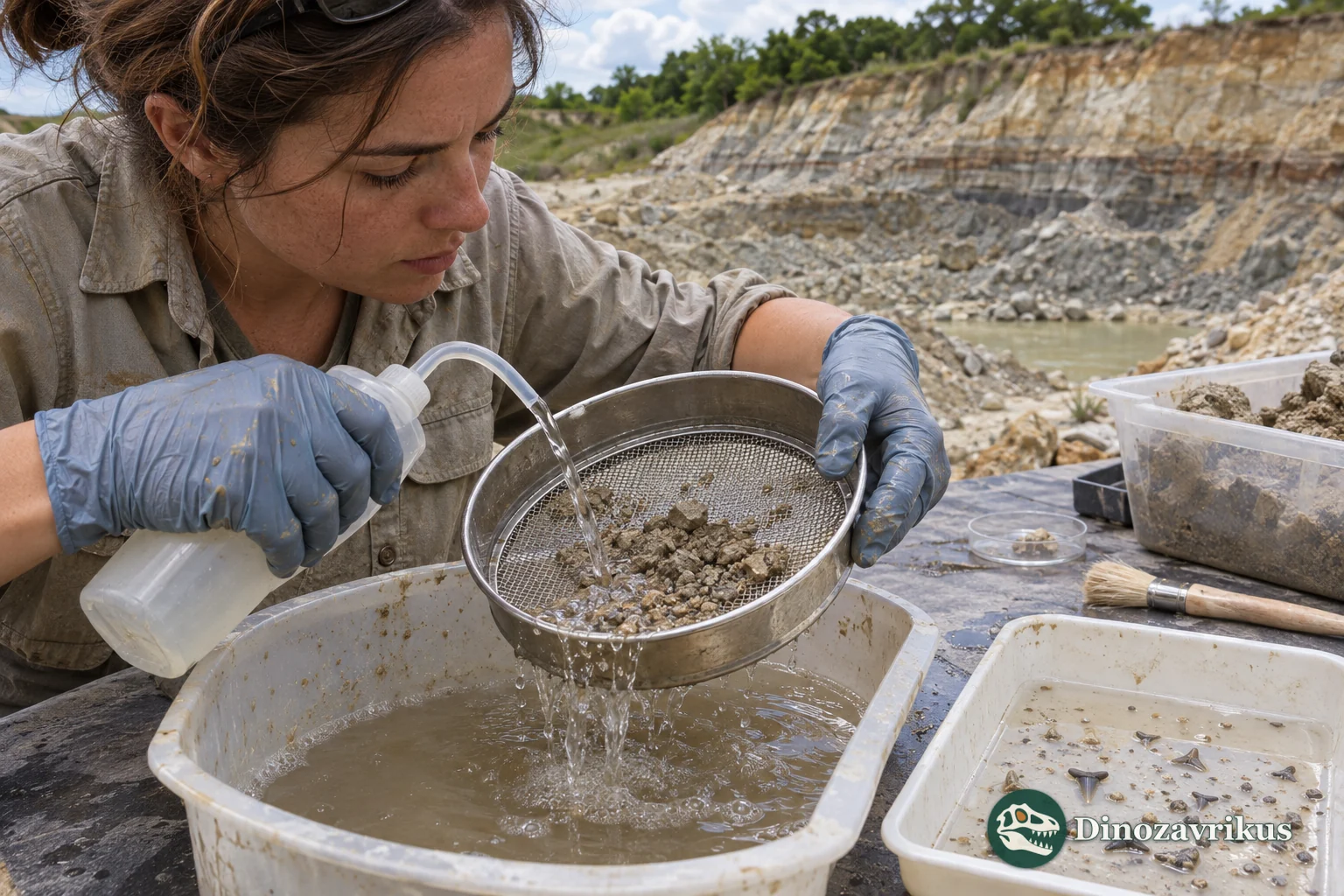
The microscope image is an illustration, not a photograph of PIN 5088/03 or the Moroccan holotype. Likewise, the staged sieving scene does not document the Kurgan field team. The small fossils require careful collection and measurement, not a visual guess about an entire animal.
What the fossils can establish
The tooth record supports dental comparisons and a catshark-family placement. It does not establish total length, reproductive sites, exact prey or an observed swimming style. Ural Foumtizia and Premontreia occurred in the same Priabonian assemblage, but co-occurrence does not prove that they interacted.
Frequently asked questions
Where was Foumtizia first named?
Noubhani and Cappetta named it in 1997 from Moroccan phosphate-basin fossils. F. abdouni is the type species.
What is the Ural holotype?
PIN 5088/03 is a lateral tooth from the Priabonian Tavda Formation near Kurgan, not a skeleton.
Did eleven Kurgan teeth represent eleven sharks?
That cannot be inferred. Sharks continually replace teeth, so the number of fossils is not the number of animals.
Why compare English and Ural teeth cautiously?
Similar tooth form occurs in material separated by distance and time. Shape alone cannot settle whether every individual belonged to one biological species.