

Foxemys was a side-necked turtle of Late Cretaceous Europe. The skull is wedge-shaped, with broad surfaces behind the beak. The French type was followed by material assigned to the same species in Spain and by an older species from Hungary.
Quick facts
| Group | Turtles, side-necked bothremydids (Bothremydidae) |
|---|---|
| Age | Late Cretaceous (Santonian, Campanian, Maastrichtian) |
| Region | Europe (France, Hungary and Spain) |
| Type species | Foxemys mechinorum |
| Holotype | MD t 10, skull and shell remains |
| Scientific name | Foxemys |
| Diet | Exact diet unknown |
What can the fossils tell us?
MD t 10 preserves a flattened skull, part of the carapace and a plastron together. This ties the head and shell to one individual.
Shell remains from Lo Hueco were assigned to F. mechinorum by comparison with French material.
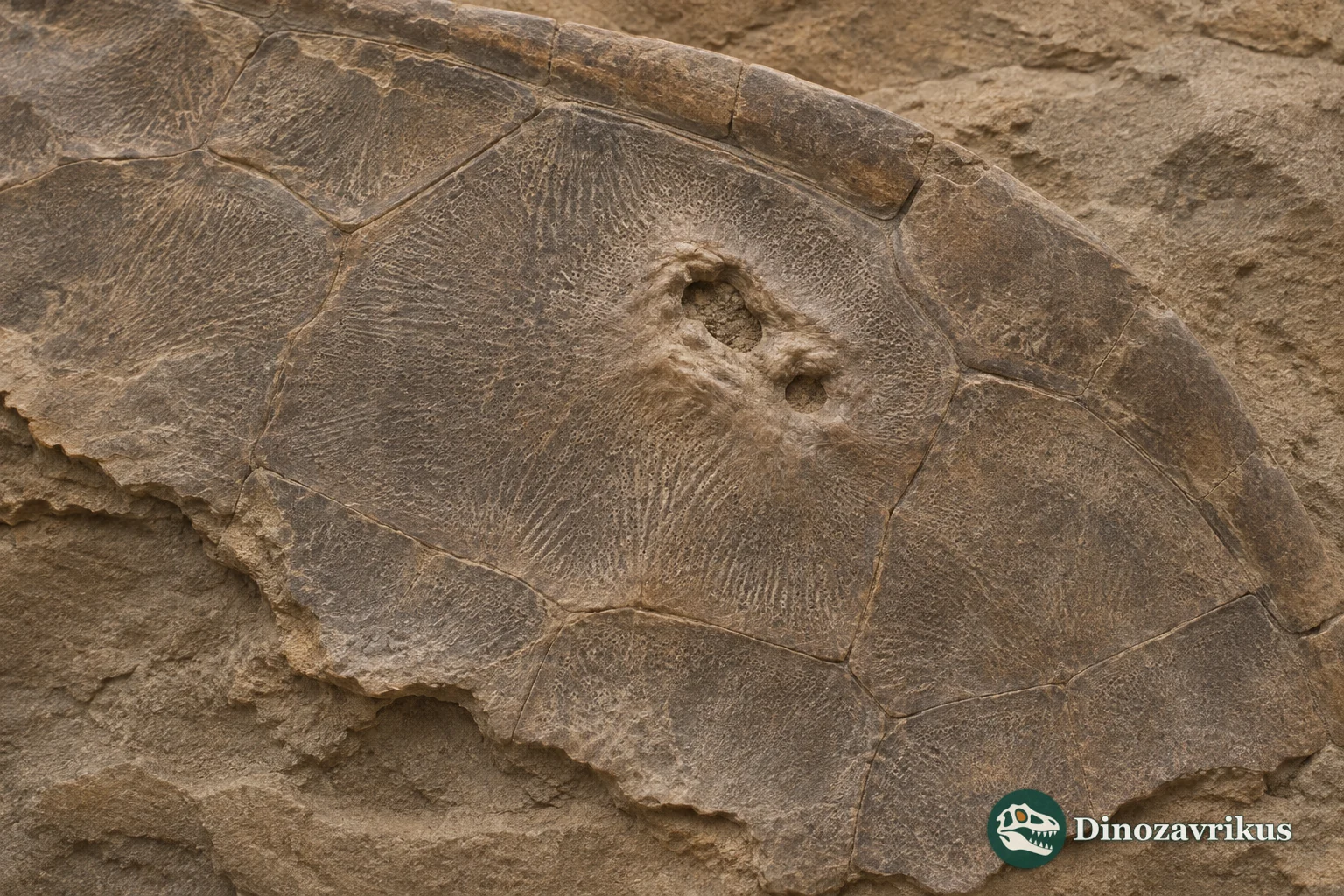
Surface damage on MTM PAL 2013.93.1 is consistent with crocodilian tooth marks. Their timing and the identity of the animal that made them are uncertain.
How the Fox-Amphoux specimen was identified
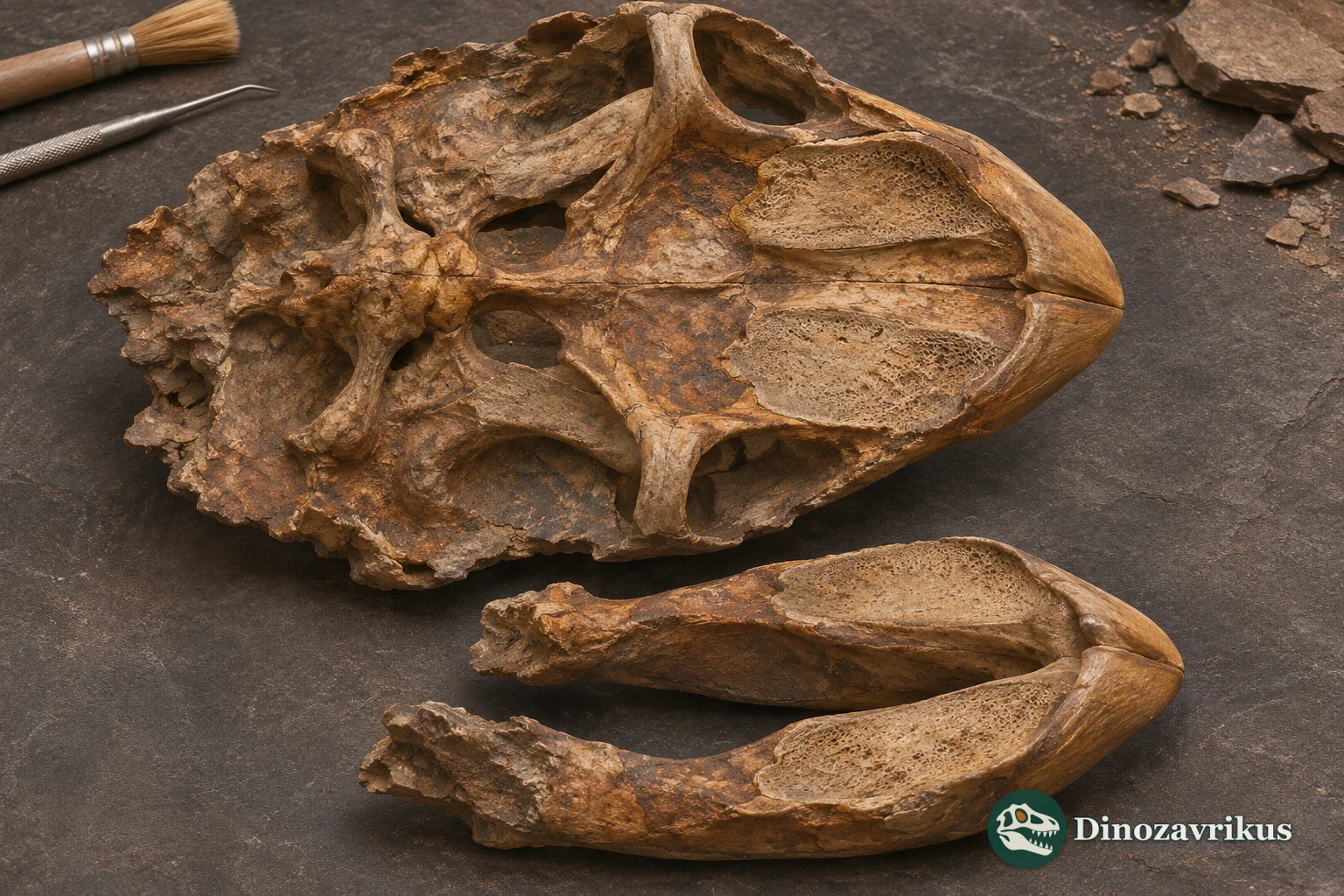
Haiyan Tong, Eugene Gaffney and Éric Buffetaut described the genus in 1998. The type of F. mechinorum, MD t 10, comes from Fox-Amphoux in southern France. It includes a skull that was found flattened inside the shell, part of the right carapace and the full plastron. The species name honours the discoverers, Patrick and Annie Méchin.
The skull widens behind the beak and has enlarged triturating surfaces. This is also seen in Polysternon. In Foxemys the jaw joints are approximately level with the joint at the back of the skull, whereas in Polysternon the jaw joints lie farther forward. The broad surfaces could help process hard foods, but no particular food item is established.
Two species across three countries
Anatomy of the shell and the pattern of scute grooves led researchers in 2018 to identify F. mechinorum at Lo Hueco in Cuenca, Spain. This extended the known distribution of the species beyond southern France.
Márton Rabi, Haiyan Tong and Gábor Botfalvai described F. trabanti in 2012. Its holotype MTM V2010.86.1 is a partial skull from the Santonian Csehbánya Formation at Iharkút in western Hungary. Additional skulls and lower jaws help document the species. The name refers to the Trabant car used during the fieldwork.
What marked the Hungarian shell
A fragment attributed to the Hungarian species, MTM PAL 2013.93.1, carries pits and scores. The researchers examined the outlines and cut thin sections through the bone. They interpreted the damage as probable crocodilian tooth marks and considered scavenging the more likely explanation for the turtle specimen.
The Iharkút beds include overbank deposits and shallow channel fills, with fossils of several crocodilian lineages. The marks by themselves do not identify which animal made them.
Frequently asked questions
Where did the type specimen come from?
It came from Late Cretaceous deposits at Fox-Amphoux in southern France.
Does the French species also occur in Spain?
Yes. Shell remains from Lo Hueco were identified as Foxemys mechinorum in 2018.
Why is the Hungarian species called trabanti?
It was named for the Trabant car used by the Iharkút field team.
Was the Hungarian turtle alive when it was bitten?
The marks were interpreted as probable bites. The researchers considered scavenging more likely for this specimen.