

Polysternon was a European side-necked turtle. Its type species is based on a shell from the south of France. A later discovery added an isolated skull from another locality, where shells with the same characteristic pattern also occur. That association is useful for comparing the head with those of related turtles, but leaves room for uncertainty over the identification.
Quick facts
| Group | Turtles, Bothremydidae |
|---|---|
| Age | Late Cretaceous, Campanian for the type species |
| Region | Europe: Provence and Languedoc, southern France |
| Type species | Polysternon provinciale |
| Type locality | Fuveau Basin, Provence, France |
| Scientific name | Polysternon |
| Diet | No direct evidence |
What can the fossils tell us?
The shell of the type species bears fine, closely spaced ridges and a broad, shallow notch at the front. The first vertebral scute reaches the first peripheral bone.
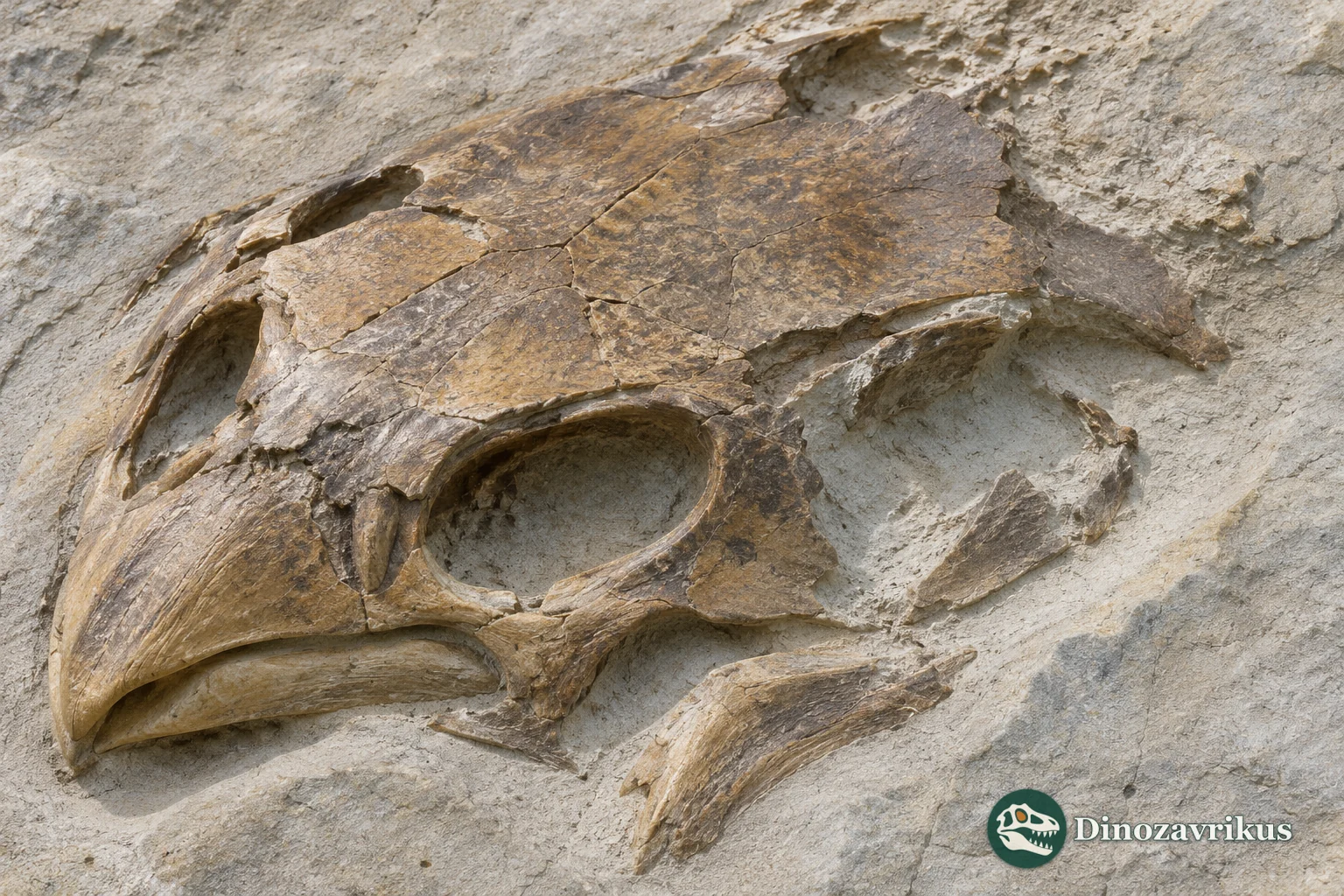
AE28 has triangular crushing surfaces on the palate. Its assignment rests on shell material of similar age at the same locality, without a skull and shell preserved together.
The Laño turtle was first described in Polysternon. A new comparison of its type bone with more complete shells led researchers to transfer it to Iberoccitanemys.
How the genus got its name
Philippe Matheron described the Fuveau Basin turtle in 1869 as Pleurosternon provinciale. Alessandro Portis placed it in the genus Polysternon in 1882. The type species has been confirmed in Campanian beds of southern France. The Muséum national d’Histoire naturelle in Paris lists a figured carapace among the specimens catalogued as MNHN.F.VIR15.
The carapace of P. provinciale has fine ridges, a broad, shallow notch in the front margin and a first vertebral scute that reaches the first peripheral bone. The combined pattern distinguishes it from similar shells referred to Foxemys.
An isolated skull with broad palatal surfaces
Haiyan Tong and Eugene Gaffney described AE28 from Campanian beds at Villeveyrac. The site yielded shell fossils resembling the type species, and the authors provisionally assigned the skull on the strength of that association. A skull attached to a diagnostic shell would provide a stronger test.
The paired crushing surfaces in the roof of the mouth are narrow at the front and broaden towards the rear. A similar arrangement occurs in Foxemys and helps place the skull among bothremydid side-necked turtles. The palate alone leaves the precise diet open.
Why the Spanish species was reassigned
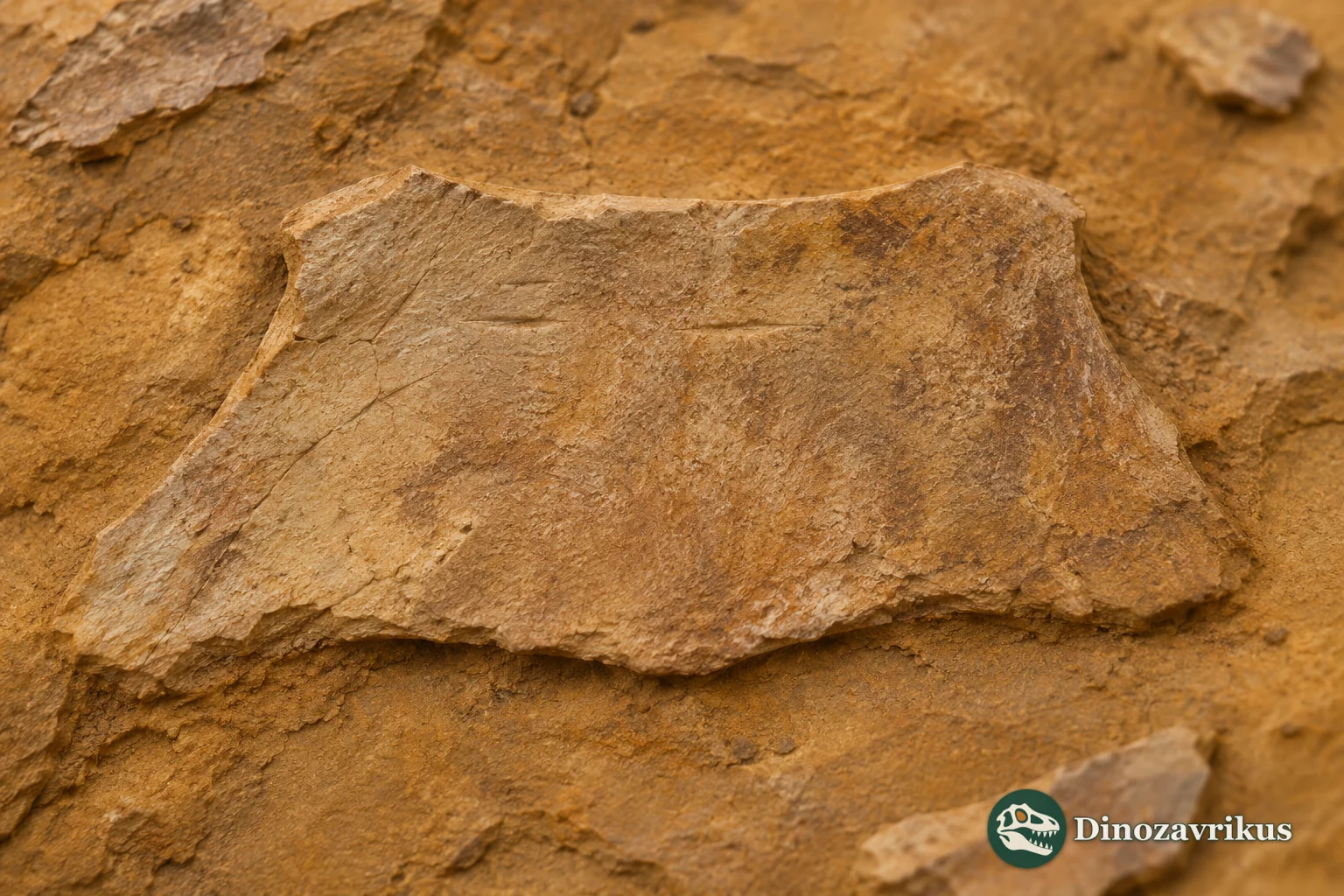
The name Polysternon atlanticum was originally based on MCNA 6316 from Laño in Spain. The type bone is a nuchal, the median plate at the front of the carapace. In 2021 Adán Pérez-García, Francisco Ortega and Xabier Murelaga compared it with more complete shells and transferred the species to Iberoccitanemys.
The river deposits at Laño also preserve Dortoka, a representative of a separate branch of side-necked turtles. These finds document the diversity of the Spanish fauna. Confirmed records of the Polysternon type species are from southern France.
Frequently asked questions
Why does the name Pleurosternon appear in older publications?
Matheron initially named the species Pleurosternon provinciale. Portis later established Polysternon for it.
Was the French skull found attached to a shell?
AE28 was recovered separately. Shells resembling the type species from the same locality informed its provisional identification.
What does side-necked mean?
Living side-necked turtles bend the neck sideways. Skeletal characters place Polysternon among their extinct relatives.
Why is Polysternon marked in Spain in older publications?
The Laño turtle was first named Polysternon atlanticum. A 2021 revision transferred it to Iberoccitanemys after re-examining the type material.