

Gasparinisuchus peirosauroides was a Late Cretaceous crocodyliform from Argentina. Its best-known fossil is a skull from Neuquén Province. The skull was long treated as an Argentine record of Peirosaurus, a genus originally described from Brazilian material.
Quick facts
| Species | Gasparinisuchus peirosauroides |
|---|---|
| Group | Peirosaurid notosuchian |
| Age | Santonian to early Campanian |
| Localities | Neuquén and Mendoza, Argentina |
| Principal fossil | Skull and lower jaws, MOZ 1750 PV |
| Rock units | Bajo de la Carpa and Anacleto formations |
What can the fossils tell us?
The skull and jaws record the shape of the head and the placement of enlarged teeth. Bones from behind the skull mentioned in early descriptions were missing when the type was reassessed.
Maxillary characters support referral of the specimen from the Anacleto Formation. It comes from younger deposits than the Neuquén skull.
The front of each jaw contains enlarged teeth. Some crowns are damaged, and the fossil jaws do not identify particular prey.
Two finds from different rock units
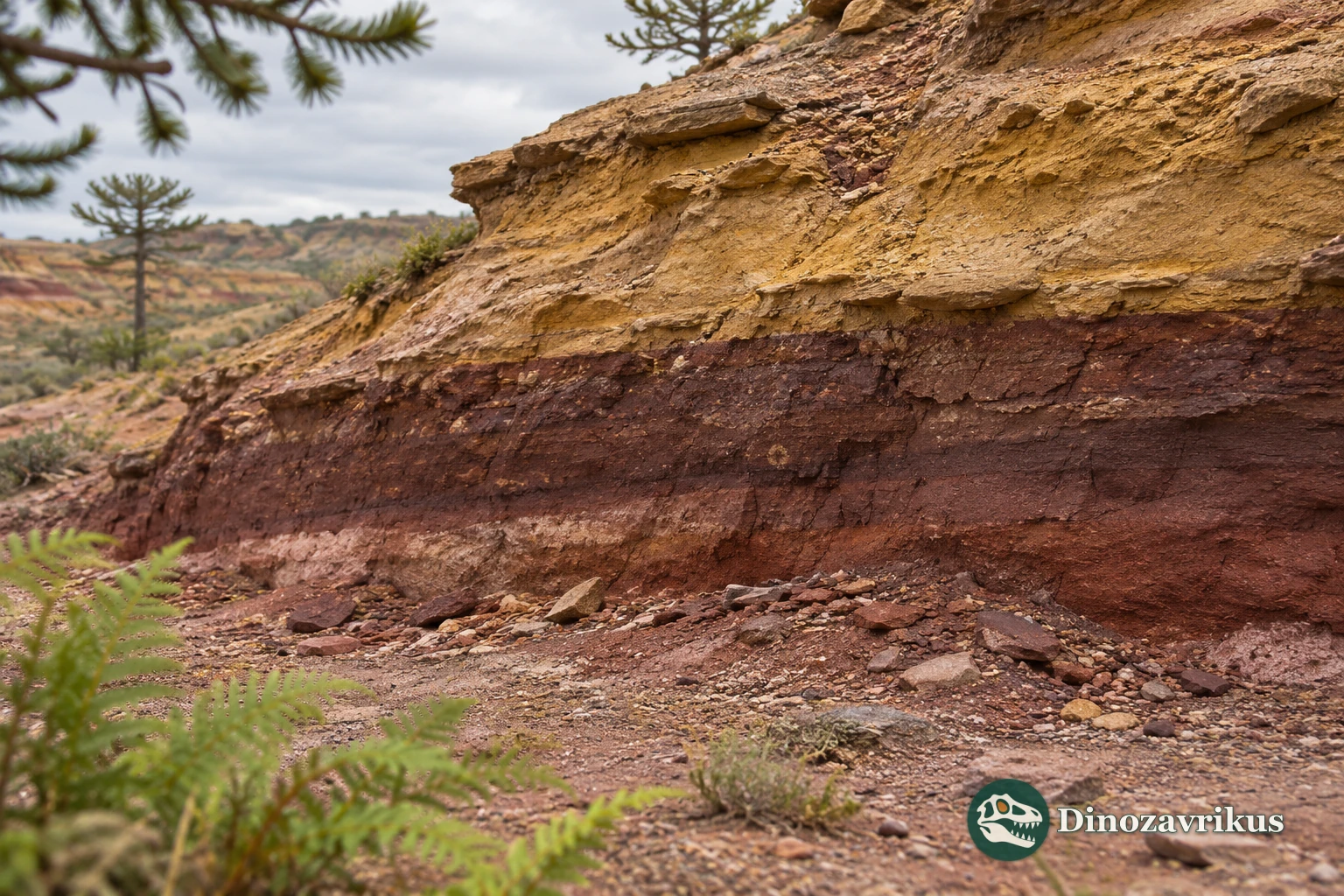
The type, MOZ 1750 PV, came from Loma de la Lata in Neuquén Province. The skull and lower jaws are from the Santonian Bajo de la Carpa Formation. Early descriptions also recorded associated bones from behind the skull, but those bones could not be located when the material was reassessed in 2012.
Specimen PV-CRIDC-12 came from the early Campanian Anacleto Formation south of Malargüe in Mendoza Province. It includes the right premaxilla and maxilla, isolated teeth and part of the postcranial skeleton. Features of the maxilla were particularly important for matching it to the older skull.
A broad snout and uneven tooth row
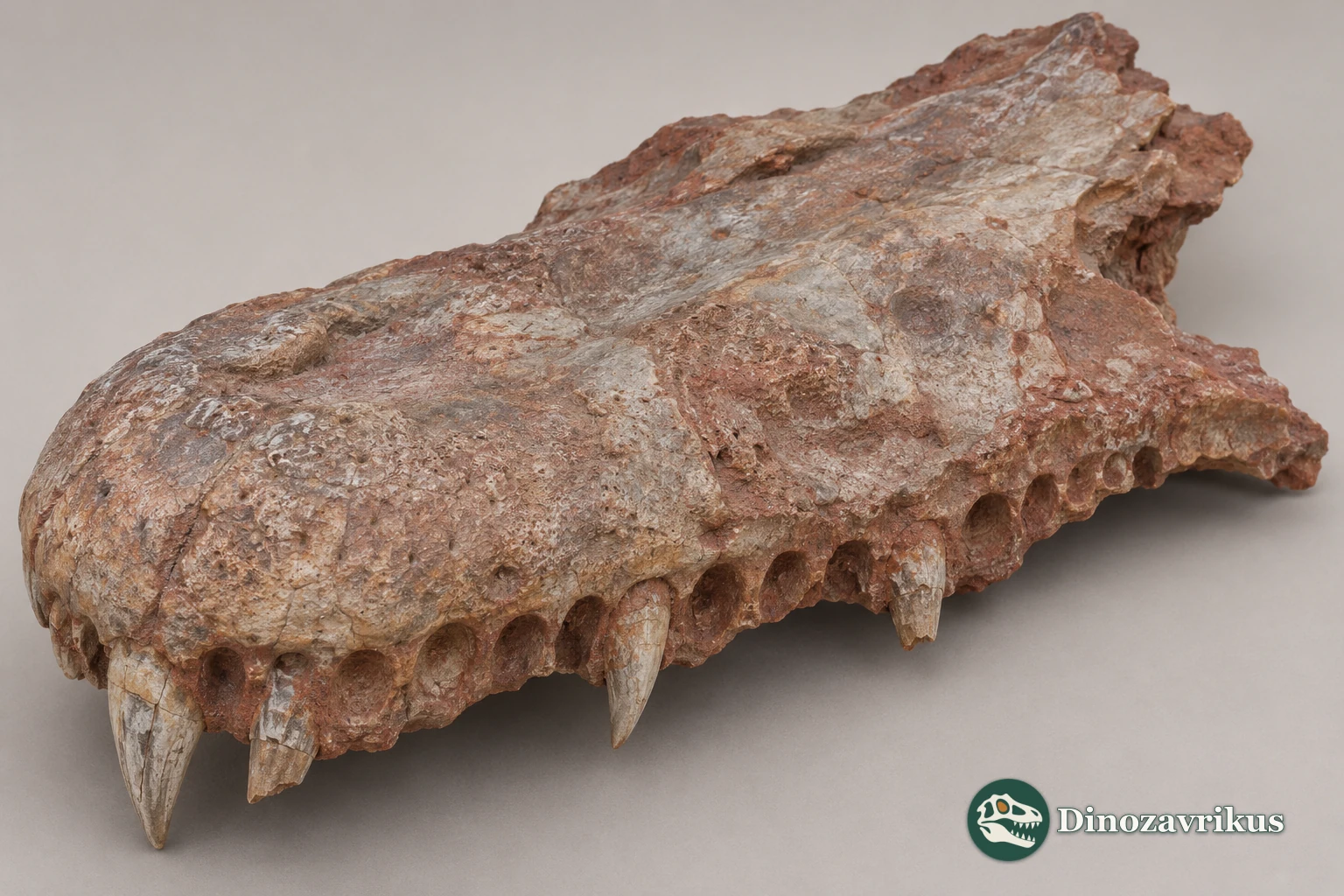
The type skull has a snout nearly as wide as its temporal region. On each side there are five premaxillary tooth positions, at least fourteen in the maxilla and eighteen in the lower jaw. The enlarged fourth lower tooth fitted into a shallow notch between bones of the upper jaw.
The jaws of Gasparinisuchus and its fellow peirosaurid Hamadasuchus allow comparisons of enlarged front teeth and smaller teeth elsewhere in the row. The Gasparinisuchus specimens give no direct evidence of the animals it ate.
How the genus was recognised
Zulma Brandoni de Gasparini used the Argentine skull when naming Peirosauridae, at a time when it was considered a specimen of Peirosaurus torminni. Comparison with the Brazilian type showed that Gasparinisuchus had a shorter premaxilla, a smaller depression around the external nostril and more closely spaced front teeth.
Agustín Martinelli and colleagues established the Argentine genus in 2012. Its name honours Gasparini for her research on South American crocodyliforms.
Frequently asked questions
When did Gasparinisuchus live?
The type skull comes from Santonian deposits. A second specimen is known from the younger, early Campanian Anacleto Formation.
What shape was its snout?
It was broad and rounded at the front. In the type skull it is nearly as wide as the temporal region.
Why was it originally identified as Peirosaurus?
The Argentine skull was assigned to the Brazilian species before a reassessment found differences in the shape of the muzzle and the spacing of its front teeth.
Who was Gasparinisuchus named after?
The name honours Argentine palaeontologist Zulma Brandoni de Gasparini, who studied South American crocodyliforms.