

Gegepterus changae is known from two incomplete fossils in western Liaoning. Its many slender teeth and surviving bones allow comparison with other ctenochasmatoid pterosaurs. Neither fossil records a particular meal, living colour or a complete wingspan.
Quick facts
| Scientific name | Gegepterus changae; originally spelt changi |
|---|---|
| Holotype | IVPP V 11981, partial compressed skeleton |
| Second specimen | IVPP V 11972, additional skull and body bones |
| Locality | Sihetun near Beipiao, Liaoning, China |
| Rock and age | Lower Yixian Formation, Early Cretaceous |
| Teeth | Around 150 slender teeth estimated in the first description |
| Wingspan | Not directly measurable from a complete wing |
What can the fossils tell us?
IVPP V 11981 preserves parts of the skull, jaw, neck, shoulder, wings, pelvis and hind limbs. Not all elements remain articulated.
The original authors estimated around 150 slender teeth in both jaws. Tooth shape informs feeding hypotheses but does not identify prey.
IVPP V 11972 preserves rear skull and body elements poorly known from the holotype. Both specimens were interpreted as immature.
A dark mineralized area and fine fibres behind the holotype skull cannot establish a whole body covering or colour.
Two fossils from Sihetun
Wang Xiaolin and colleagues named the first fossil, IVPP V 11981, in 2007. It came from Sihetun near Beipiao in Liaoning Province. Its skull and lower jaw, cervical vertebrae, coracoid, wing elements, pelvis and hind limbs are flattened in a slab. Some parts lie apart. Their association with one individual was inferred from position in the rock rather than observed in life.
The species first appeared as Gegepterus changi. The ending was subsequently corrected to changae, the spelling used in a 2011 study of specimen IVPP V 11972. This is a nomenclatural correction, not a second species. The newer specimen added rear skull and body anatomy. Both individuals were interpreted as immature from their bones; the size difference alone does not establish sex or exact individual age.
Jaws with many thin teeth
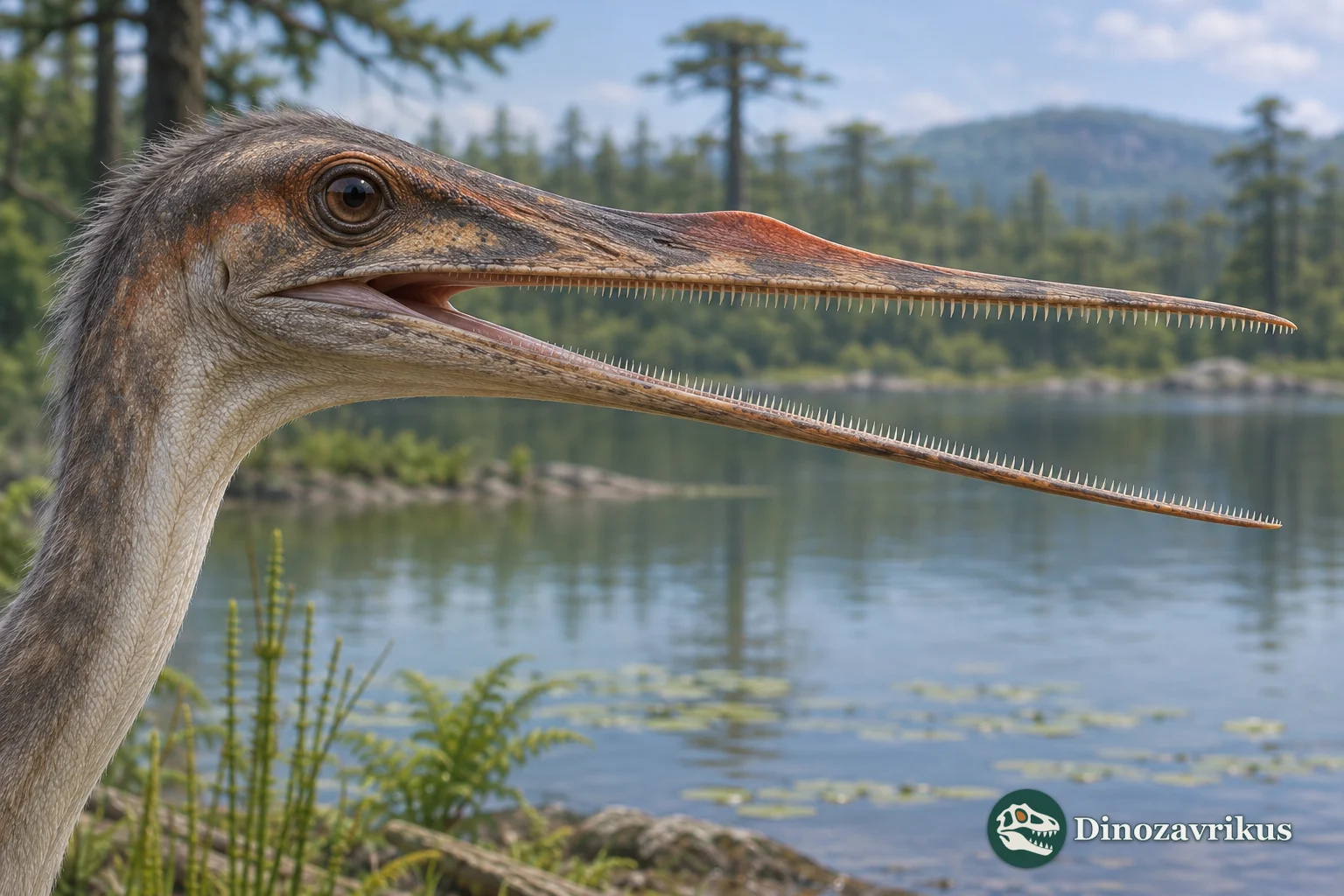
Gegepterus had long narrow jaws and many slender teeth. The first study estimated approximately 150 teeth overall. Teeth in sockets along the jaws and a small bony crest at the front of the snout help researchers compare it with other ctenochasmatoids. The second fossil clarified features of the nasal bones.
These teeth may have helped hold small food items, but neither specimen preserves prey. Ctenochasma demonstrates the range of fine-toothed pterosaur jaws. Similar teeth do not prove identical feeding movements or prey.
Bones, tissue traces and burial
Small size and the state of bone fusion helped the authors assess both specimens as young. Their incomplete wings do not directly yield an adult wingspan. Measurements of preserved bones are firmer than the dimensions of an animal drawn in flight.
Behind the holotype skull, the original team described dark material and fine unbranched fibres. This is a limited soft-tissue trace, not a map of body colour or a complete coat. Several skeletal parts moved before final burial. The authors inferred a quiet lake setting and some disarticulation from the sediment and bone positions; nobody observed the burial event.
The lake deposits and life art
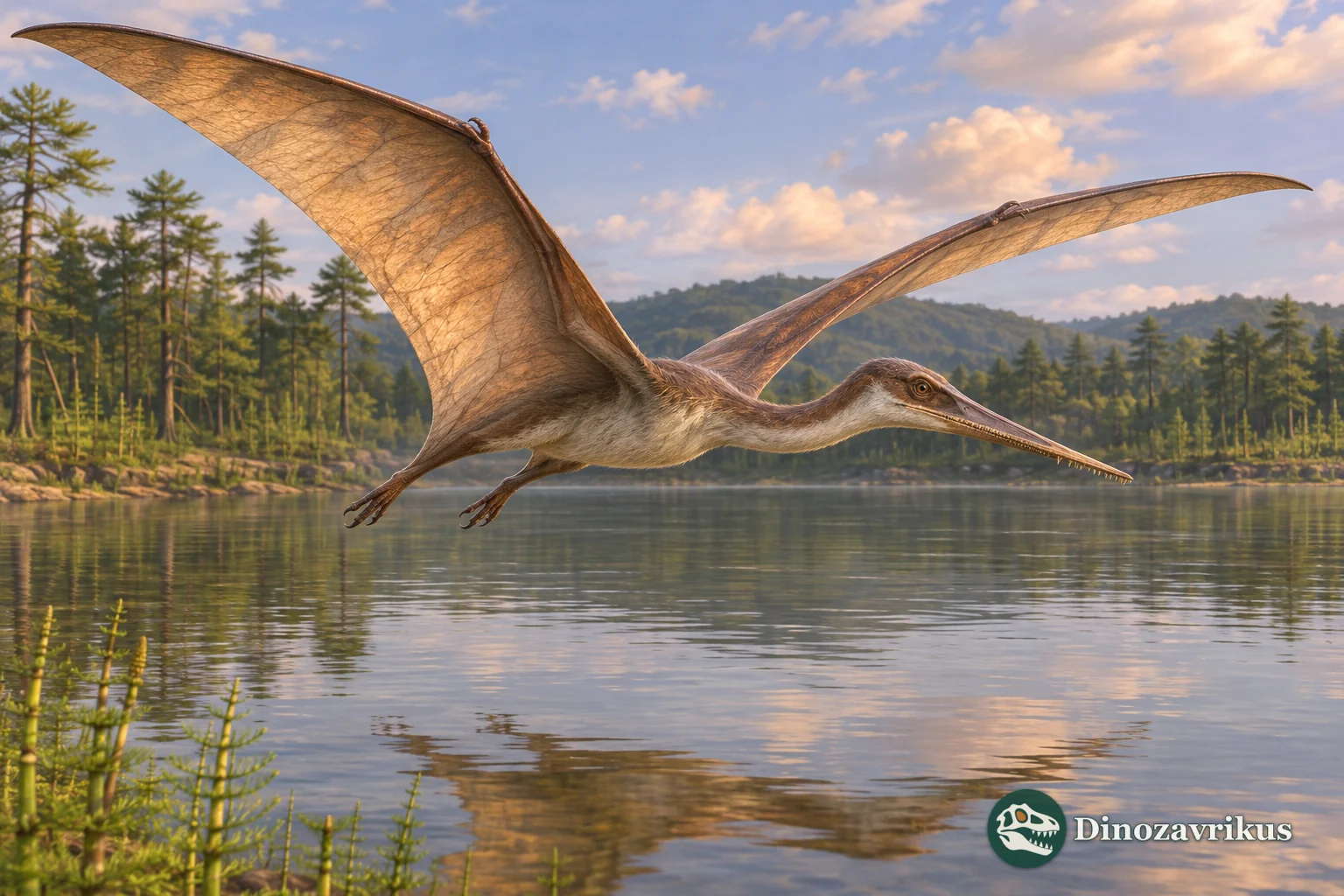
The Jianshangou Bed of the lower Yixian Formation belongs to the Early Cretaceous and preserves a diverse lake environment. Eosipterus from other Early Cretaceous Liaoning deposits offers a comparison with nearby pterosaur diversity. Lake sediment alone does not show that Gegepterus always lived at the water's edge or ate only aquatic prey.
The cover and flight scene imagine the living animal. Pose, colour and particular plants are artistic choices. The bones constrain aspects of form but do not record an individual's flight.
Frequently asked questions
Where was Gegepterus found?
Both known specimens came from the Sihetun area near Beipiao in Liaoning, China, in the lower Yixian Formation.
Why do changi and changae both appear?
The 2007 description used changi. A later nomenclatural correction changed the ending to changae; subsequent work uses the corrected name.
Can its exact wingspan be measured?
No. Both skeletons are incomplete, and neither preserves an entire outstretched wing. Any whole span would require reconstructed missing parts.
What did Gegepterus eat?
Numerous slender teeth suggest ways to catch small food, but no prey or stomach contents identify its actual diet.