

Gelastops was a very small Paleocene mammal known from lower jaws and isolated teeth in western North America. Its best-known fossils are dental, and the crowns are only a few millimetres across. They provide measurable evidence for tooth anatomy but a much narrower account of the animal than a complete skeleton would allow.
The genus is part of the ancient mammal catalogue. Its named species and referred fossils come from several Paleocene faunas, so each occurrence needs to be tied to its own specimen and geological context.
Quick facts
| Scientific name | Gelastops Simpson, 1935 |
|---|---|
| Type species | G. parcus Simpson, 1935 |
| Type specimen | USNM 6148: right lower jaw with canine, M1, M3 and alveoli |
| Age | Middle Paleocene; referred material spans Torrejonian and Tiffanian records |
| Localities | Montana, Wyoming and a referred Ohio Creek specimen from Colorado |
| Type M1 | 3.5 × 2.3 mm |
| Diet and body mass | Not securely established from the fragmentary dental record |
Which fossils make up the Gelastops record?
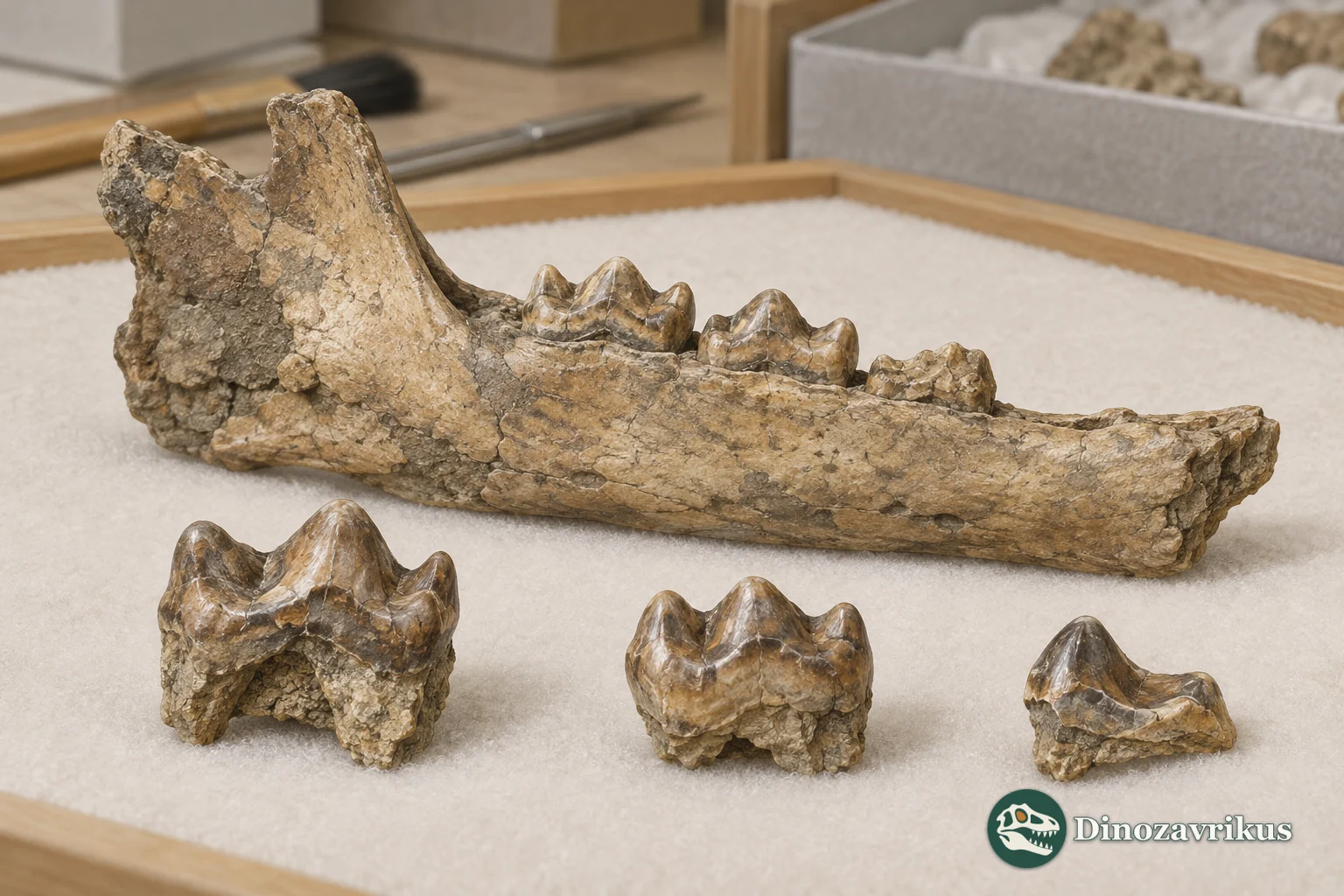
The right mandible retains a canine, M1, M3 and alveoli for missing teeth. It documents part of the lower tooth row, not a complete skull or skeleton.
Simpson measured the type M1 at 3.5 by 2.3 mm and described molar and premolar characters. Tooth size shows the scale of the fossil, not the animal’s mass.
G. parcus was described from Montana’s Fort Union Formation; G. joni is associated with Wyoming’s Hanna Basin. A separate Ohio Creek tooth was referred to Gelastops sp. These are not one skeleton or one bed.
Simpson used a question-marked Deltatheridiidae and Didelphodontinae assignment. Later classifications varied as authors changed taxon sampling and dental character sets.
Simpson’s description and the type jaw
George Gaylord Simpson named Gelastops parcus in 1935 in a paper on new mammals from Montana’s Fort Union Formation. The holotype is USNM 6148, a fragment of a right lower jaw retaining a canine, first and third molars, and alveoli that mark the positions of missing teeth. Simpson credited A.C. Silberling as collector.
The type M1 measures 3.5 mm in length and 2.3 mm in width. Simpson also reported an M3 length of 2.7–2.9 mm. These are measurements of individual crowns, not the whole jaw or body. His diagnosis compared the more upright canine, crowded premolars and relative proportions of the lower molar trigonids with Didelphodus.
The Fort Union Formation and age
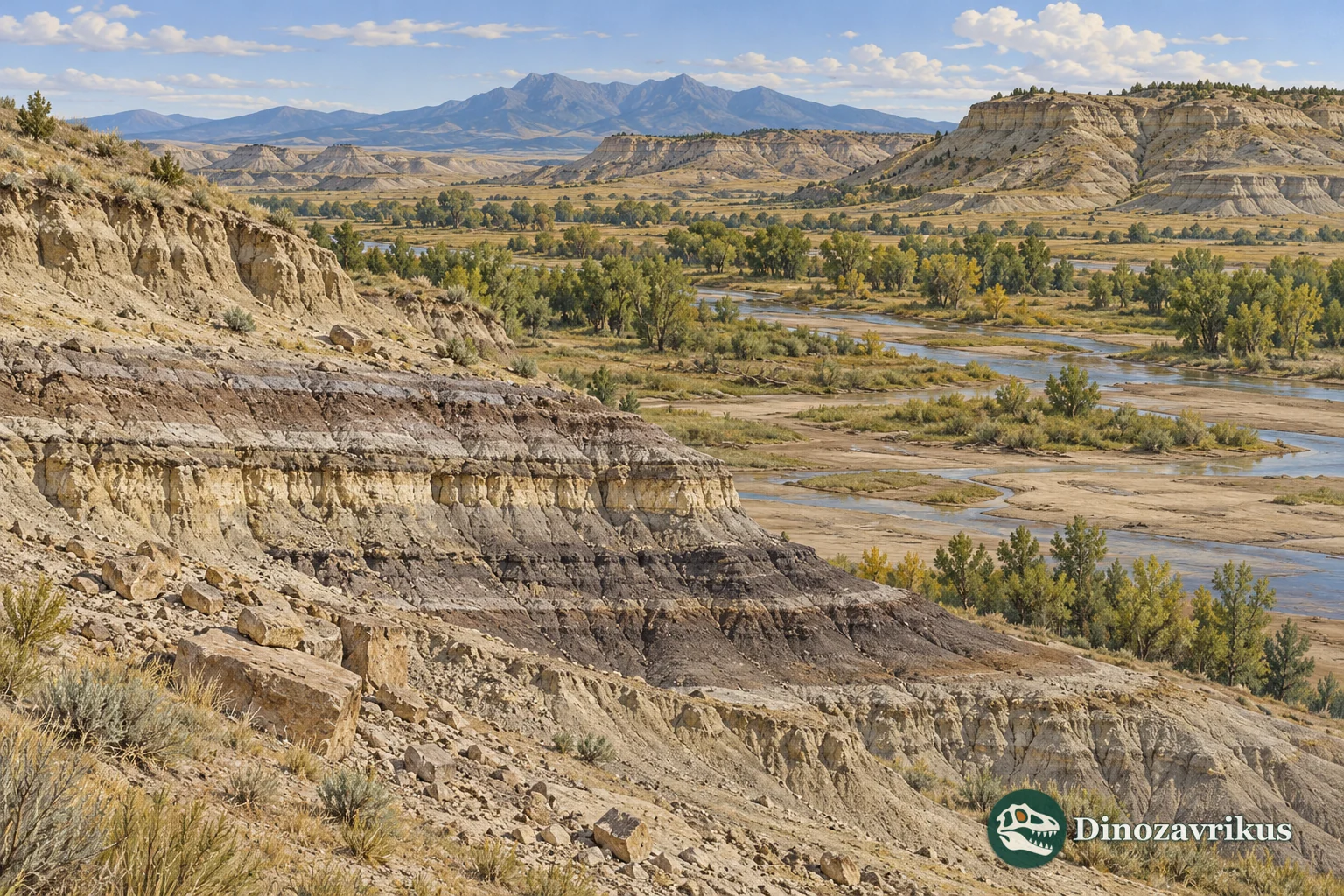
The type species comes from the Fort Union Formation in Montana’s Crazy Mountain field. Simpson noted that the type probably came from the same level as Gidley Quarry, while some referred specimens were collected at the quarry itself. The word ‘probably’ matters: the original field record does not pin the holotype to a measured bed with the precision of a modern excavation log.
Simpson described the horizon as middle Paleocene. Modern North American land-mammal ages divide this interval more finely, but assignments should be made for individual localities rather than applied to the genus as a single point in time. The genus includes material from more than one region and biochronological interval.
Named species and referred occurrences
Gelastops joni was named by J.K. Rigby from Swain Quarry in Wyoming’s Hanna Basin. It belongs to a Torrejonian fauna of the middle Paleocene. This record extends the discussion beyond the Montana type species, but the two species should remain separate when comparing anatomy and age.
Later comparative syntheses include Emperodon acmeodontoides within G. parcus. That is a taxonomic synonymy in the history of names, not a new species or an additional skeleton. A separate upper first molar, UCM 99898, from Colorado’s Ohio Creek Formation was referred to Gelastops sp. The published specimen is fragmentary and was assigned at an open-nomenclature level; it should not be treated as a secure third species.
Dental anatomy and classification
Researchers diagnose the genus from combinations of upper and lower tooth characters. Simpson described an elongated trigonid on M1, shorter and higher trigonids on M2–M3, smaller posterior molars relative to M1, and a reduced metaconule with no evident hypocone on the referred upper molar. A later synthesis reported an average m2 length of about 2.5–2.9 mm for G. parcus. Such values refer to samples and individual teeth, not an invariant measurement for every fossil.
Simpson placed the genus tentatively in ?Deltatheridiidae, subfamily Didelphodontinae. Higher classifications later changed as ideas about early placentals and extinct mammal groups developed. Halliday and colleagues’ 2017 review discussed Gelastops among an unstable radiation of mammals with carnivorous-looking morphology, while noting that some proposed links had little support across analyses. Fragmentary dental material leaves the result sensitive to the taxa and characters sampled.
Other Paleocene mammals, including Pantolambda, show the diversity of communities that followed the end-Cretaceous extinction. Their presence does not prove close relationship or establish the food of Gelastops.
Body size, diet and reconstruction
The very small teeth and jaw indicate a small mammal, but a reliable body length and mass have not been established. There is no associated complete skeleton from which to check proportions. Converting one crown measurement into a precise weight would create unjustified accuracy, because animals with similarly sized teeth can have different body shapes.
Tooth structure permits functional comparisons, but the exact diet remains unknown. The sources consulted here do not report stomach contents or a chemical analysis that identifies specific food. Family-level analogies can suggest hypotheses, but the unstable position of the genus makes those transfers especially uncertain.
The fossils do not reveal coat, colour, speed, posture, reproductive biology or social behaviour. The illustration communicates a possible scale and setting; its soft tissues and body outline are artistic choices.
Frequently asked questions
What is the holotype of Gelastops parcus?
USNM 6148 is a right lower jaw with a canine, M1, M3 and alveoli for missing teeth. A.C. Silberling collected it, and Simpson described it in 1935.
Where has Gelastops been found?
The type species is associated with Montana’s Fort Union Formation, while G. joni is associated with Swain Quarry in Wyoming. Isolated teeth have also been referred to the genus elsewhere.
How large was Gelastops?
The type M1 of G. parcus is 3.5 mm long. A reliable body length or mass is unknown because no complete skeleton is available.
What did Gelastops eat?
Its exact diet is unresolved. Tooth anatomy supports comparisons of food processing but does not identify particular foods.