

Pantolambda is an extinct pantodont known mainly from Paleocene deposits of western North America. Its fossils include teeth and skeletal remains, especially from the San Juan Basin in New Mexico. The genus is notable because microscopic tooth tissues have been used to investigate development before and after birth, a rare line of evidence for an early Cenozoic mammal.
The genus belongs in the ancient mammal catalogue. It can be compared with the pantodont Titanoides, while South American notoungulates such as Isotemnus and Notopithecus represent separate branches rather than close equivalents.
Quick facts
| Scientific name | Pantolambda Cope, 1882 |
|---|---|
| Type species | P. bathmodon Cope, 1882 |
| Group | Pantodonta; Pantolambdidae |
| Age | Paleocene; many San Juan Basin records are Torrejonian |
| Range | Western North America, especially the San Juan Basin, New Mexico |
| Known remains | Teeth, skulls and postcranial bones with varying degrees of association |
| Mass estimate | About 42 kg in one comparative model; method-dependent |
| Key evidence | Dental histology and growth lines |
What do Pantolambda fossils reveal?
Microscopic sections show the formation of enamel and dentine and lines interpreted in relation to birth. Calendar ages and the duration of developmental stages are estimates derived from tissue-growth models.
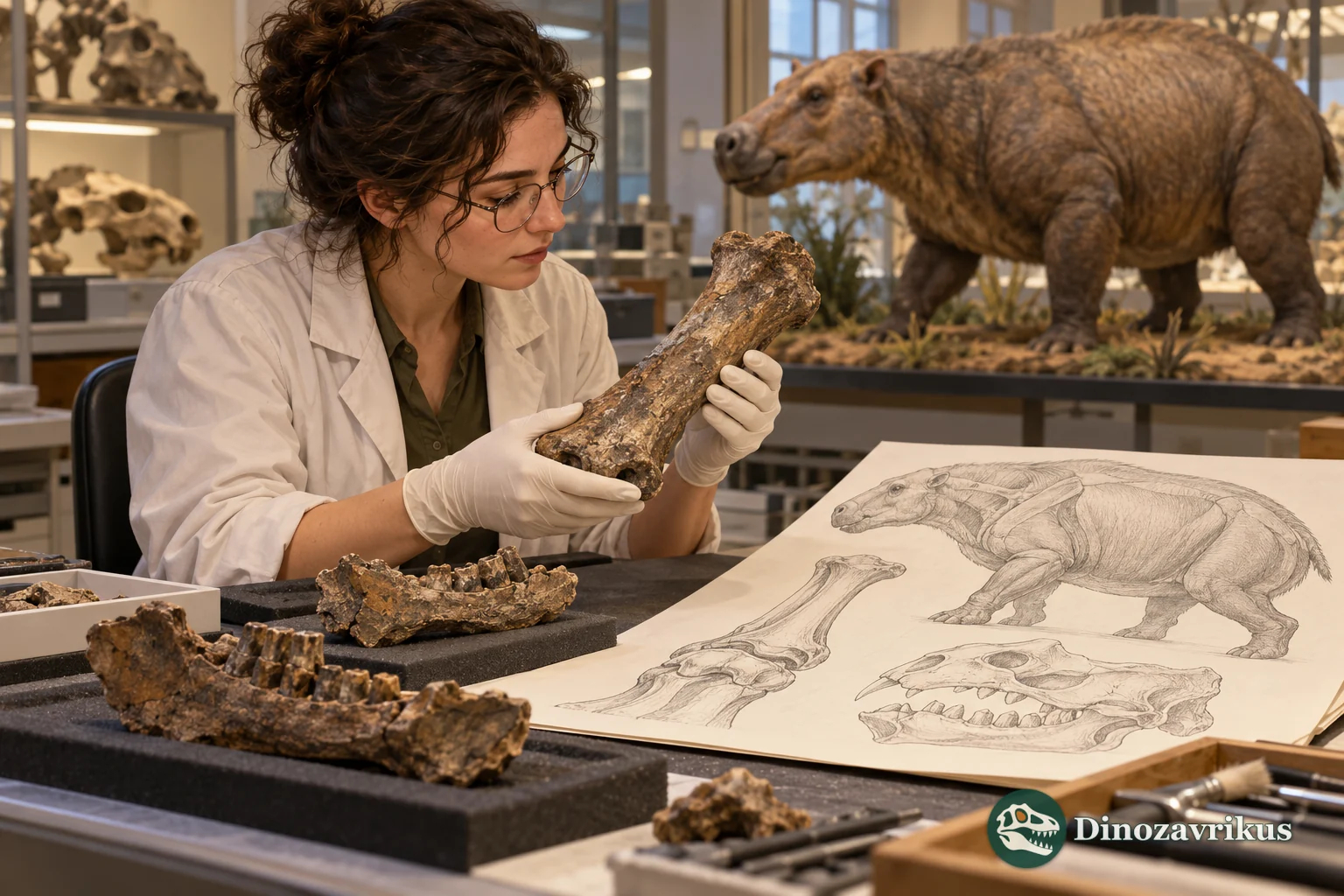
Collections include skulls and postcranial bones, and some localities preserve remains of several individuals. Bones from different finds cannot be combined into one complete skeleton without evidence that they belong together.
Dental histology has been used to estimate prenatal tooth formation, growth and likely nursing duration. These interpretations rely partly on comparisons with living mammals and on assumptions about tissue-growth rates.
San Juan Basin sediments and associated fossils help reconstruct regional environments and burial conditions. They do not establish the precise habitat or diet of every Pantolambda individual.
Name, discoveries and collections
Edward Drinker Cope established Pantolambda in 1882; its type species is P. bathmodon. Early Paleocene collections often relied on isolated teeth and bones, so later comparisons have had to test whether specimens assigned to a species share a diagnostic combination rather than merely a similar molar.
The San Juan Basin of New Mexico is a major source of material. A Smithsonian collection record lists a specimen of P. bathmodon from the Nacimiento Formation, collected by Jacob L. Wortman in 1896. The entry documents one museum object and its recorded provenance; it is not a complete account of the genus or a precise bed-level date.
Other finds include fragmentary and more associated remains. A study of one New Mexico bone accumulation identified at least four individuals from calcanei, with histological work suggesting a larger minimum count. This describes one deposit and does not demonstrate a stable herd or family group.
Species and classification
Pantolambda is a pantodont, and Pantolambdidae takes its name from the genus. Pantodonts were a diverse group of early placental mammals. Their broader relationships depend on the taxa and anatomical characters included in each analysis, so simplified diagrams should not be read as a settled sequence of direct ancestors.
In addition to the type species P. bathmodon, the literature discusses P. cavirictum and P. intermedium. Their known material differs in completeness. A 2024 anatomical study of limb bones compares specimens attributed to these forms and underscores why species assignments should rest on combinations of characters rather than size alone.
Taxonomic names in museum databases and older publications may reflect different revisions. A change in combination or a questioned referral does not represent a new discovery; it records a revised interpretation of existing material.
Teeth, jaws and body-size estimates
Dental anatomy is central to identifying Pantolambda. Crown shape, premolar and molar proportions, and wear can be compared among specimens. Wear changes through an animal’s life and may also reflect food properties and grit, so a single worn tooth cannot establish a precise menu.
Comparative studies have reported a body-mass estimate near 42 kilograms for Pantolambda. This is a model-derived value based on selected measurements and comparison animals, not a direct weighing of a complete skeleton. It should be treated as an approximate estimate rather than a fixed mass for every individual.
Growth and development from dental histology
Microscopic study of pantodont teeth has identified growth lines and patterns in enamel and dentine. Some structures began forming before birth, and the first permanent molar started developing early. Authors have estimated that parts of tooth formation took weeks to months, depending on the assumed rate at which tissues accumulated.
Lines interpreted as birth-related were used together with tooth growth and comparisons to living mammals to propose a gestation lasting several months and a comparatively short nursing period. This is an unusual and informative inference from fossils, but the numerical durations are indirect: no fossil records a calendar of pregnancy, and estimates depend on the comparative model.
Tooth size and bone histology can also inform age estimates for individuals in a particular deposit. A concentration of young adults at one locality should not be generalized to the entire species or population; preservation and local burial events can shape the sample.
Diet, locomotion and environment
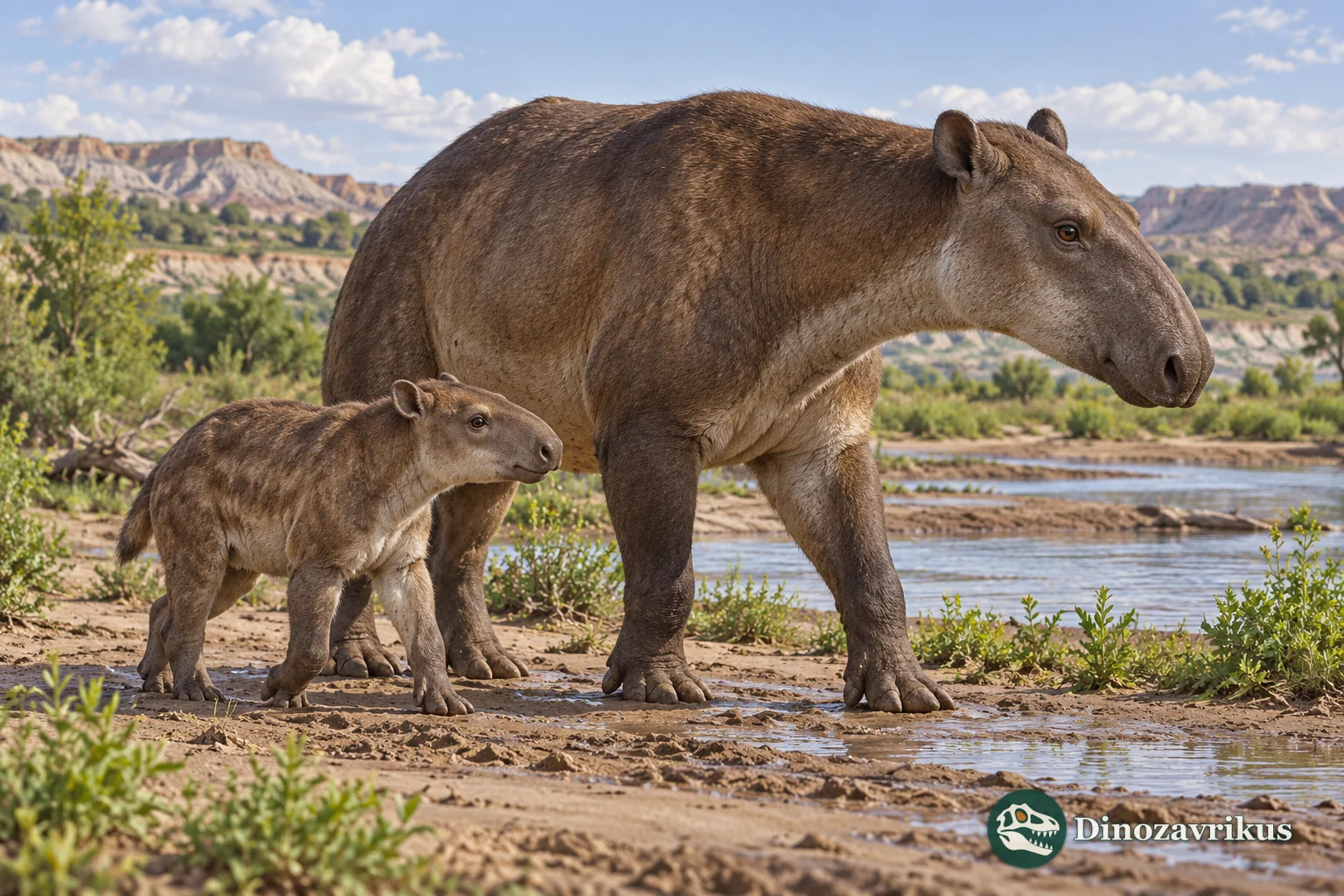
Pantodonts differed in dental form and body size. Crown shape and wear can help assess how Pantolambda processed food, but a specific diet requires several independent lines of evidence. The fossils discussed here do not justify naming particular plant species as its food.
Limb and joint anatomy can inform support and terrestrial locomotion, although incomplete skeletons limit conclusions about posture and speed. Reconstructions generally show a four-legged land mammal, but exact gait, behaviour, coat and colour are not preserved.
Nacimiento Formation sediments and their associated fauna provide regional context for Paleocene landscapes of the San Juan Basin. Transport, breakage and concentration of bones may have combined remains in ways that do not represent one moment of life.
What can be concluded
Pantolambda is known through museum teeth and bones, fossil localities and microscopic dental tissues. Histology has supported rare hypotheses about prenatal development and early growth. Species limits, behaviour, exact diet and numerical growth estimates remain questions for comparative research rather than direct observations of a living animal.
Frequently asked questions
When did Pantolambda live?
It lived in the Paleocene of North America. Many San Juan Basin finds are assigned to the Torrejonian, but the age should be checked against the particular locality and specimen.
Where have Pantolambda fossils been found?
The San Juan Basin of New Mexico is a major source. Other specimens have been reported from western North America.
What can its teeth reveal about development?
Growth lines and dental tissues have been used to estimate tooth formation, birth and early growth. A gestation of several months and short nursing period are research inferences, not events directly preserved as such.
How large was Pantolambda?
One comparative model estimated a mass near 42 kilograms. The value depends on measurements and method and is not a direct measurement of a complete skeleton.