

Isotemnus was a South American notoungulate known mainly from teeth and jaw fragments. Isolated limb bones referred to the genus from early Eocene Patagonia add anatomical information, but they do not make up a complete skeleton. A mass estimate of about 50 kilograms comes from comparative scaling of an astragalus, not from a directly measured animal.
The genus was named for Patagonian fossils in the late nineteenth century, and its type species is I. primitivus. Later authors applied the name to material from multiple faunas and ages. Isotemnus is listed in the ancient mammal catalogue. Comparisons with other Patagonian notoungulates such as Pleurostylodon help separate shared group traits from characters known only in particular fossils.
Quick facts
| Scientific name | Isotemnus Ameghino, 1897 |
|---|---|
| Type species | I. primitivus Ameghino, 1897 |
| Group | Notoungulata; early members of Toxodontia |
| Age | Eocene; referrals include early and middle Eocene faunas |
| Range | Patagonia, Argentina |
| Known remains | Teeth, upper and lower jaws, isolated limb bones |
| Mass estimate | About 50 kg, inferred from the astragalus in one study |
| Main limitation | No complete articulated skeleton links all referred material |
What can the fossils tell us?
Upper and lower tooth rows have been described from several Patagonian faunas. The form of the metacone, lingual cingulum and metaconid can distinguish Isotemnus from similar notoungulates, but an isolated tooth may not support a species-level identification.
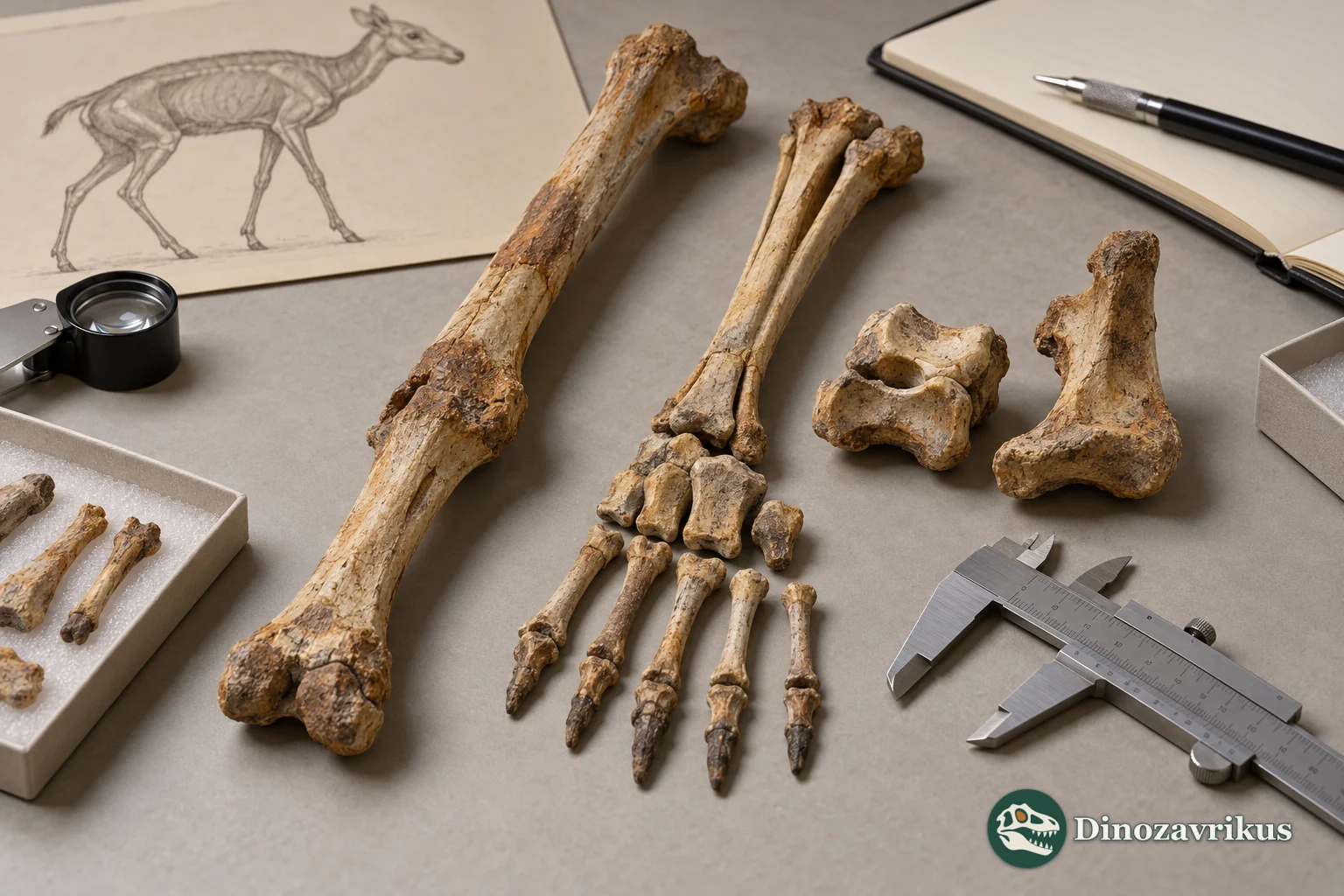
Postcranial remains referred to Isotemnus from the early Eocene Sapoan fauna were compared with later isotemnids. They reveal details of individual joints and weight-bearing surfaces, but do not form one complete articulated skeleton.
A 2020 study inferred a mass of roughly 50 kg from the astragalus. This is not a direct weighing or a measurement from a complete skeleton; it depends on comparative scaling and applies to the studied material.
Isotemnus is usually placed among early toxodontians, while Isotemnidae traditionally groups several Patagonian genera. Some phylogenetic analyses treat the family as paraphyletic, so the family name reflects a taxonomic interpretation rather than a certain clade.
The name and early fossils
Florentino Ameghino introduced Isotemnus in 1897 in his work on Patagonian fossil mammals. The original species list included I. primitivus and other early names based on dental remains. At the time, some Patagonian fossil beds were considered Cretaceous; later geology and faunal comparisons established that important isotemnid localities are Cenozoic.
The genus became more complicated as later researchers referred fossils from different places and ages to it. Systematic accounts list I. primitivus in middle Eocene Gran Barranca assemblages, while teeth from Paso del Sapo were identified only as Isotemnus sp. These records should not be treated as one species unless the material supports that identification.
Teeth and jaws
A 2009 account of the early Eocene fauna of western Patagonia reported two upper maxillae preserving P4–M3 and several mandibular fragments assigned to Isotemnus sp. The authors compared the transverse upper molars, a columnar metacone and the absence of a lingual cingulum. They discussed the lower teeth by the structure of the metaconid and an open talonid basin.
These characters help distinguish the genus from similar forms such as Pleurostylodon, but they do not always identify a species. Isolated teeth lack many skull and skeleton characters, and comparisons across horizons depend on whether their diagnostic features are genuinely equivalent.
Limb bones and the mass estimate
Malena Lorente compared isolated postcranial remains from the early Eocene Sapoan fauna with the limbs of later isotemnids, including Thomashuxleya and Periphragnis. The study describes parts of the humerus and radius as well as the astragalus and calcaneus. Some traits are shared with toxodontians; others resemble smaller notoungulates.
The estimate of roughly 50 kilograms was inferred from the astragalus. It is a comparative estimate rather than a direct measurement. It indicates an approximate scale for the studied remains and places Isotemnus among the smaller members of traditionally defined Isotemnidae; it should not be applied to every fossil referred to the genus.
Age, geography and environment
Patagonian faunas that include Isotemnus belong to more than one regional interval. Reviews list I. primitivus from middle Eocene Cañadón Vaca and Gran Barranca assemblages. Other material comes from the early Eocene Sapoan fauna near Paso del Sapo. Geochronological evidence from volcanic rocks around the Paso del Sapo mammal-bearing localities places the faunas near the late Early–Middle Eocene boundary; correlations vary with the specific section.
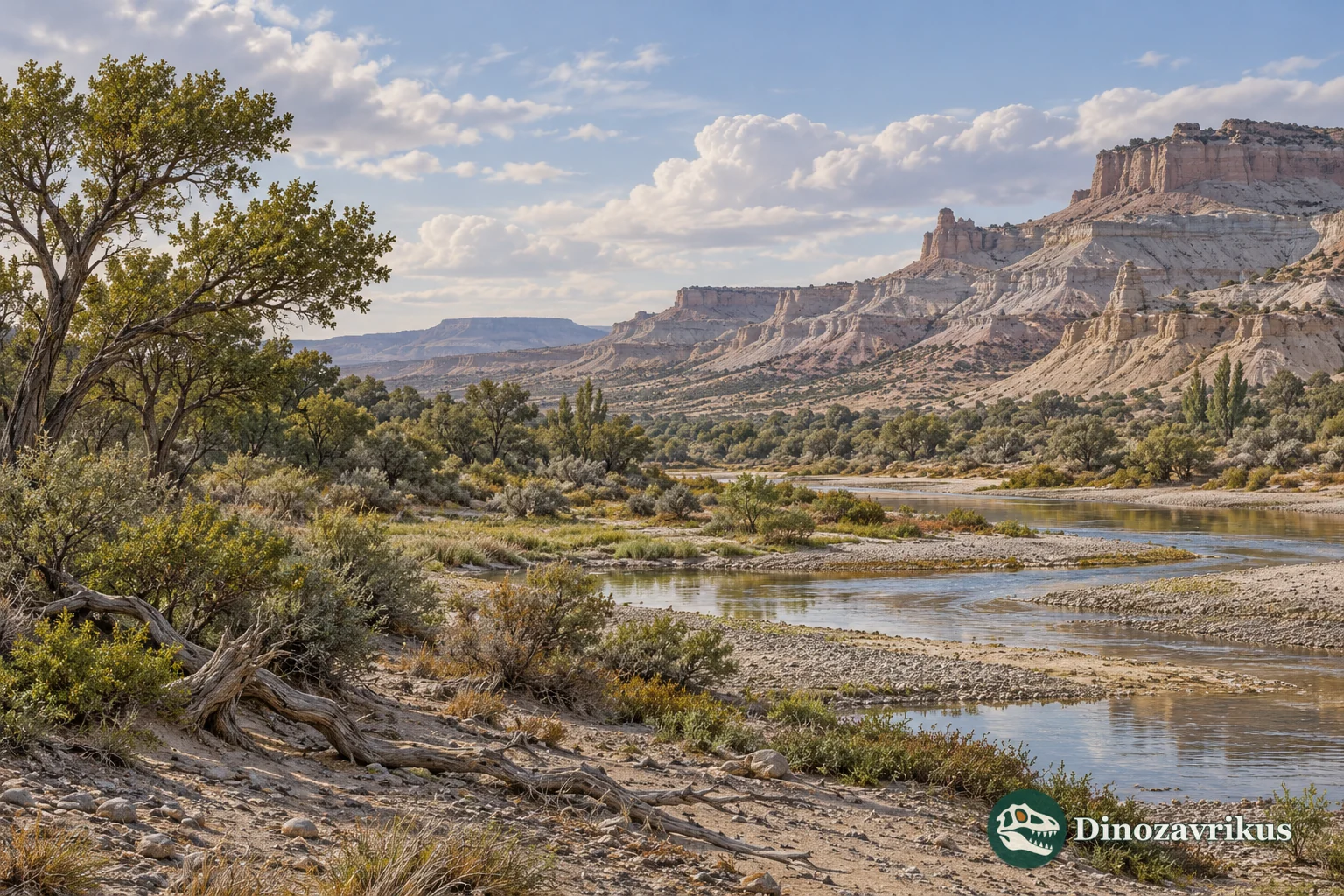
Regional paleobotanical and palynological evidence from western Patagonia points to warm, probably moderately humid subtropical conditions. This describes the broader setting of the fossil localities, not a plant directly eaten by Isotemnus. No stomach contents or coprolites are known for the genus.
Systematic placement
Isotemnus is traditionally assigned to Isotemnidae within Notoungulata. Studies of early toxodontians place isotemnids near the base of that radiation. Some phylogenetic analyses, however, recover Isotemnidae as paraphyletic: its genera may represent successive early branches rather than one exclusive lineage. The family-level classification therefore remains open to revision.
It is also important not to transfer the better-known anatomy of Thomashuxleya directly to Isotemnus. The 2020 comparison estimated some later isotemnids at about four times the mass of Isotemnus. Shared family-level classification does not mean that the genera had identical proportions; conclusions should be tied to each genus’s own fossils.
Limits of reconstruction
Teeth and jaws support broad comparisons with herbivorous notoungulates, but the exact menu is not directly known. Limb bones constrain aspects of joint form and weight-bearing; they do not establish running speed, habitual gait, reproduction, social behaviour or coat colour. A complete-body reconstruction must therefore rely on comparison with relatives.
The cover shows a hypothetical four-legged mammal beside a Patagonian river. Fur, colour and body proportions are not preserved in the known Isotemnus material. The image conveys a plausible general body plan, not a precise reconstruction of one skeleton.
Frequently asked questions
When did Isotemnus live?
The genus is known from Eocene Patagonian faunas. Referrals include early Eocene material from Paso del Sapo and middle Eocene assemblages where the type species I. primitivus is recorded.
How was the estimate of about 50 kg calculated?
A limb-anatomy study inferred it from the astragalus using comparative scaling. It is a model estimate, not the weight of a complete skeleton, and applies to the studied material.
Has a complete Isotemnus skeleton been found?
No. The genus is represented by teeth, upper and lower jaws, and isolated postcranial bones. The available studies do not describe one complete articulated skeleton connecting all this material.
Is Isotemnidae a natural evolutionary group?
That remains unresolved. The family is traditionally used for early Patagonian notoungulates, but some phylogenetic analyses consider it paraphyletic.