

Pleurostylodon was an extinct South American ungulate in the group Notoungulata. Its fossils come from Eocene Patagonia and consist mostly of teeth, jaws and isolated bones. One partial skeleton added evidence about the limbs, but also exposed a common danger in palaeontology: bones from different animals can be combined into a plausible yet inaccurate composite.
Florentino Ameghino named the genus in 1897. Later work discussed several species, especially P. modicus and P. similis. Their study is closely tied to the history of other Patagonian mammals such as Notostylops, whose record also shows why a fossil locality and a single taxonomic name are not enough to prove that every bone belonged to the same animal. This profile is part of the ancient mammal catalogue.
Quick facts
| Scientific name | Pleurostylodon Ameghino, 1897 |
|---|---|
| Group | Notoungulata; traditionally Isotemnidae |
| Age | Eocene, Patagonia |
| Discussed species | P. modicus and P. similis |
| Best associated material | Partial skeleton AMNH 28904 with an upper molar |
| Evidence | Teeth, jaw fragments and postcranial bones |
| Key caution | An older composite skeleton combined three genera |
What can the fossils tell us?
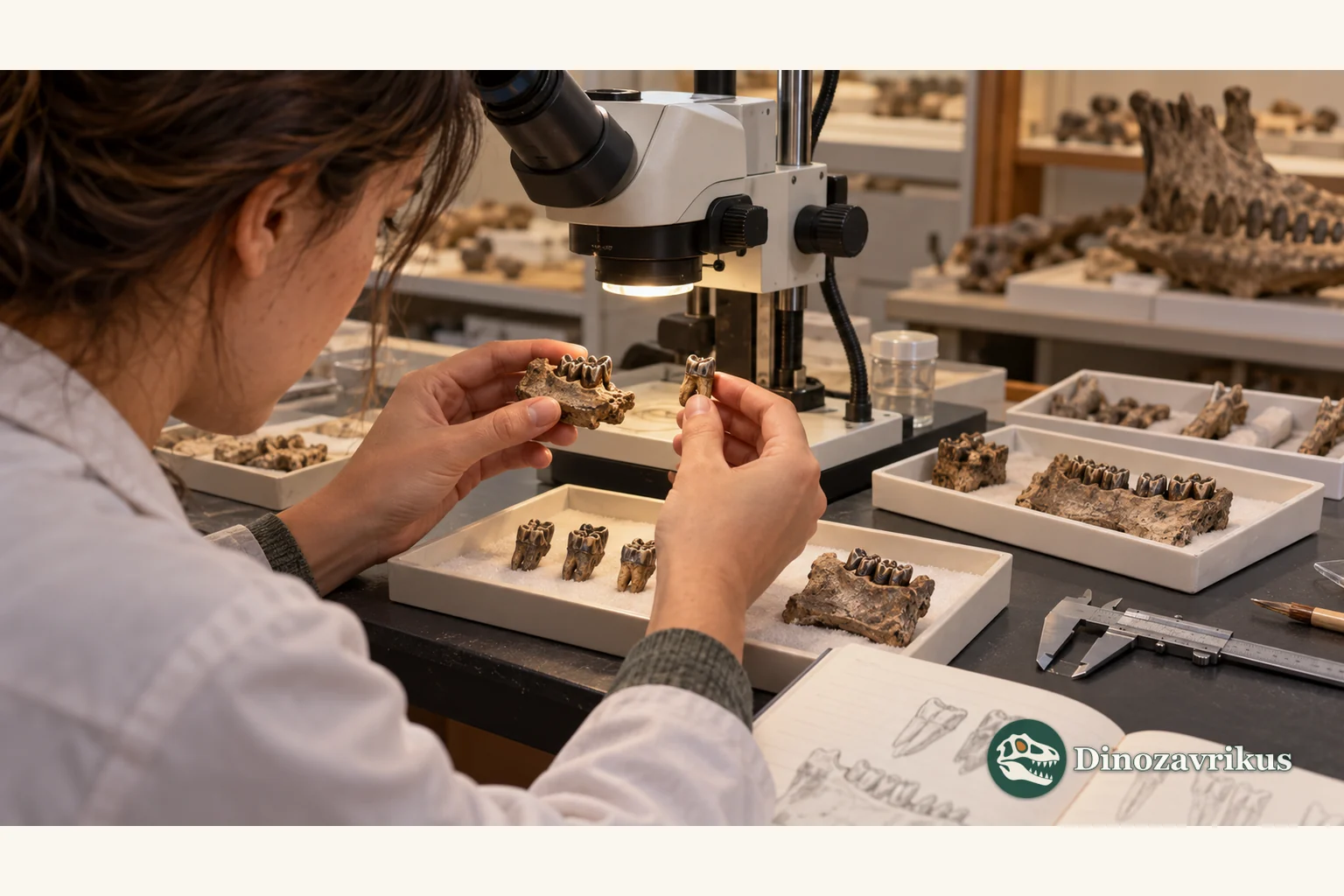
Early identifications relied chiefly on tooth and jaw fragments. They preserve crown shape and wear, but an isolated tooth rarely establishes the whole animal or a precise menu.
A molar found with limb elements supports referring the partial skeleton to P. similis. The association is valuable, but it is neither a complete skeleton nor a basis for assigning every isolated limb bone to the genus.
The elbow and ulna of AMNH 28904 were interpreted as supporting a more crouched forelimb than in Thomashuxleya. This is a functional reading of bone shape, not direct evidence of gait or speed.
Pleurostylodon is commonly placed in Isotemnidae within Toxodontia. Some phylogenetic studies recover isotemnids as a paraphyletic or polyphyletic assemblage of early traits, so that family label does not settle the evolutionary tree.
A name from the early Patagonian collections
Ameghino established Pleurostylodon in 1897 during a period when many South American fossil mammals were named from isolated teeth. The first descriptions predated modern stratigraphic practice, and some early labels for the fossil beds were later revised. Specimens now discussed as Pleurostylodon are from Eocene deposits, not Cretaceous rocks.
P. modicus was among the early named forms; Ameghino later described P. similis. Subsequent authors compared their dental characters with other notoungulates and debated how many distinct species were justified. Wear, tooth position and individual variation can all affect crown shape, so later taxonomic decisions cannot be reduced to the count of names in the original descriptions.
The genus is traditionally included in Isotemnidae, usually within Toxodontia. This is a useful working classification, but phylogenetic analyses have questioned whether Isotemnidae forms one natural branch. Some of the traits used to define it may be primitive features retained by several lineages rather than unique shared innovations.
Teeth and the limits of dental evidence
Dental fossils are the most common evidence assigned to Pleurostylodon. Studies describe low-crowned cheek teeth and details of the molar surfaces; these features can be compared across jaws and isolated teeth. They are less secure when an isolated crown lacks its position in the tooth row, and wear can erase small cusps that once helped distinguish taxa.
A 2019 study of notoungulate incisor enamel included samples identified as cf. Pleurostylodon. The “cf.” qualification signals a tentative comparison, not a certain genus-level referral. The study used thin sections and scanning electron microscopy to compare enamel microstructure. Such work can inform questions about tooth development and functional properties, while the uncertain attribution of a fragment remains a separate limitation.
No complete skeleton provides a reliable body-mass estimate for the genus. Measurements of individual bones are real data, but converting one limb dimension into the mass of an animal with unknown proportions adds assumptions. A precise number would suggest more certainty than the material supports.
AMNH 28904 and a correction to the skeleton
AMNH 28904 was collected at Cañadón Vaca in 1931. It preserves an upper molar together with parts of the forelimbs, hindlimbs, hands and feet. Because the tooth can be compared with dental material, Shockey and Flynn referred the associated bones to P. similis. The specimen is partial: many parts of the skeleton are absent, but the tooth and limb association makes it more informative than an isolated bone.
Earlier reconstructions by George Gaylord Simpson had combined elements of Thomashuxleya, Anisotemnus and Pleurostylodon into a composite isotemnid skeleton. Re-examination of the specimens in 2007 documented anatomical differences that matter for both function and classification. The correction is not a minor change in illustration: if a limb belongs to a different genus, it cannot be used as direct evidence for Pleurostylodon’s size or movement.
In AMNH 28904, the ulna and elbow surfaces were interpreted as consistent with a more flexed forelimb posture than that inferred for Thomashuxleya. The proposal comes from bone geometry. There are no trackways securely attributed to Pleurostylodon that would independently show its stance, stride or speed.
Separate specimens and Patagonian localities
Material assigned to P. modicus includes AMNH 28878 from the Barrancan context at Gran Barranca. It is a separate individual from AMNH 28904 and represents another species and locality. Shockey and Flynn listed elements such as a scapula and radius for this specimen. Keeping the records separate prevents a reconstructed body from quietly accumulating bones that never belonged together.
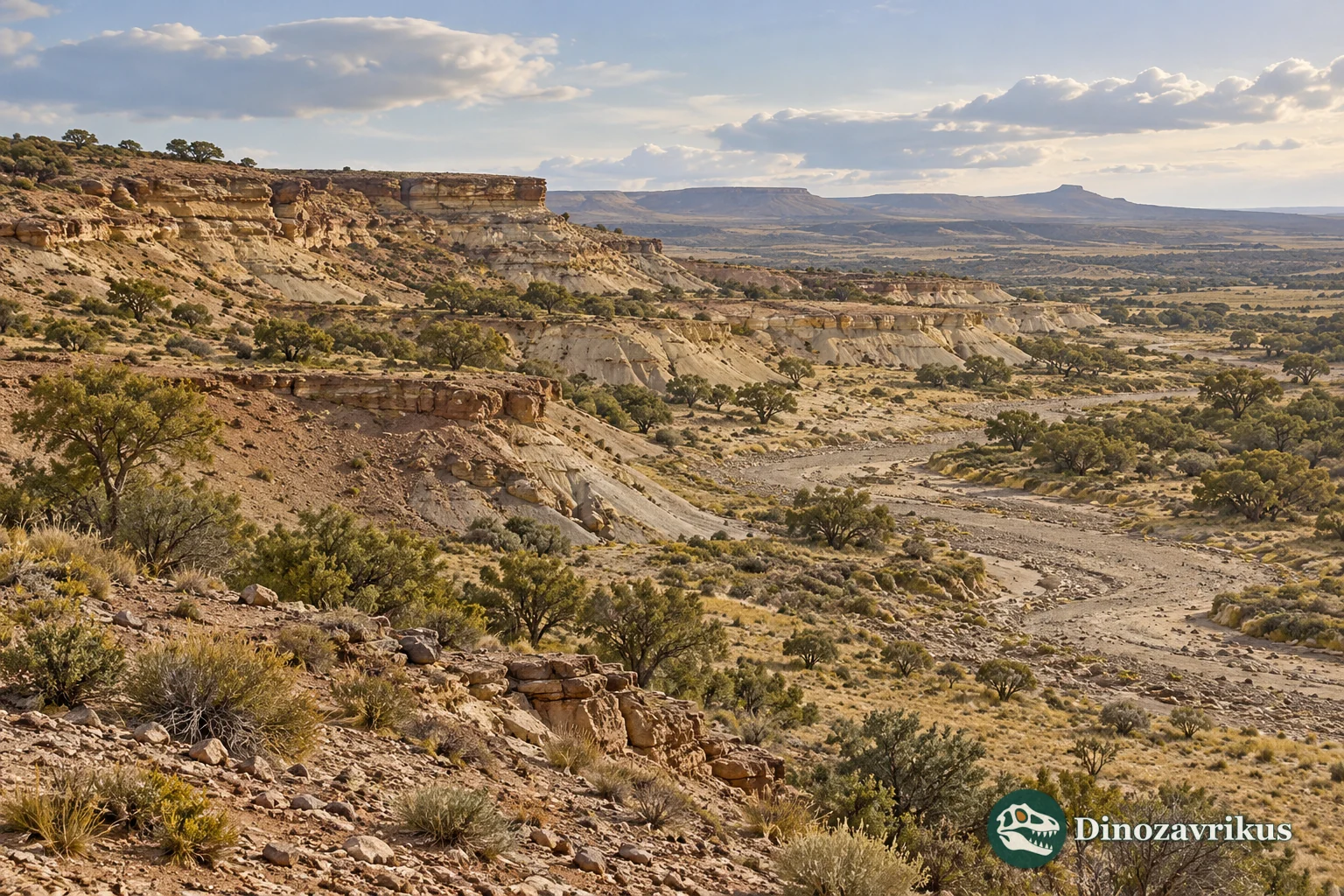
The Cañadón Vaca local fauna includes several isotemnids and other early notoungulates. Its Casamayoran age assignment and subage terminology are biostratigraphic tools based on the fossil assemblage and stratigraphic position. Local sections and age correlations are refined by later fieldwork and radiometric dating, so the fossil fauna should not be treated as a single moment across all of Patagonia.
Diet, movement and life history
The teeth and its placement among notoungulates support a broad inference of herbivory, but no stomach contents, attributed coprolites or diagnostic microwear record a particular plant diet for the genus. It would be unwarranted to assign a fixed diet of leaves, fruit or grasses based only on a low-crowned tooth pattern.
Postcranial bones constrain how joints could move. They do not preserve muscle activity, habitual speed, social interactions or reproductive behaviour. The more flexed limb posture proposed for P. similis is a functional hypothesis about how the forelimb could be used, not proof that the animal crouched at all times or moved in one particular way.
No growth series, eggs, juveniles or healed injuries provide an adequate record of reproduction, development or pathology. The Eocene regional setting indicates terrestrial habitats and a diverse mammal community, but not the exact plants, climate at a single site or daily routine of this genus.
What a reconstruction can show
The fossils support a four-limbed notoungulate with recognizable teeth and limb joints. They do not preserve fur, skin, colour or the proportions of every missing part. A scene showing the animal in a Patagonian landscape is therefore a scientific illustration based on the broad group and time period, not a direct portrait of one skeleton.
Pleurostylodon remains useful because its record connects several kinds of evidence while making their limits visible. Dental samples help with identity, AMNH 28904 connects a molar with limbs, and comparative anatomy allows cautious functional proposals. None alone supplies a complete picture. Other fossil taxa can be explored in the ancient mammal catalogue.
Frequently asked questions
When did Pleurostylodon live?
Known species come from Eocene deposits in Patagonia. The better associated partial skeleton of P. similis was collected at Cañadón Vaca in a middle Eocene Casamayoran context.
Has a complete skeleton been found?
No. AMNH 28904 preserves a tooth and several limb elements, but it is incomplete. An older composite reconstruction combined fossils from Pleurostylodon, Anisotemnus and Thomashuxleya.
What did Pleurostylodon eat?
Herbivory is a broad inference from its teeth and group, but no direct stomach or coprolite evidence identifies a specific menu for the genus.
Is its placement in Isotemnidae certain?
Isotemnidae is the traditional placement, but some phylogenetic analyses question whether the family is a single natural branch. The classification remains useful with that caveat.