

Genalaticurus was an Early Ordovician trilobite from western North America. Its head has unusually wide fixed cheeks and closely packed, flat-topped tubercles. A narrow notch interrupts the rear edge of its short tail shield.
Quick facts
| Group | Trilobites |
|---|---|
| Age | Early Ordovician |
| Genus named by | J. Adrain and colleagues, 2003 |
| Type species | Genalaticurus genalatus |
| Records | Southeastern Idaho and western Utah, United States |
| Material | Cranidia and tail shields |
What can the fossils tell us?
Their width is measured on the cranidium, the central part of the head shield that can be preserved without the free cheeks.
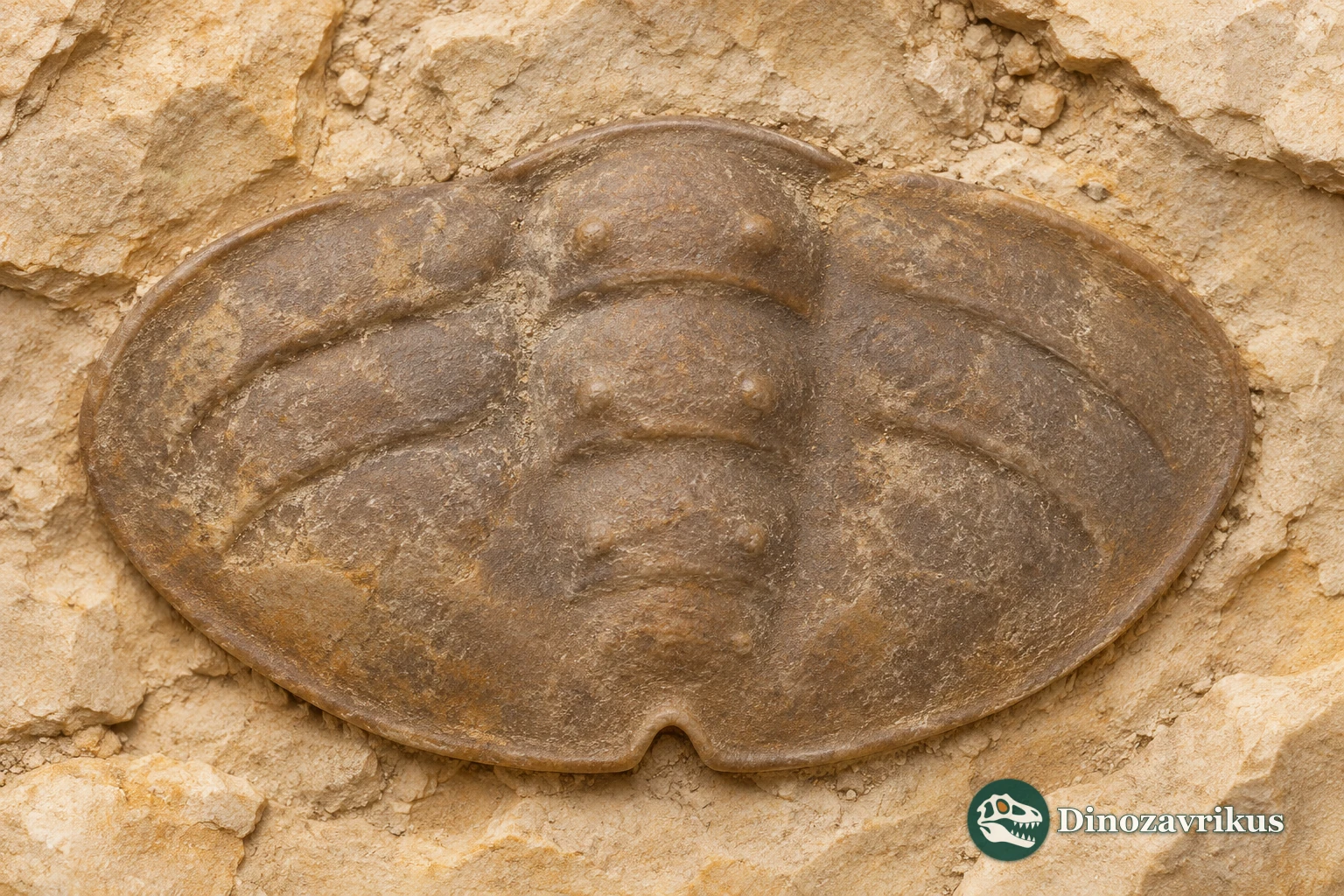
This notch helps identify the genus. The tail shield is about 40% as long as it is wide.
The authors assigned it to the genus without giving it a species name.
Why the fossils were placed in a separate genus
Reuben Ross described the species in 1951 as Hystricurus genalatus, placing it in Hystricurus. In 2003 Jonathan Adrain and colleagues erected the genus Genalaticurus for it. The revision illustrated several specimens from the type area in Franklin Basin, Idaho.
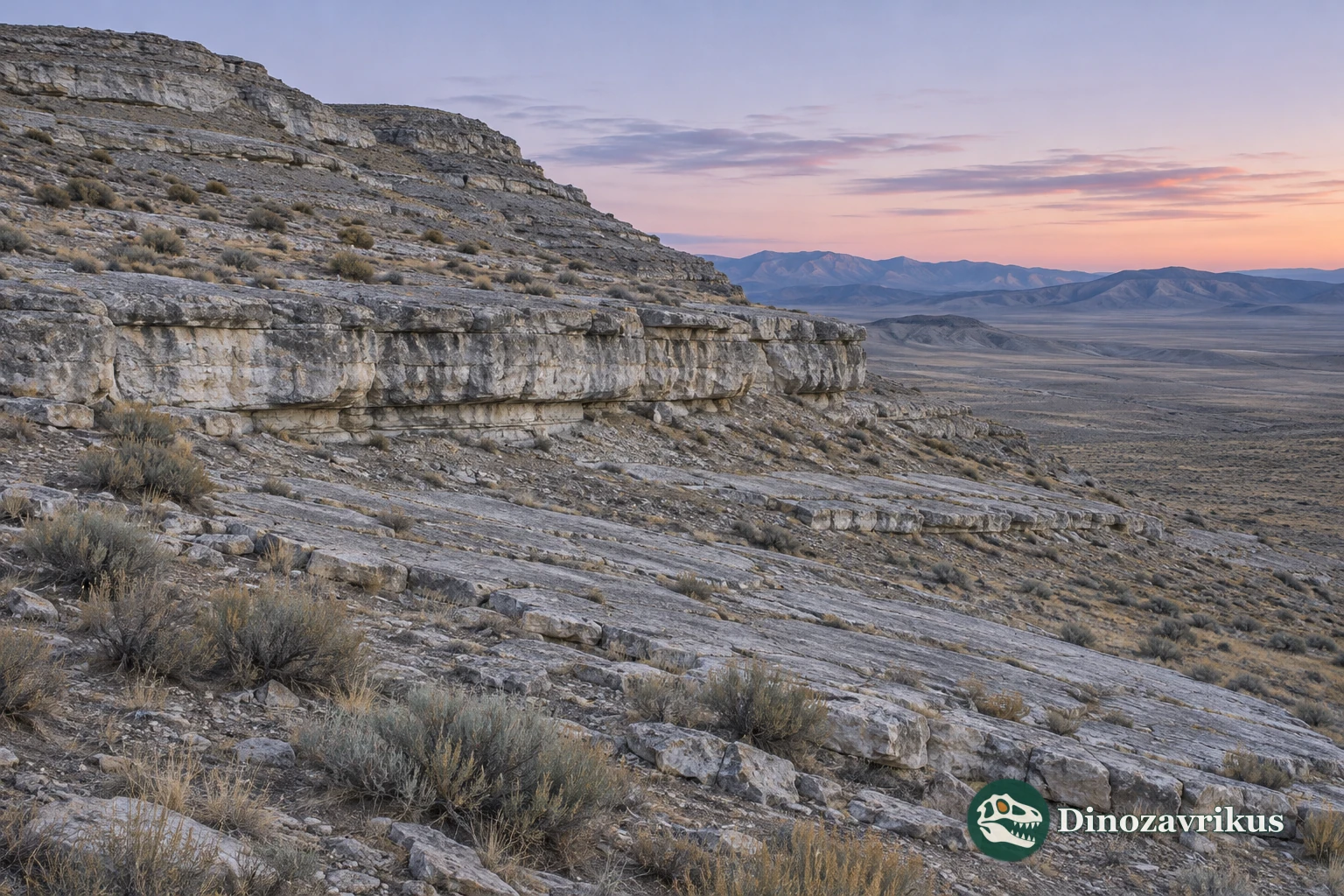
The Idaho fossils come from the Garden City Formation. Additional material is known from the Red Canyon Member of the House Formation in western Utah. In the North American regional scheme, the beds with the type species are upper Skullrockian, part of the Early Ordovician.
Texture on the head and a notch in the tail
The fixed cheeks are broad between the eyes and the central lobe of the head. Closely spaced, flat-topped tubercles cover much of the cranidium and extend onto the inner part of the front border.
The tail shield is short and wide. Two sets of lateral furrows on either side flank a low, tapering axis. A narrow notch cuts into the otherwise smoother rear rim. Shield length is about two-fifths of its full width.
Fossils above the beds with the type species
In the southern House Range of Utah, the type species occurs near the top of the Red Canyon Member, although it is absent in some samples. The authors recorded a different form slightly higher in the section. They identified it as Genalaticurus without assigning it a species name, so that occurrence documents the genus alone.
Frequently asked questions
What was the original name of the type species?
It was described as Hystricurus genalatus in 1951 and moved to Genalaticurus in 2003.
Which states have yielded Genalaticurus?
Idaho and Utah, from the Garden City and House formations respectively.
What shape is the tail shield?
It is much wider than it is long, with a narrow notch in the middle of the rear edge.
What is known about the form higher in the Utah section?
It was assigned to Genalaticurus without a formal species name.