

Genyornis was a massive flightless bird of Pleistocene Australia. It was the last surviving dromornithid, although smaller than the largest members of its family. Newly described skulls and studies of ancient eggshell have changed its reconstructed appearance and sharpened questions about its disappearance.
Quick facts
| Family | Dromornithidae |
|---|---|
| Region | Australia |
| Time | Pleistocene |
| Size | About 2 m; approximately 230 kg |
| Youngest dated evidence | Eggshell around 46–44 thousand years old |
What can the fossils tell us?
Lake Callabonna finds associate informative cranial material with body remains. They provide a substantially firmer basis for reconstructing the bill.
Ancient proteins helped reject attribution of disputed eggshell to megapodes. Together with shell structure, they support identification as Genyornis.
A 2026 study compared radiocarbon and uranium-thorium methods. Its youngest investigated eggshell indicates survival around 46–44 thousand years ago.
A heavy bird with reduced wings
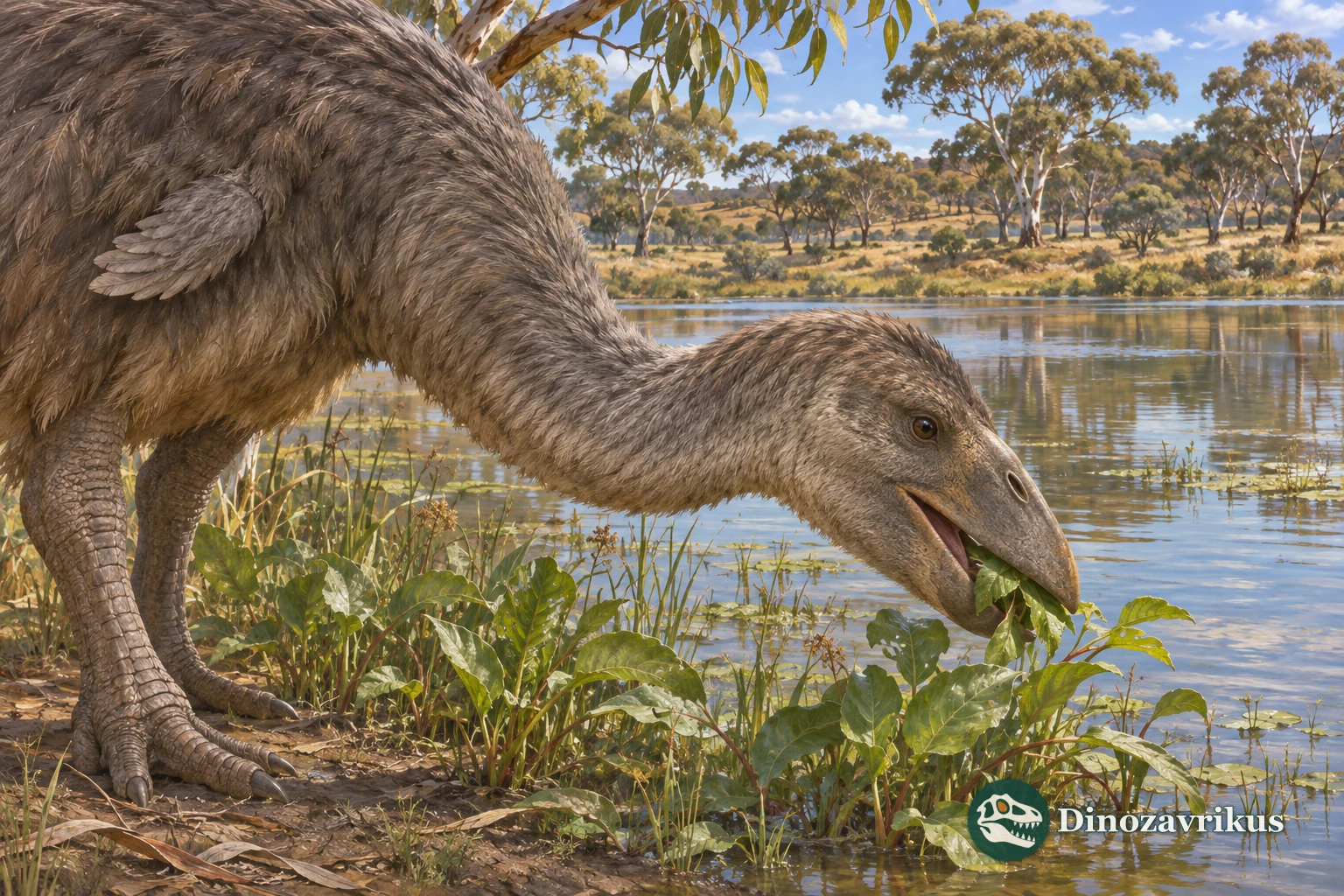
Genyornis newtoni belongs to Dromornithidae, an Australian family characterised by powerful hindlimbs, heavy bodies and strongly reduced wings. Its height is estimated at roughly two metres and its mass at about 230 kg. These are reconstructions from skeletal evidence, not fixed dimensions shared by every individual.
Despite a superficial resemblance in silhouette, Genyornis was not a kind of emu. Its family is associated with the branch containing landfowl and waterfowl, and the new skull material strengthens comparisons with early-diverging waterfowl. The older Dromornis belonged to the same family, but some of its species reached substantially greater masses.
What the Callabonna skulls changed
For a long time, understanding of the head depended on a badly damaged skull reported in 1913. Flinders University expeditions in 2019 recovered new cranial remains beside nearly complete body skeletons in the dry bed of Lake Callabonna. That association helped establish the identity of the bird.
Phoebe McInerney, Jacob Blokland and Trevor Worthy described the material in 2024. The tall upper bill was mobile, but its overall shape was more goose-like. Joint structure and muscle attachment areas supported a powerful closing action capable of processing soft vegetation and fruit. This is a functional inference, not a list of plants recovered from a stomach.
Certain cranial features could have protected the ears and throat against water when the head was submerged. They are consistent with feeding near water, but do not demonstrate whole-body diving or penguin-like swimming in such a heavy bird.
Eggshell and its disputed owner
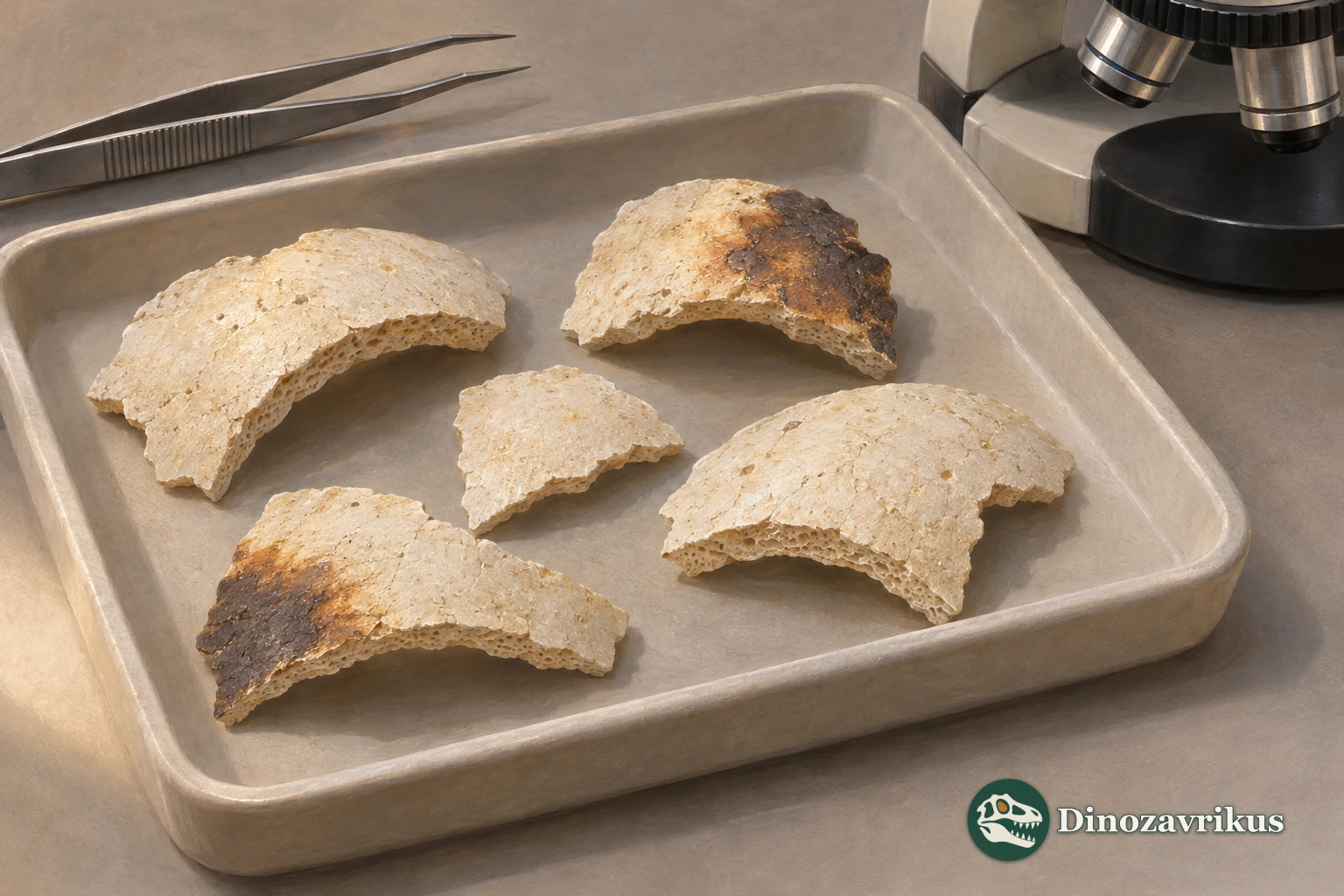
A distinctive fossil eggshell occurs widely in Australian deposits and was long attributed to Genyornis. That assignment was challenged: a large megapode, particularly Progura, was proposed instead. Resolving the identity mattered because the shells were being used to investigate the disappearance of a giant bird.
A 2022 study recovered ancient proteins protected within the shell’s mineral structure. Comparisons of their sequences did not support a megapode origin. Combined with eggshell microstructure, the result strengthened attribution to Genyornis. The evidence concerns ancient proteins, not a reconstructed genome or authenticated DNA identification.
Fire, people and the timing of disappearance
Some fragments preserve localised evidence of intense heating. A 2016 investigation compared discolouration with amino-acid breakdown: sharp contrasts between heated and unheated parts are consistent with broken shell being discarded beside small fires. The authors interpreted this as human egg cooking rather than the effects of ordinary landscape fires.
Egg collection could reduce recruitment by removing future chicks. Evidence that eggs were consumed, however, does not establish a single cause for the extinction of the entire population. Changes in water availability and vegetation also matter when considering the bird’s vulnerability.
In 2026, improved preparation for radiocarbon dating was compared with uranium-thorium burial dating of eggshell. The youngest well-preserved samples produced compatible ages of about 46–44 thousand years. These are the latest dated specimens in that investigation, not the precisely known death date of the final Genyornis.
Frequently asked questions
Was Genyornis a predator?
Recent skull analysis supports feeding on soft plant material and fruit. A massive bill is not, on its own, evidence of hunting other animals.
How confidently can its appearance be reconstructed?
Body skeletons and the new skulls constrain overall proportions and head shape. Feather colours, soft tissues and particular illustrated poses remain artistic reconstructions.
Did people eat its eggs?
Heated shell is interpreted as evidence of egg cooking, and protein research supports its identification as Genyornis. That does not establish people as the sole cause of extinction.
When did Genyornis become extinct?
It disappeared during the Late Pleistocene. A 2026 study dated its youngest investigated eggshell to around 46–44 thousand years ago; the exact extinction time remains unknown.