

Gigantocamelus is an extinct North American camel named for fossils from Nebraska. Its large body is memorable, but size alone does not identify the genus: other camelids also became giants. The jaw, lower incisors and cheek teeth provide stronger comparisons. The animal on the cover is life restoration; its coat and hump shape are not preserved in the skeleton.
The type species G. fricki was named in 1939. Many revisions combine its material with an older species name, producing G. spatulus.
Quick facts
| Genus | Gigantocamelus Barbour and Schultz, 1939 |
|---|---|
| Type species | G. fricki, usually combined with G. spatulus |
| Family | Camelidae |
| Region | Central and western North America |
| Evidence | Skull, jaws, teeth and limb bones |
| Age | Blancan, across the late Pliocene and early Pleistocene |
What can the fossils tell us?
A blunt mandibular chin, splayed lower canines and spatulate incisors contrast with the longer chin and arcuate incisors described for Titanotylopus.
A 1985 revision emphasized taller cheek-tooth crowns in Gigantocamelus. Broken isolated teeth may not retain the full set of characters.
Lisco and Keefe Canyon are separate accumulations. An old label saying Lower Pleistocene cannot date every Blancan camel occurrence.
From the Lisco quarries to an older species name
Erwin H. Barbour and C. Bertrand Schultz described G. fricki in 1939 after collecting near Broadwater and Lisco in Nebraska. The area had yielded vertebrate fossils since 1936, and several quarries were opened. The original publication called the deposits lower Pleistocene. Later Blancan correlations mean that a particular specimen needs its own stratigraphic context before a modern age is stated.
Edward Drinker Cope had named Pliauchenia spatula from Texas in 1893. When the Texas, Nebraska and Kansas fossils were treated as one species, the older epithet took priority and the combination Gigantocamelus spatulus was used. G. fricki remains the type species of the genus even when the two species names are synonymized. Camelops is another North American camel and should not be identified from size alone.
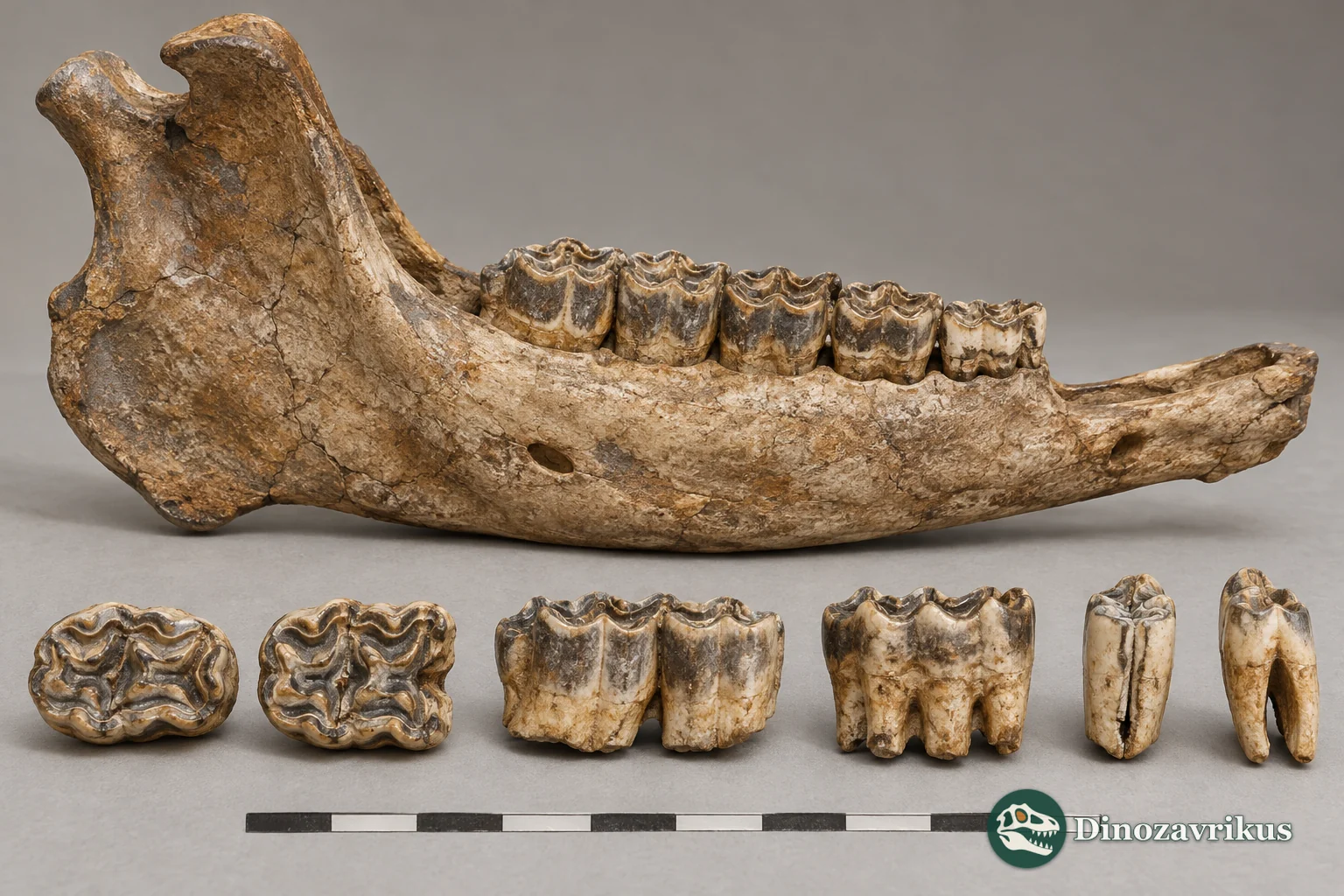
Gigantocamelus or Titanotylopus?
The original Titanotylopus nebraskensis was based on a large Nebraska mandible. Some twentieth-century workers combined Titanotylopus and Gigantocamelus, while others retained both. A Smithsonian revision in 1985 argued for separation using several characters together: the shorter blunt chin, splayed canines, transversely arranged spatulate incisors and taller cheek-tooth crowns of Gigantocamelus. Titanotylopus was described as having a longer chin and nonspatulate incisors set in an arc.
An isolated toe or damaged vertebra may not preserve those diagnostic traits. Several regional records have accordingly been listed with a question mark. The name of a fossil should be tied to the actual piece examined, not inferred from its impressive scale. The age range of Blancan sites straddles the start of the Quaternary.
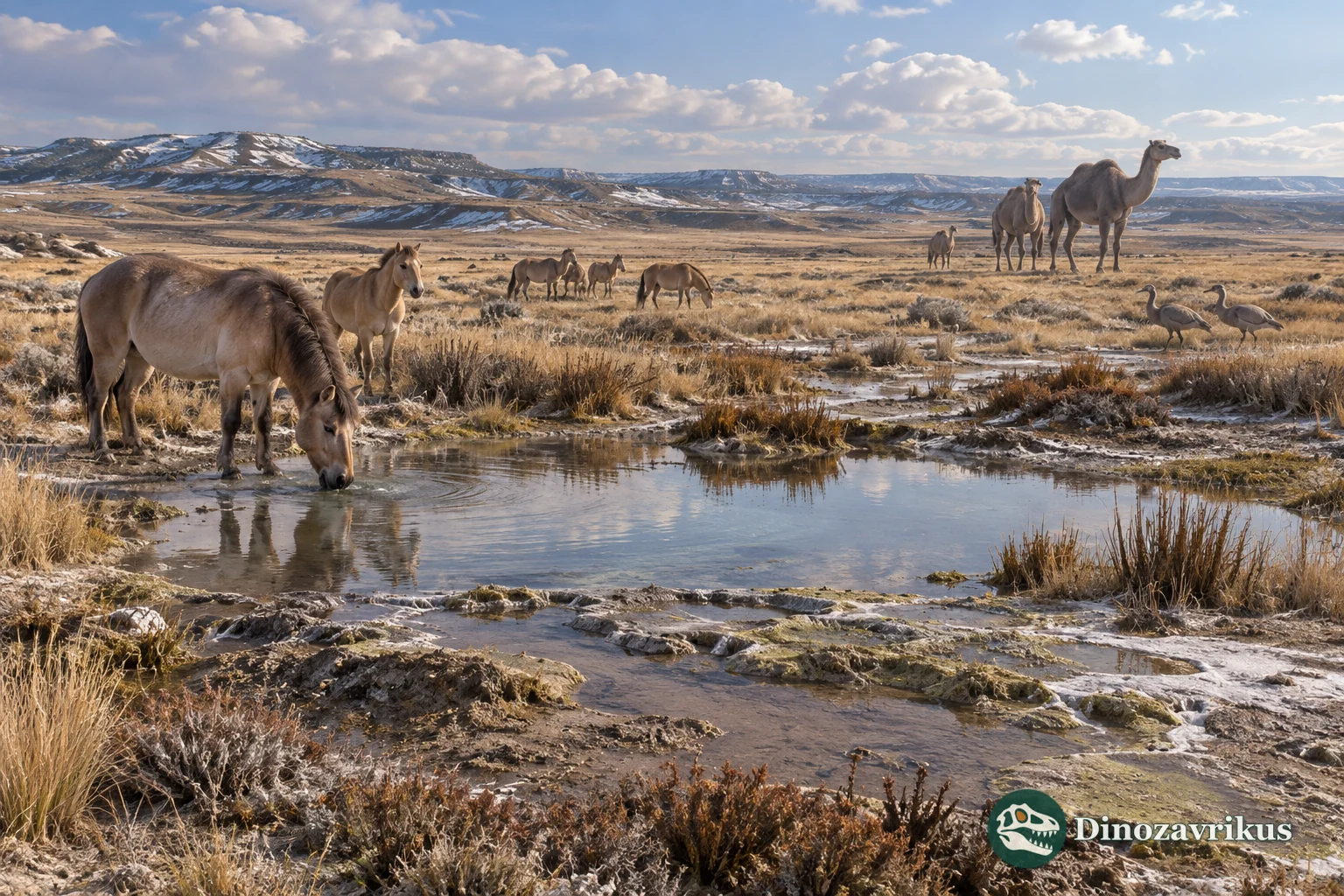
What Keefe Canyon can tell us
Claude Hibbard and Elmer Riggs described abundant G. spatulus remains at Keefe Canyon, Kansas. They interpreted the late Pliocene locality as an artesian spring basin. Animals visiting the water could become trapped in quicksand or mire, helping explain the concentration of different mammals. The assemblage does not show that giant camels spent their entire lives beside springs.
A regional review calls Gigantocamelus the most abundant camelid at that locality. Local fossil abundance is not a count of the species across North America. The later Grand View record of the rabbit Alilepus is another reminder that a faunal date does not automatically date all occurrences of a genus. Tall cheek teeth are compatible with abrasive plant food, but the fossils do not disclose a precise menu, running speed or coat color.
Frequently asked questions
Where was the type species named?
Barbour and Schultz named G. fricki from Nebraska fossils in 1939.
Why is G. spatulus also used?
Cope's older species name spatula has priority when the Texas and Nebraska material is combined into one species.
How is it distinguished from Titanotylopus?
Researchers compare the mandibular chin, canine and incisor arrangement and cheek-tooth crown height; the generic boundary was debated.
Why were so many camel bones found at Keefe Canyon?
The late Pliocene spring basin could trap animals in mire or quicksand, concentrating remains of several species.