

Gilmoremys was a softshell turtle of Late Cretaceous North America. The narrow heads first described from Hell Creek represent young individuals. Two larger skulls from Montana revealed a broader adult skull and changes to the bony surfaces of the palate.
Quick facts
| Group | Turtles, plastomenid softshells (Plastomenidae) |
|---|---|
| Age | Late Cretaceous (Campanian and Maastrichtian) |
| Region | North America (United States) |
| Type species | Gilmoremys lancensis |
| Holotype | USNM 6727, carapace from the Lance Formation |
| Scientific name | Gilmoremys |
| Diet | Exact diet unknown |
What can the fossils tell us?
USNM 6727 anchors the type species. The genus was eventually recognised with the help of separate fossils from the Hell Creek Formation.
The two adult skulls from Montana share distinctive anatomy with five smaller, narrow-headed specimens. The comparison supports a change in shape with maturity.
Campanian shell material represents G. gettyspherensis. Its skull has yet to be documented, so the growth comparison applies to G. lancensis.
The shell that came first
Charles W. Gilmore described the species as Aspideretes lancensis in 1916. Its holotype, USNM 6727, came from the Maastrichtian Lance Formation in Niobrara County, Wyoming. John Bell Hatcher collected the fossil, now held at the Smithsonian’s National Museum of Natural History. Skulls and shell material from the Hell Creek Formation showed a combination of characters that Walter Joyce and Tyler Lyson used to establish Gilmoremys in 2011, naming the genus for Gilmore.
The upper shell of G. lancensis bears elongate, winding grooves. A separate preneural bone lies just ahead of the row of vertebra-associated plates. There is no bony ring of peripherals, a feature shared with other softshells. The Eocene Rafetoides also had a sculptured bony disc, but its shell diagnosis includes the absence of a preneural.
From the narrow juvenile skull to the adult shape
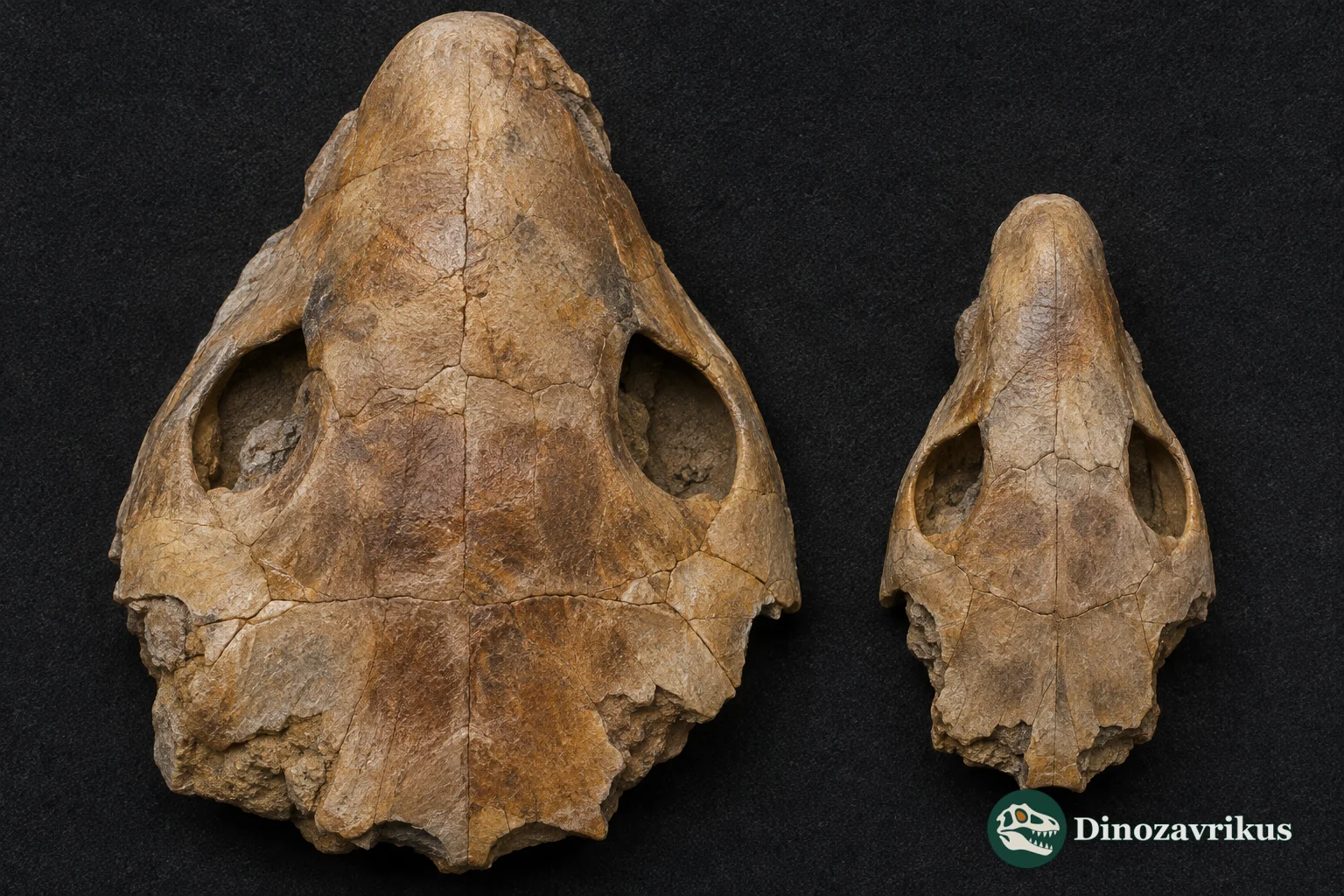
Five skulls from the Turtle Graveyard site in North Dakota gave an early picture of the head. Specimens BMRP 2013.4.214 and BMRP 2012.4.336 from Carter County, Montana, have considerably broader skulls. Joyce, Lyson and Scott Williams assigned them to the same species in 2016 based on characters including the contribution of the parietal to the eye socket and the match between shell bones from the two areas.
The midline groove on the palate is deep and narrow in the smaller fossils. It is shallow and wide in the adults, and the accessory ridges are higher. The vomer contributes more to the secondary palate in the larger specimens. These changes are observable in bone. How the growing turtles used those surfaces and what foods they handled remain open questions.
An earlier species from the Fruitland Formation
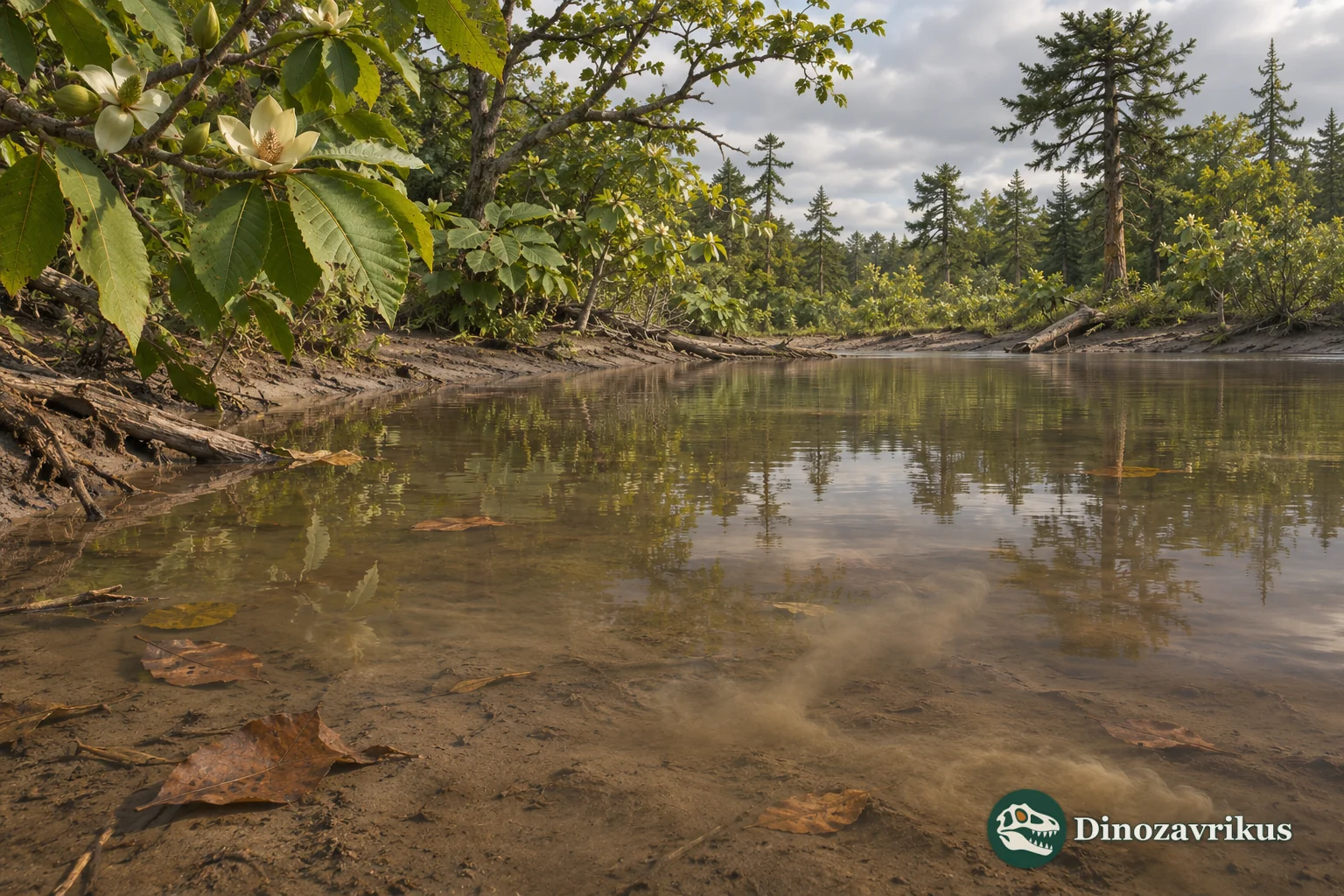
Joyce and colleagues named G. gettyspherensis in 2018 from Campanian shell material from northwestern New Mexico. Their analysis placed it next to G. lancensis near the base of Plastomenidae. Its type came from mudstone. At the younger North Dakota site, sedimentary evidence also points to standing water. The two deposits are consistent with a softshell turtle living in ponded habitats.
Frequently asked questions
Where was the first specimen found?
It came from the Maastrichtian Lance Formation in Niobrara County, Wyoming.
What changed in the adult skull?
The skull became broader, the central palatal groove shallower and wider, and the accessory ridges higher.
Which species occurred first?
Gilmoremys gettyspherensis comes from Campanian deposits. The type species, G. lancensis, is Maastrichtian.
Did the shell carry hard scutes?
The type species lacks evidence of carapacial and plastral scutes. Its shell had the leathery covering typical of softshell turtles.