

Glyphaspis was a middle Cambrian trilobite from North America. Its broad tail shield occupies much of the exoskeleton. Loose shields account for most records, but a rare Georgia fossil also preserves threadlike structures beneath the thorax.
Quick facts
| Group | Trilobites |
|---|---|
| Age | Middle Cambrian, Miaolingian |
| Region | North America: the United States and Canada |
| Type species | Glyphaspis capella |
| Scientific name | Glyphaspis |
| Diet | Unknown |
What can the fossils tell us?
Detached pygidia preserve a wide border and shallow grooves around the segmented axis. Articulated specimens connect these features to the head and thorax.
A Georgia fossil preserves thin threads beneath the thorax. The researchers identified them as filamentous branches of the thoracic limbs.
Several species are based on isolated shields. The limits of Glyphaspis and its relationship to Blainia remain debated.
Cheek spines and a broad tail rim
Charles Walcott described the Montana type material in 1916 as Asaphiscus? capella. Christian Poulsen made it the type species of Glyphaspis in 1927. It differs from Asaphiscus wheeleri in possessing prominent cheek spines and a wide tail border crossed by furrows that reach close to the margin.
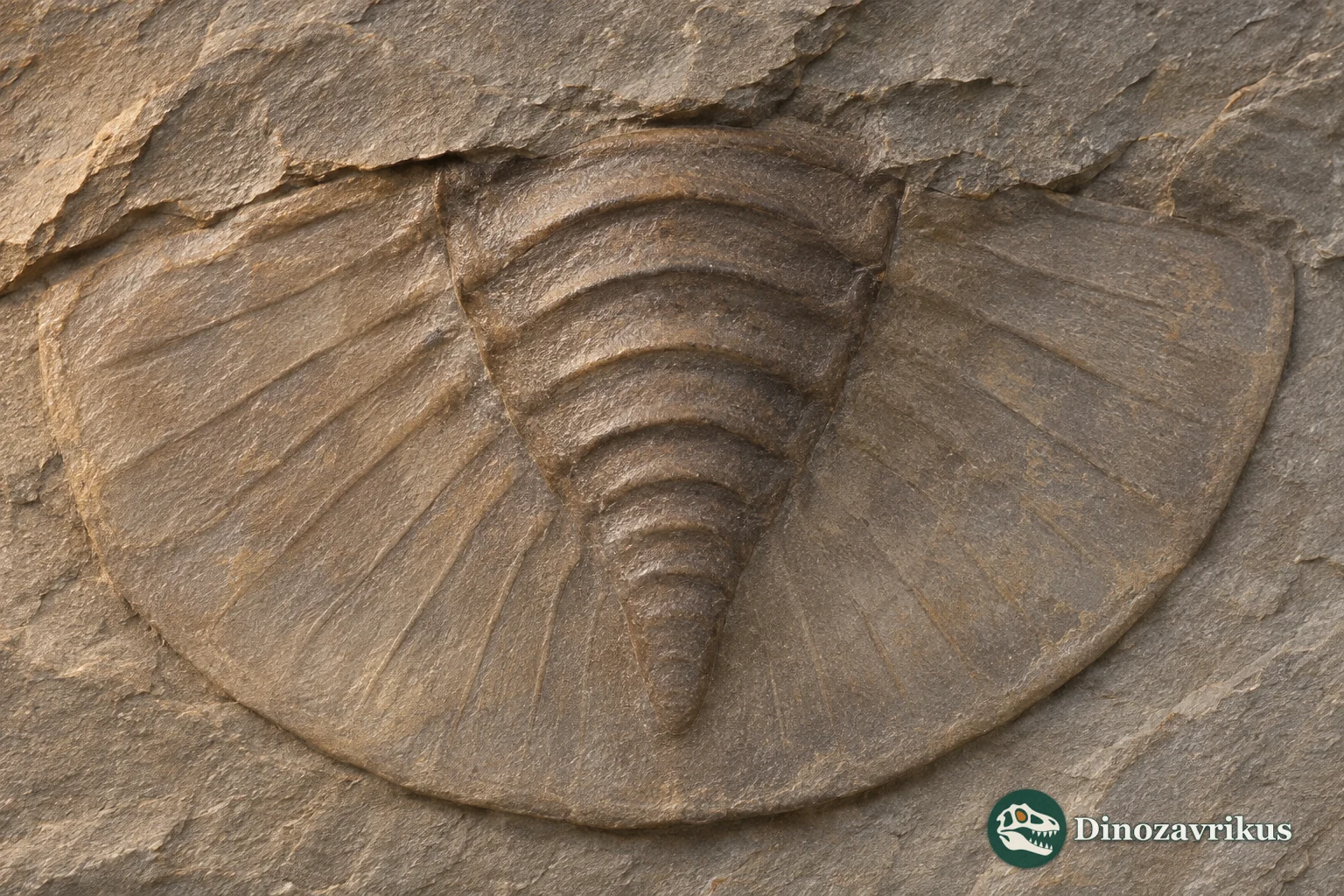
There are nine thoracic segments between the front and rear shields in G. capella. Its rounded pygidium has a segmented axis and furrows radiating from it. An isolated shield can preserve those features, though linking it to an entire animal is easier when the parts remain joined.
Filaments beneath a Georgia fossil
Part and counterpart of specimen CSUC 95-91-1, assigned to G. capella, came from fine-grained sediment of the Conasauga Formation. Filaments are visible beneath the left thoracic ribs and farther back under the thorax. David Schwimmer and William Montante interpreted them as filamentous branches of the limbs with a respiratory role. The specimen gives no direct evidence of what the animal ate.
Tracing a species across Laurentia
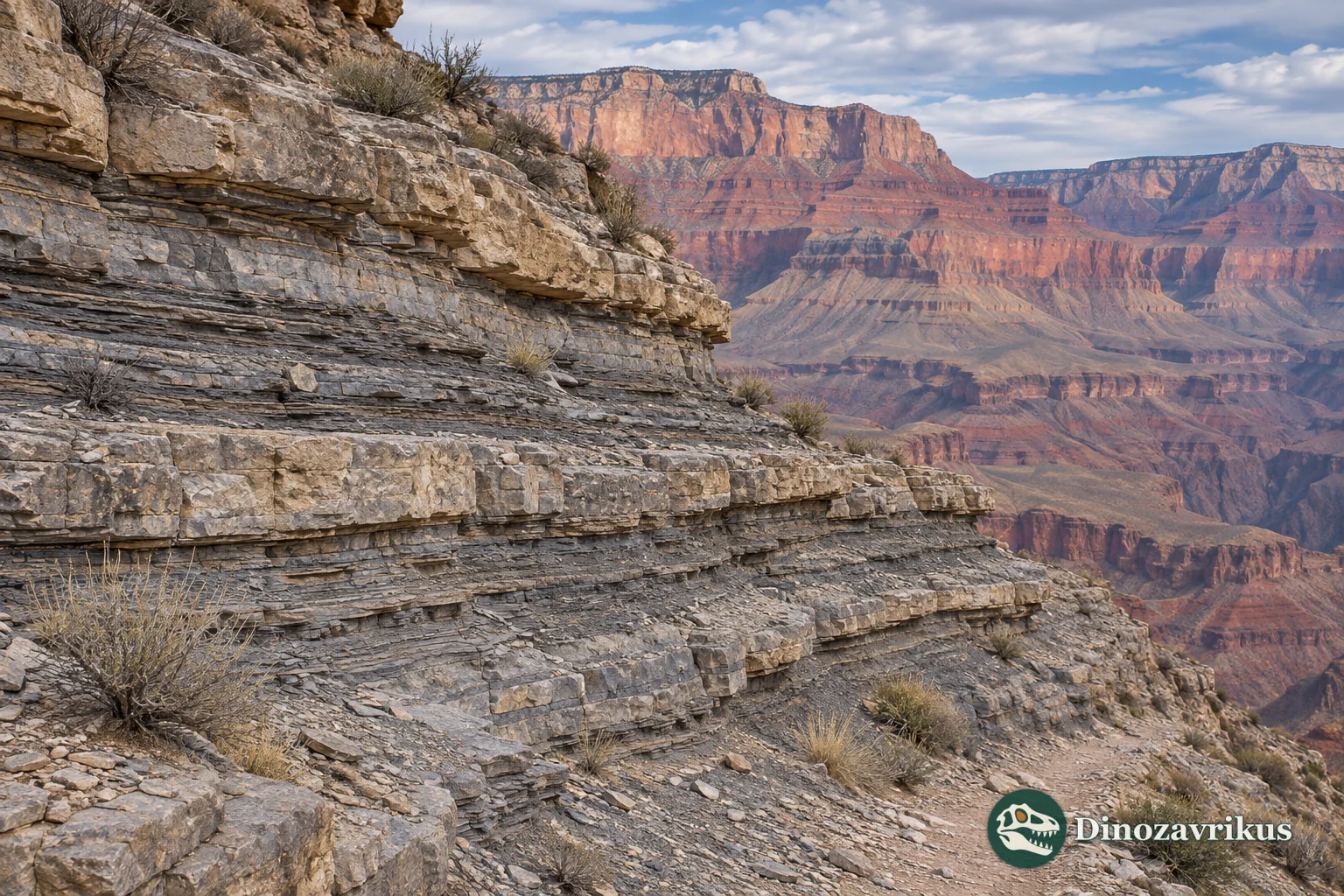
Cranidia and pygidia of G. tetonensis have been identified in the Muav Formation of the Grand Canyon. They occur in strata assigned to the Bolaspidella Biozone. The species had previously been described from Wyoming and from the Pika Formation in Alberta, Canada. The occurrences help correlate Cambrian marine rocks across Laurentia.
Why the genus boundaries are debated
Some studies combined Glyphaspis with Blainia on the basis of similarities between species. Comparisons with type material and better-preserved specimens support keeping their type species apart. The Grand Canyon revision retained Glyphaspis while noting that several species based on incomplete shields are still difficult to assign between the two genera.
Frequently asked questions
What does the Glyphaspis tail shield look like?
It is large and rounded. The grooves on either side of the axis extend close to its broad rim.
Where did the type species come from?
The type material of G. capella came from Montana. More complete material assigned to that species has been described from Georgia.
What soft structures were preserved?
Fine threads beneath the thorax of one fossil were interpreted as filamentous branches of thoracic limbs.
Which species was found in the Grand Canyon?
Separate shields of G. tetonensis from the Muav Formation helped identify the local Bolaspidella interval.