

Gobiops was a Jurassic temnospondyl from Asia. The genus was first described from isolated bones found in Mongolia. Distinctive features of the skull and vertebrae allowed researchers to compare it with older material from China.
Quick facts
| Group | Temnospondyls, brachyopids (Brachyopidae) |
|---|---|
| Age | Middle and Late Jurassic |
| Region | Asia: Mongolia and China |
| Type species | Gobiops desertus |
| Scientific name | Gobiops |
| Diet | Undetermined from known fossils |
What can the fossils tell us?
Holotype PIN 4174/102 is a left squamosal. Parts of the jaw, shoulder girdle and backbone have also been referred to the species.
Some Chinese specimens share distinctive features with the Mongolian material. Other isolated finds can only be referred tentatively.
The bones allow comparisons of individual parts of the skeleton. No complete skull sets the proportions of the head.
What Shar Teg preserves
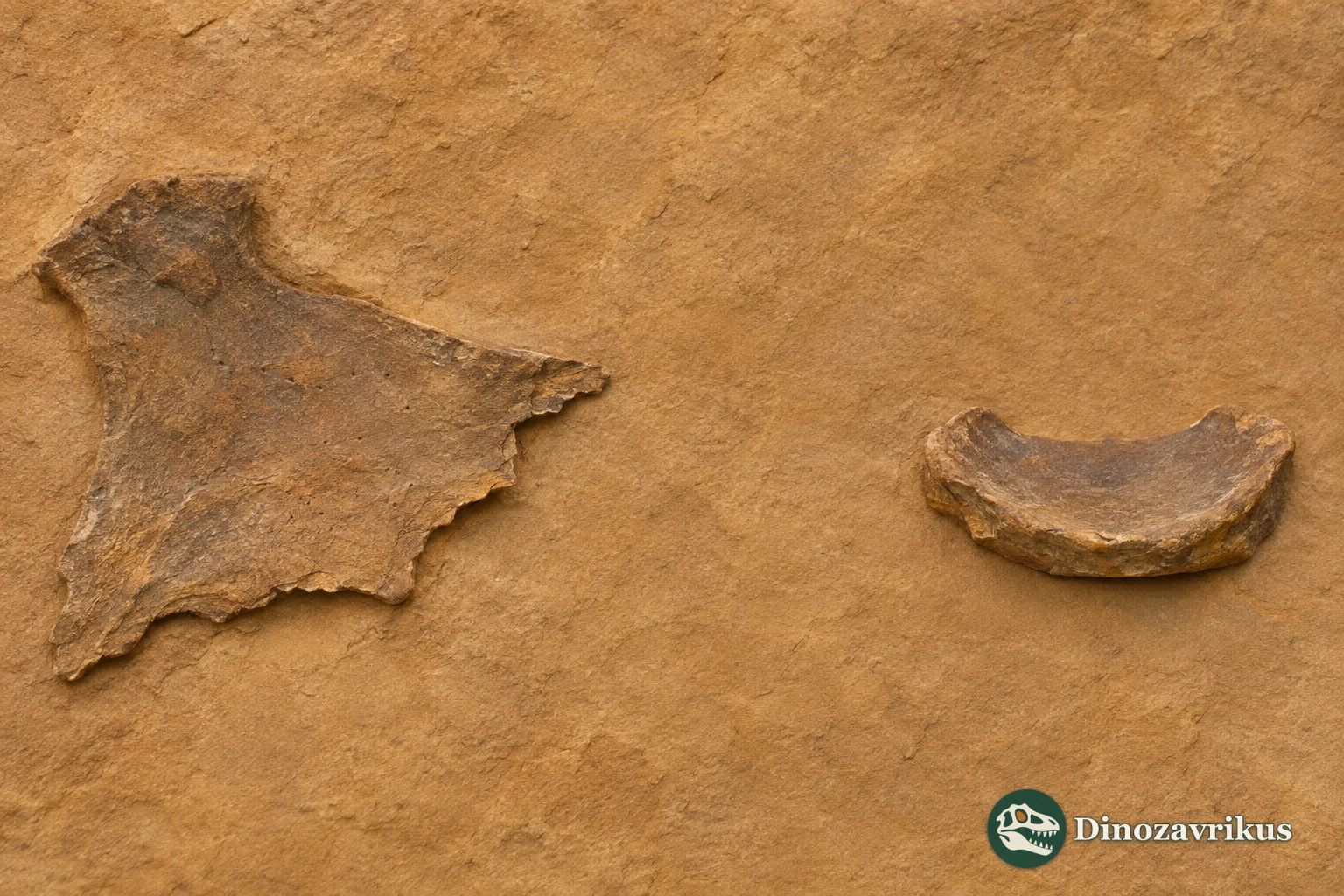
Mikhail Shishkin described Gobiops desertus in 1991 from material collected at Shar Teg in southwestern Mongolia. Holotype PIN 4174/102 is a left squamosal, a bone along the side of the skull roof. Other bones referred to the species include lower jaw fragments, clavicles, a humerus and several vertebral elements. The Mongolian material comes from Late Jurassic rocks.
Comparing Mongolia with northwestern China
Michael Maisch and Andreas Matzke described isolated bones from the Toutunhe Formation in the southern Junggar Basin in 2005. Features of the skull roof and parts of the vertebrae supported assigning some of this Middle Jurassic material to Gobiops desertus. The authors treated some of the more fragmentary specimens with reservation.
What individual vertebral bones can show
An intercentrum is a bone that forms part of the body of a vertebra. Its shape and degree of ossification can help distinguish isolated finds. In Gobiops these elements differ along the backbone. Another Jurassic brachyopoid, Ferganobatrachus, is also known from scattered bones. Comparing the two genera shows which anatomical features can be studied without a complete skeleton.
Frequently asked questions
Where was Gobiops first found?
At Shar Teg in southwestern Mongolia, in rocks of Late Jurassic age.
What is the holotype of Gobiops?
It is a left squamosal, a skull bone catalogued as PIN 4174/102.
Has Gobiops been found in China?
Researchers referred some Middle Jurassic specimens from the Junggar Basin to Gobiops desertus. Other fragments were assigned tentatively.
How large was Gobiops?
A reliable estimate of total length requires more complete remains of the skull and backbone.