

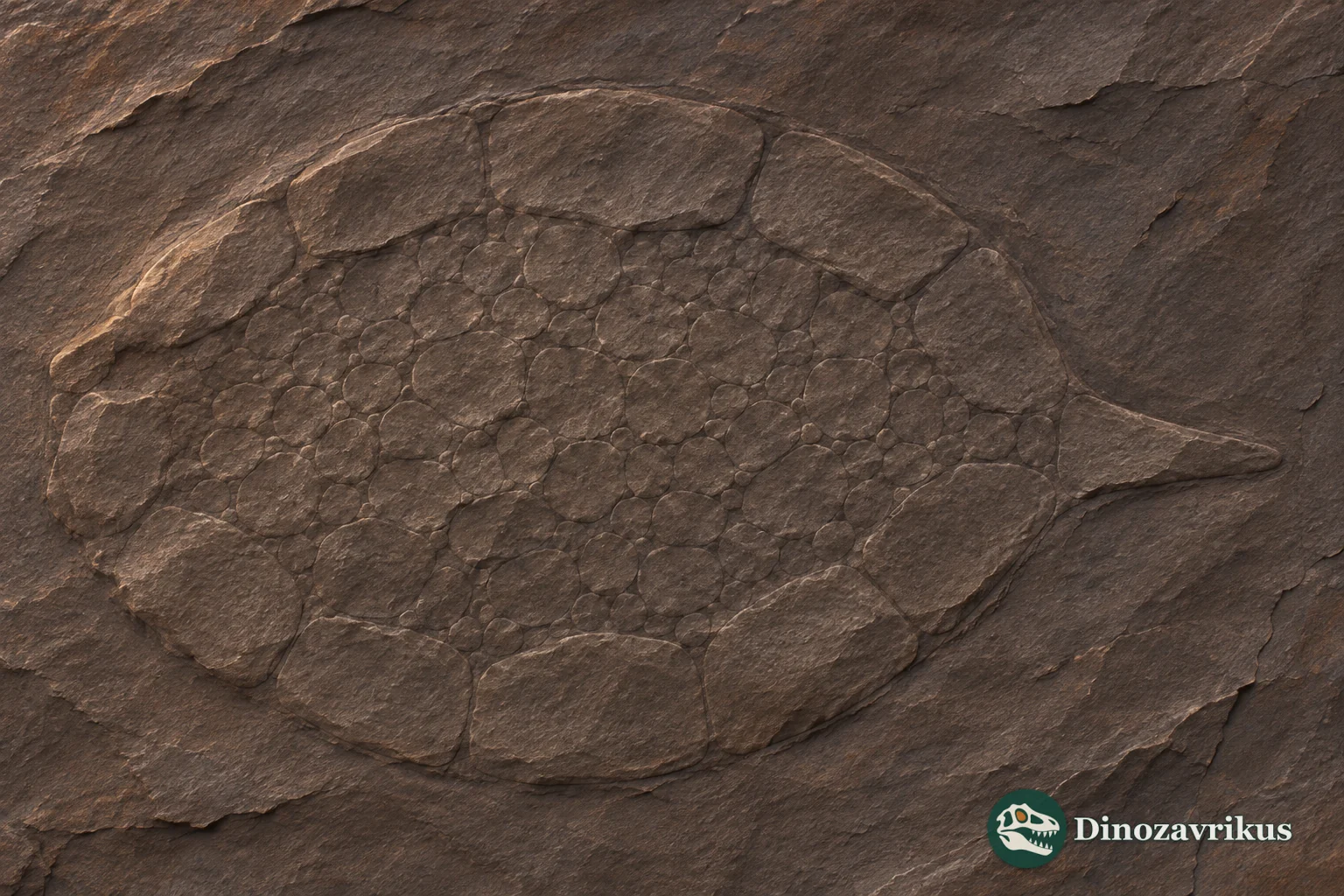
Gyrocystis was a Cambrian echinoderm from the extinct group Cincta. The type species had a flattened, asymmetric skeleton with large marginal plates and a short rear extension. A short feeding groove ran along part of the front margin.
Quick facts
| Group | Echinoderms, Cincta |
|---|---|
| Age | Middle Cambrian |
| Region | Europe: France and Spain |
| Diet | Suspension feeding |
| Type species | Gyrocystis platessa |
What can the fossils tell us?
The Murero Formation yielded 153 complete G. platessa specimens preserved as natural moulds in claystone.
Simulations of G. testudiformis showed that external flow could retain particles of suspended food near the mouth.
Skeletal impressions preserve details of the plated body. How soft tissues captured food particles remains unknown.
The flattened skeleton
Otto Jaekel established Gyrocystis in 1918. The type species, G. platessa, was described from the Coulouma Formation in the Montagne Noire of southern France. The larger Spanish sample helped establish how the number and arrangement of its plates varied.
Large plates framed the flattened theca, or main part of the skeleton. Most of the Spanish specimens have ten marginal plates, with eleven in occasional individuals. At the rear, the theca continued into a short plated extension. A feeding groove followed a short stretch of the left front margin. Specialized plates covered the large opening at the front, while the smaller mouth lay to the right.
Why so many fossils survived in Spain
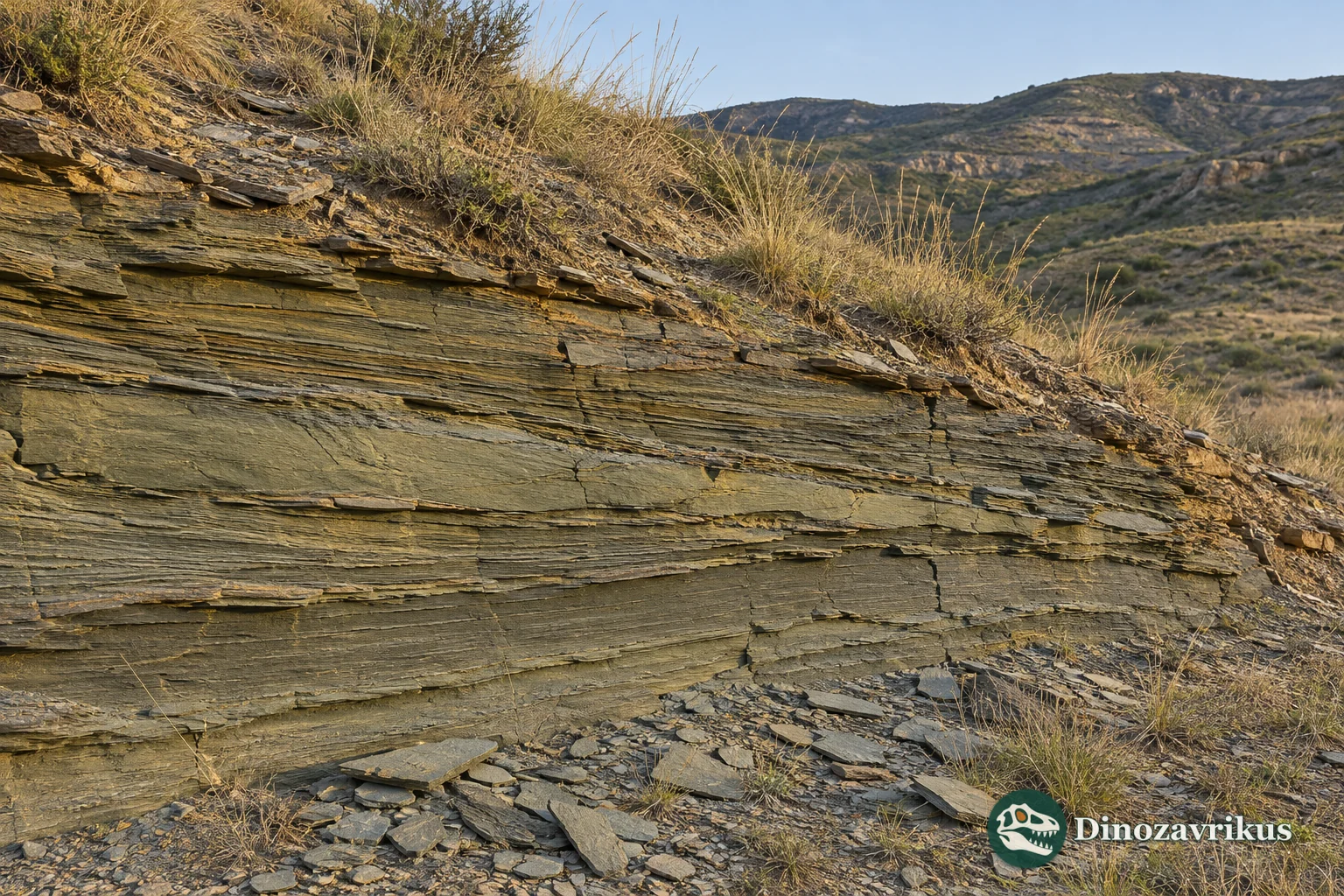
Researchers recovered 153 complete G. platessa specimens from the Murero Formation near Murero and Purujosa. The animals survive as natural moulds in claystone. The beds belong to the Manublesia thorali trilobite zone.
The researchers identified several episodes of rapid burial. In complete specimens the marginal plates stayed in place relative to one another. The moulds preserve enough of the outline to compare the number of plates across individuals.
Testing how Gyrocystis fed
Researchers made a digital model of the skeleton of G. testudiformis and simulated how water flowed around it. At certain flow speeds and directions, water circulated back near the mouth and feeding groove, where suspended particles could linger. That result supports passive suspension feeding in the species studied. The mechanism in G. platessa remains an open question.
Other Cambrian echinoderms, including Gogia, gathered particles with feeding appendages raised above the bottom. The plated skeleton of Gyrocystis shows that food could also have been collected very close to the sediment.
Frequently asked questions
Was Gyrocystis a starfish?
It belonged to the extinct group Cincta. Its skeleton lacked the radiating arms of a starfish.
How many edge plates surrounded its body?
Most Spanish G. platessa specimens have ten marginal plates. A few have eleven.
Where is the type species found?
G. platessa is known from the Montagne Noire in southern France and the Murero Formation in northeastern Spain.
What did the computer model test?
It simulated water flowing around G. testudiformis to see whether particles could remain close to the mouth.