

Haplaletes was a genus of small Paleocene mammals from North America, known from jaws and teeth. George Gaylord Simpson named the type species, H. disceptatrix, from Fort Union material in Montana. Later authors added species from Wyoming, but the identity of one of them, H. serior, became controversial.
The genus is included in the ancient mammal catalogue. Its dental remains are often compared with those of Litocherus, a Paleocene mammal whose higher classification is also unsettled.
Quick facts
| Scientific name | Haplaletes Simpson, 1935 |
|---|---|
| Type species | Haplaletes disceptatrix Simpson, 1935 |
| Group | Early placental mammal; classification was revised |
| Age | Middle and late Paleocene; localities differ by species |
| Range | North America, particularly Montana and Wyoming |
| Holotype | USNM 9500, right lower jaw with P3–M3 |
| Additional type material | USNM 9555, upper jaw designated as paratype |
| Known remains | Jaw fragments, tooth rows and isolated teeth; no complete skeleton |
What can the teeth tell us?
Simpson described the holotype of H. disceptatrix as a right lower jaw with teeth P3–M3. A separate upper jaw, USNM 9555, was designated as a paratype. Neither specimen preserves a complete skull or body.
H. disceptatrix and H. pelicatus are commonly treated as species of Haplaletes. Zack and colleagues in 2005 proposed that H. serior represented the lower dentition of Utemylus latomius or a close relative, while a 2023 fauna abstract again listed H. serior separately.
The type species comes from the Fort Union Formation in Montana. H. pelicatus is known from Wyoming faunas; the basal Overland Member assemblage extended its reported range into Ti1. These are biochronological assignments, not exact dates for individual teeth.
Early works used Hyopsodontidae broadly. A 2005 phylogenetic analysis recognized Apheliscidae for apheliscines and reconsidered the placement of H. serior. Family assignments should be read in the context of the revision being followed.
Description and museum specimens
George Gaylord Simpson published the name Haplaletes in 1935 in a preliminary paper on new mammals from the Fort Union Formation. He selected H. disceptatrix as the type species and noted that fuller descriptions and illustrations of the wider collection would follow in later work.
The holotype, USNM 9500, is a right lower jaw preserving teeth from P3 to M3. Simpson credited its collection to A. C. Silberling. The paratype, USNM 9555, is a right upper jaw collected by James W. Gidley. The two specimens provide upper and lower dental information, but the original account does not state that they came from a single individual.
Dental anatomy and comparison
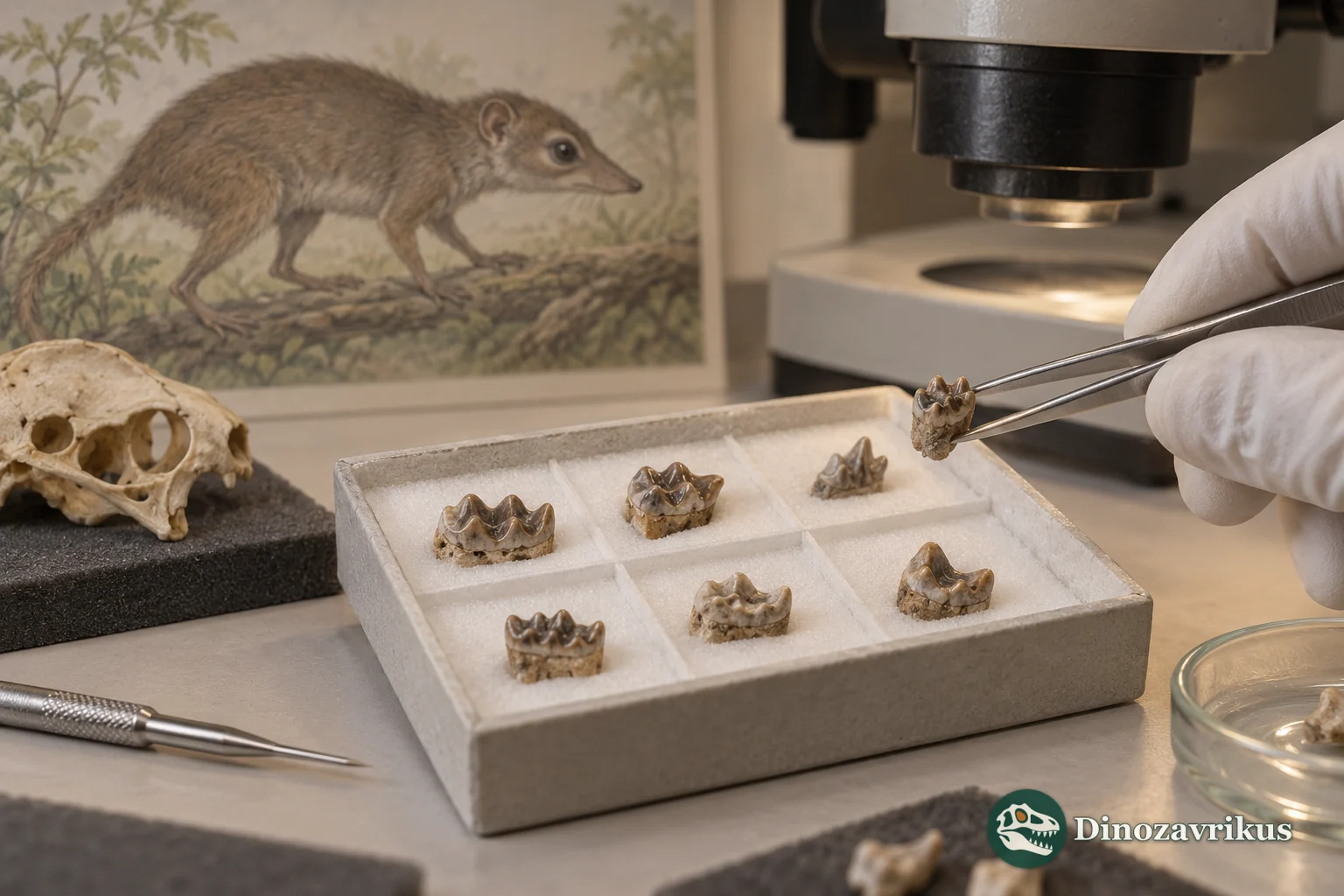
Simpson described the lower molars of H. disceptatrix as short and broad, with low, blunt cusps and weak anterior elements. He compared the upper teeth with Litaletes while noting differences in their proportions. These observations concern tooth surfaces; they do not provide a complete picture of the skull.
Later comparisons sought characters that separate early placental groups. Novacek and colleagues distinguished Litocherus from primitive hyopsodontids by sharper-cusped cheek teeth, features of the upper molar crest and the weaker outer cingulum on lower molars. Such contrasts help classify samples, but isolated teeth may lack enough detail for a confident species-level identification.
Species, localities and age
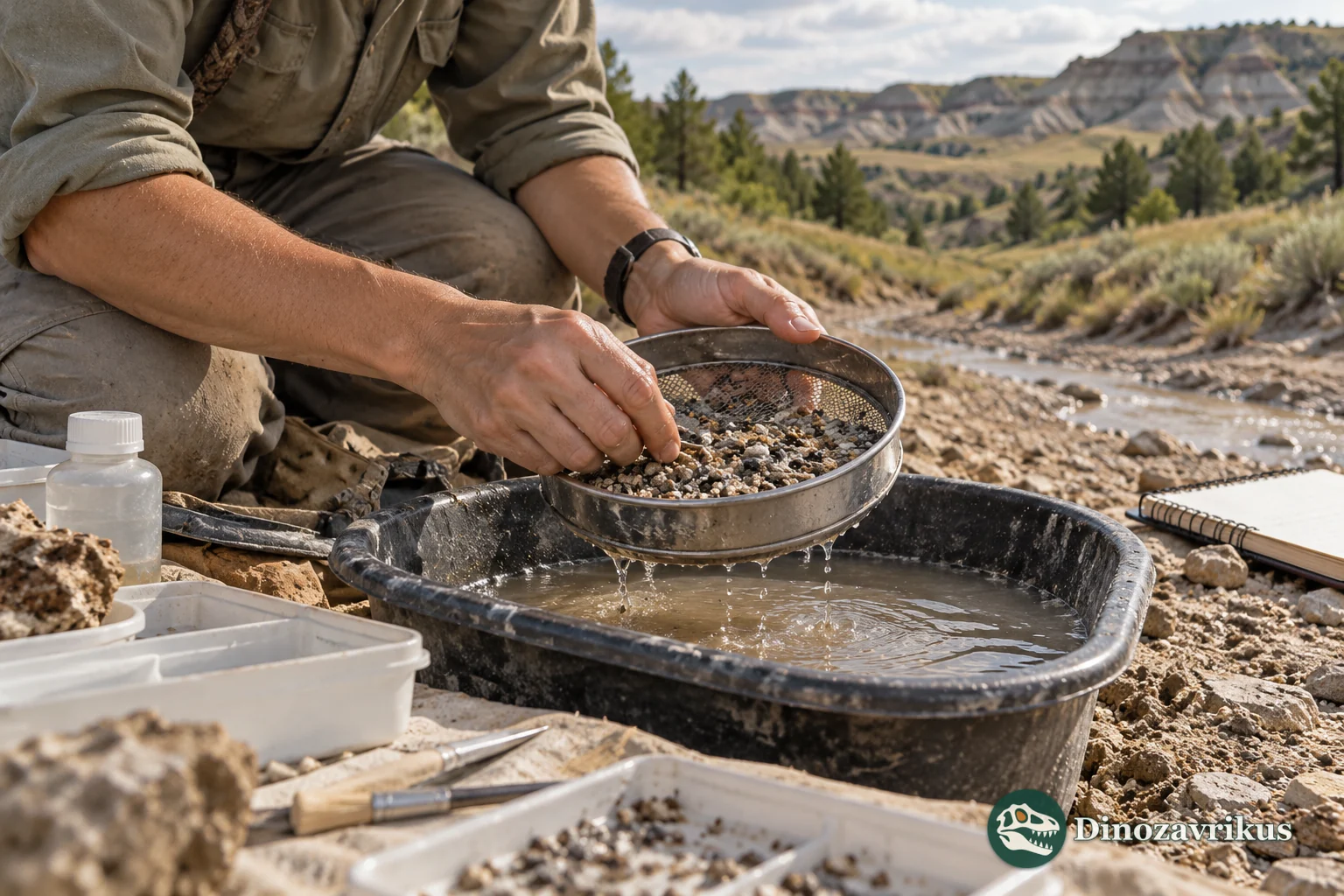
Besides the type species, the name H. pelicatus has been used for fossils from Paleocene localities in Wyoming, including the Bison Basin region. In 2018, Emily Halverson and Jaelyn Eberle described a mammal assemblage from the basal Overland Member of the Fort Union Formation in the Great Divide Basin. The combination of taxa led them to assign it to the earliest Tiffanian interval, Ti1, extending the known occurrence of H. pelicatus earlier than previously reported.
Gazin named H. serior from a lower jaw found at the Titanoides locality in Wyoming. The site lies within the Fort Union Formation, but the specimen came from a level and position distinct from the type quarry. It is a locality-specific occurrence, not evidence that all Haplaletes species had one identical range.
The H. serior question
In 2005, Shawn Zack and colleagues argued that the material called H. serior represented the lower dentition of Utemylus latomius or a close relative. Their analysis also reconsidered the relationships of mammals traditionally grouped in Hyopsodontidae and recognized Apheliscidae for apheliscines.
A 2023 conference abstract on the Titanoides fauna again listed Haplaletes serior. That later usage shows that the name remains in faunal discussion, but it is not itself a detailed published revision of the type jaw. The most accurate summary is that H. serior has been treated both as a separate species and as material of Utemylus; the competing identifications should remain visible until the type is re-evaluated in a full analysis.
Classification and what the fossils cannot show
Simpson's original classification placed the genus in Hyopsodontidae. Later phylogenetic work changed the meaning and membership of that family, and some researchers instead discuss apheliscids. The family assignment therefore depends on the taxonomic framework; the type teeth themselves are the secure starting point.
No complete skeleton is known. The fossil record does not establish body length, mass, gait, coat or social behaviour. Tooth shape alone also does not identify a specific prey item or plant. A small mammal feeding among Paleocene leaf litter is a plausible artistic scene, but the soft tissues, colour and exact ecology of Haplaletes remain unknown.
Frequently asked questions
When did Haplaletes live?
Its species come from middle and late Paleocene faunas in North America. The exact biochronological interval varies with locality and species.
What is the holotype of H. disceptatrix?
USNM 9500 is a right lower jaw with teeth P3–M3 from Gidley Quarry. USNM 9555, an upper jaw, was designated as a paratype.
How many species belong to Haplaletes?
H. disceptatrix and H. pelicatus are commonly recognized. H. serior was proposed as a synonym or lower dentition of Utemylus latomius by one study, but it reappeared as a separate name in a later fauna list.
What did Haplaletes eat?
Its diet is not directly known. Teeth allow anatomical comparisons, but no diagnostic gut contents, coprolites or feeding traces have been reported for the genus.