

Litocherus was a small Paleocene mammal from western North America, known mostly from teeth and jaws. An important exception is L. notissimus from Alberta, for which researchers described parts of the skull base and limbs alongside dental material. Those bones added evidence about its anatomy, but they did not settle every question about its ancestry.
The genus belongs in the ancient mammal catalogue. Its tooth characters have been compared with those of the near-contemporary Haplaletes, illustrating how subtle dental differences help separate early placental mammals.
Quick facts
| Scientific name | Litocherus Gingerich, 1983 |
|---|---|
| Type species | Litocherus zygeus Gingerich, 1983 |
| Group | Early placental mammal; higher placement is disputed |
| Age | Paleocene; individual species come from different local faunas |
| Range | Wyoming, Montana, Alberta and Saskatchewan |
| Type specimen | UMMP 64508, dental material from Cedar Point Quarry |
| Known remains | Teeth and jaws; associated skull-base and limb elements for L. notissimus |
| Body size | No secure whole-body estimate from a complete skeleton |
What can the fossils tell us?
Descriptions compare premolars, molar cusp patterns, crests and the gradual reduction in size toward the rear molars. These characters help distinguish samples, but isolated teeth do not by themselves resolve deep relationships.
Material from DW-2 in Alberta includes parts of the basicranium, jaws and limbs associated with dental remains. It reveals features of the ankle and limb, but it is not a complete articulated skeleton.
Early studies treated Litocherus as an erinaceomorph of uncertain position. A 2012 treatment proposed macroscelidean affinities; later work on associated bones supported an erinaceomorph interpretation, while the incomplete sample remains a limitation.
Cedar Point, Titanoides and Roche Percée represent separate fossil localities. The Roche Percée fauna was assigned to the late middle Tiffanian Ti4 interval, but that age cannot be transferred to every Litocherus specimen.
The name and the type species
Philip Gingerich established Litocherus in 1983, separating several species previously assigned to Litolestes. He designated L. zygeus as the type species. In their 1985 review of early Tertiary Erinaceomorpha, Mark Novacek, Thomas Bown and John Schankler supported the genus but noted that the original species distinctions relied heavily on size. They emphasized additional differences in premolar and molar structure.
The type specimen of L. zygeus is UMMP 64508 from Cedar Point Quarry in the Bighorn Basin, Wyoming. It anchors the name to dental material, not a complete skeleton. L. lacunatus was first named as Litolestes lacunatus from an incomplete left dentary, USNM 21016, at the Titanoides locality in the Fort Union Formation. Gingerich later transferred it to Litocherus.
Teeth and the limits of species identification
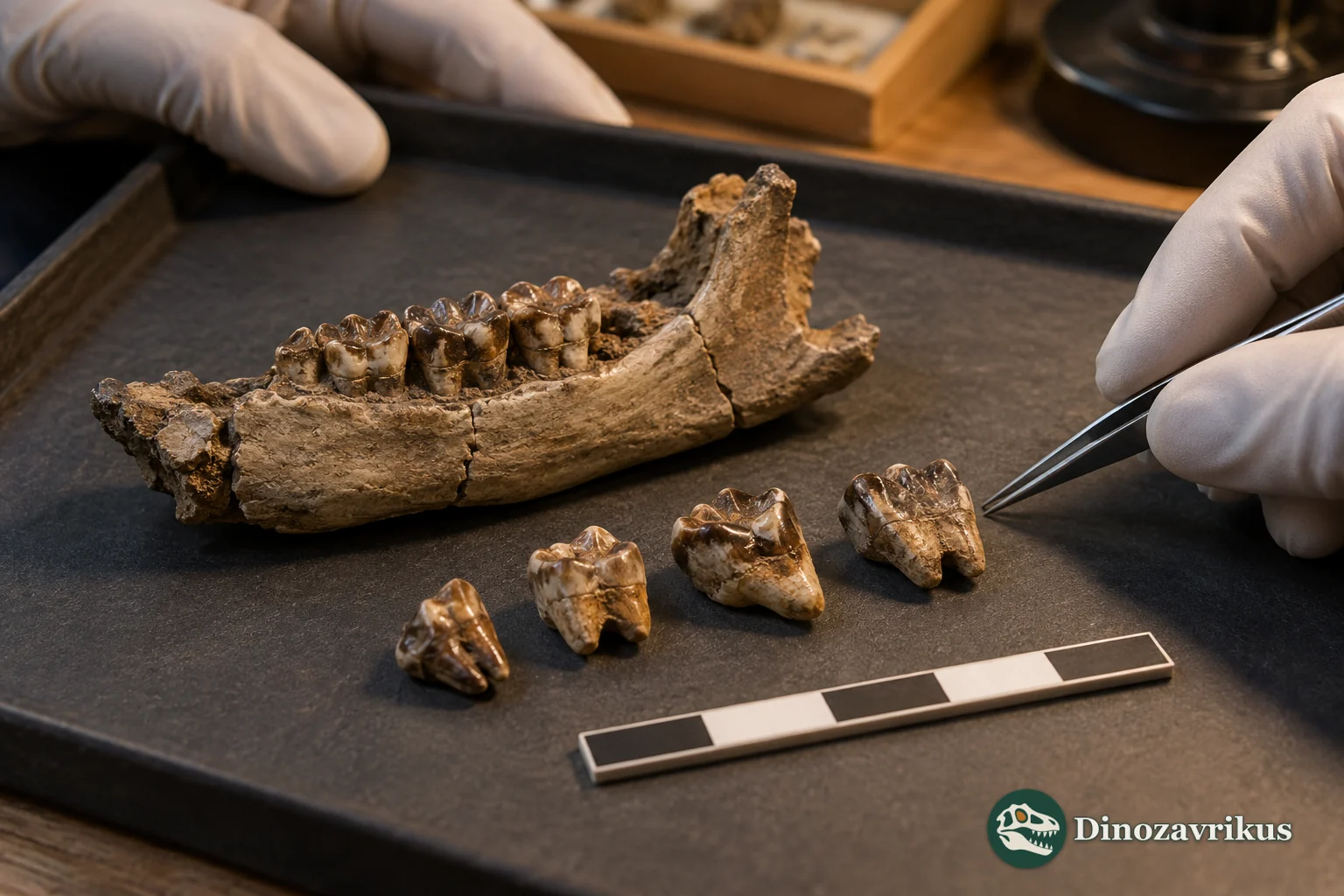
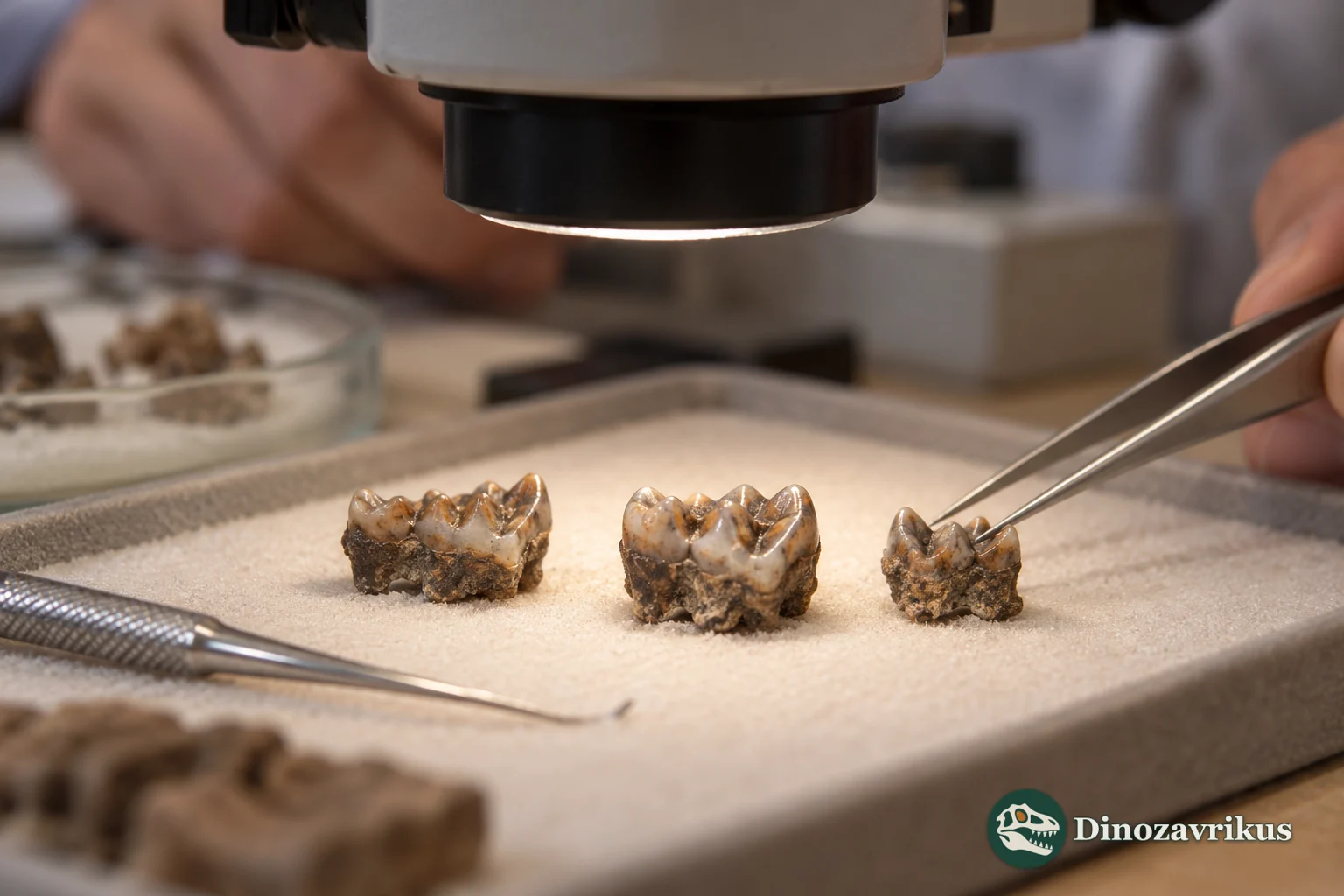
Researchers compare premolar proportions, cusp arrangement and the crests on the molars. Descriptions of Litocherus note rounded talonid basins and reduced, sometimes crest-like paraconids; the rear lower molars become smaller. The exact combination varies among species, so a tooth from an isolated screen-washed sample may be assigned cautiously.
The commonly recognized species are L. zygeus, L. notissimus and L. lacunatus. Earlier combinations in Litolestes remain part of their nomenclatural history. Some teeth from different quarries have been referred with a question mark or left at genus level, showing that a resemblance is not always enough for a secure species identification.
Localities and Paleocene age
L. zygeus is represented at Cedar Point and other localities in the northern Bighorn Basin. L. lacunatus includes material from the Titanoides locality in Wyoming. Rankin and colleagues reported a substantial sample of L. lacunatus in the Roche Percée local fauna of Saskatchewan and assigned that fauna to the late middle Tiffanian Ti4 interval.
DW-2 in Alberta yielded the material that expanded knowledge of L. notissimus beyond isolated teeth. These localities represent separate assemblages and stratigraphic contexts. A genus-level range should not be treated as one precise date for every fossil.
Postcranial bones and locomotion
The DW-2 sample attributed to L. notissimus includes parts of the basicranium, jaws, pelvis, femur, ankle bones and toe bones. These remains were found in close association with dental material, giving researchers several independent anatomical characters to compare. They do not make up a complete, articulated skeleton.
Craig Scott and Doug Boyer interpreted the basicranial and ankle features as supporting erinaceomorph or eulipotyphlan affinities. They also discussed a terrestrial locomotor pattern that could have involved running or leaping. Such a reconstruction is an inference from a limited set of bones; the fossils do not supply a measured running speed or a complete gait cycle.
Competing evolutionary placements
Gingerich assigned Litocherus to Erinaceomorpha. Novacek and colleagues treated it as Erinaceomorpha of uncertain position, noting dental characters that separated it from hyopsodontid mammals without tying it confidently to one family. Hooker and Russell's 2012 analysis of early Paleogene Louisinidae and macroscelideans proposed a relationship on the stem of Macroscelidea.
The associated postcranial material later supplied new characters, and analyses by Scott and Boyer supported an erinaceomorph interpretation rather than a macroscelidean one. The sample is still incomplete, and results depend on character selection and which fossil groups are included. It is safest to describe Litocherus as an early placental with disputed affinities, often treated among erinaceomorphs, rather than as a proven ancestor of modern elephant shrews.
Diet and reconstruction
Tooth form provides the main evidence for naming and comparing the species. No diagnostic gut contents, coprolites or feeding traces have been reported for the genus, so a precise diet is not established. The dental record alone also cannot provide a reliable mass or body length.
The cover illustration shows a hypothetical small mammal on a Paleocene woodland floor. Its proportions and fur are artistic choices, not details preserved in the fossil record. Limb bones permit limited discussion of terrestrial movement, while colour, behaviour and soft tissues remain unknown.
Frequently asked questions
When did Litocherus live?
It is known from Paleocene sites in western North America. The species come from different local faunas, so one exact date does not apply to every specimen.
Is a complete Litocherus skeleton known?
No. Material of L. notissimus includes associated skull-base and limb elements with dental remains, but there is no complete articulated skeleton.
Why have researchers classified it in different groups?
Early placements relied mostly on teeth, while Hooker and Russell proposed macroscelidean affinities and later study of associated bones supported an erinaceomorph interpretation. The sample remains incomplete.
Which species are usually included in the genus?
Systematic studies commonly recognize L. zygeus, L. notissimus and L. lacunatus. Some isolated teeth have only tentative or genus-level identifications.