

Hardyoides was a late Cambrian trilobite from North America. In the type species, H. minor, two spines rose from the midline of the thorax, one on the third segment and one on the fifth. Differences in the positions of these spines helped paleontologists distinguish closely related species.
Quick facts
| Group | Trilobites, Norwoodiidae |
|---|---|
| Age | Late Cambrian |
| Region | North America: Canada and the United States |
| Type species | Hardyoides minor |
| Scientific name | Hardyoides |
| Diet | Unknown |
What can the fossils tell us?
Nevada examples preserve thoracic segments, so the positions of the spines can be checked directly.
The type species occurs in the upper part of the regional Aphelaspis Zone, identified by its late Cambrian trilobite assemblage.
Body fossils show where the spines were attached, but do not reveal how the animal used them.
From Canada to Nevada
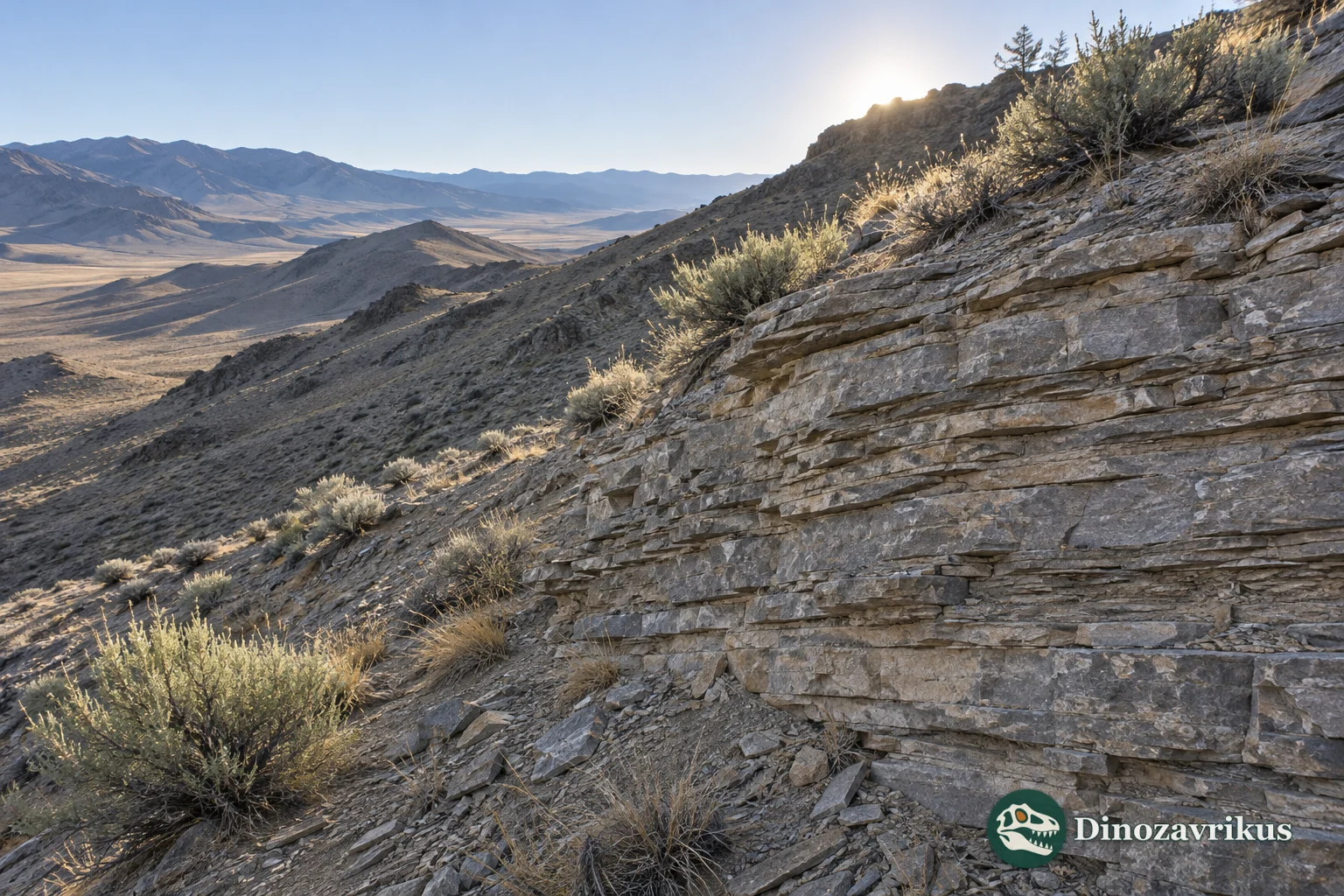
Teiichi Kobayashi named Hardyoides minor in 1938 from Canadian material. Abundant specimens in eastern Nevada later allowed Allison Palmer to refine the description of the species and test earlier estimates of its age. The Nevada specimens came from limestone, and some were preserved through replacement by silica.
The positions of the spines
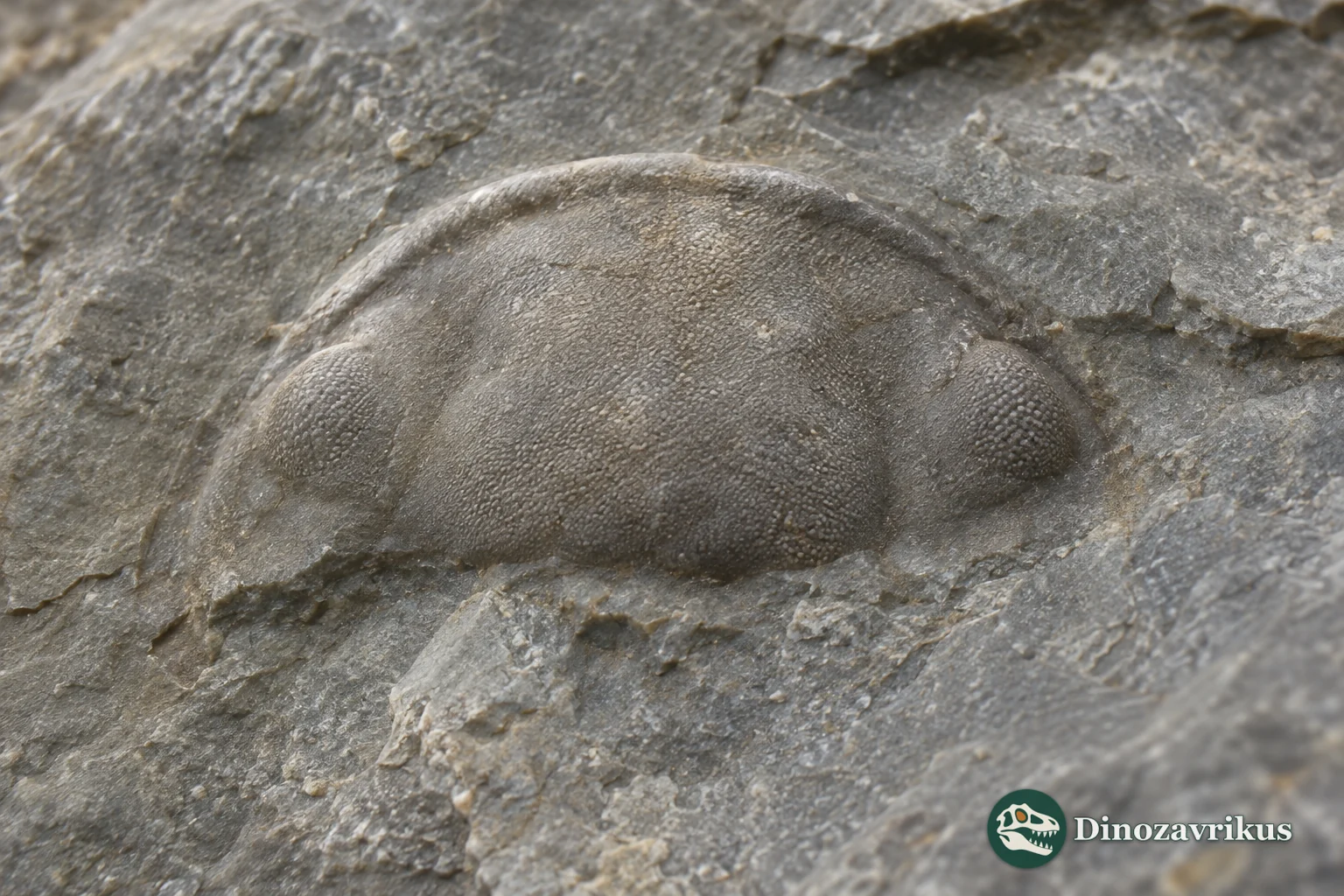
The head had a long, convex glabella with faint furrows. Fine granules are visible on the exoskeleton of H. minor. Its thorax had eight segments, with axial spines restricted to the third and fifth. The occipital ring, just behind the glabella, and the seventh thoracic segment lacked spines. Both positions bear additional spines in H. tenerus.
H. tenerus was once placed in a separate genus, Norwoodina. Palmer compared the type species and treated the two genus names as synonyms, retaining the earlier name Hardyoides. Another species, H. mimicus, was described from cranidial material from Nevada. It has a spine on the occipital ring and a slightly longer brim in front of the glabella than H. minor.
Dating the Nevada finds
The Nevada specimens of H. minor came from the upper part of the Aphelaspis Zone in the Great Basin. The same interval also yields Terranovella brevis, a species of Terranovella. H. mimicus occurs in somewhat younger beds at Yucca Flat, in the Dicanthopyge Zone. Both zones belong to the late Cambrian.
Frequently asked questions
Which segments had spines in the type species?
H. minor had one axial spine on the third thoracic segment and another on the fifth.
How did H. tenerus differ?
It had additional axial spines on the occipital ring and the seventh thoracic segment.
Why does the name Norwoodina occur in older studies?
It was named as a separate genus for the species now referred to as Hardyoides tenerus.
Where did Hardyoides live?
Confirmed material comes from late Cambrian marine rocks in North America, including localities in Canada and Nevada.