

Terranovella was a Cambrian trilobite from North America. Its type species came from western Newfoundland. Fossils of a different species from the Arctic Boothia Peninsula retain fine details of the outer head shield.
Quick facts
| Group | Trilobites, family Lonchocephalidae |
|---|---|
| Age | Cambrian, including the early Furongian |
| Region | North America: Canada and United States |
| Type species | Terranovella obscura |
| Diet | Unknown |
What can the fossils tell us?
T. dorsalis collections from the Boothia Peninsula include 50 cranidia, 14 tail shields and two free cheeks.
The preserved exoskeleton traits match T. dorsalis material from Wisconsin.
Some head and tail pieces from the Reluctant Head Formation could be identified only to genus.
The type species from Newfoundland
Christina Lochman established Terranovella in 1938. Its type species T. obscura came from western Newfoundland. Published classifications place the genus in the family Lonchocephalidae.
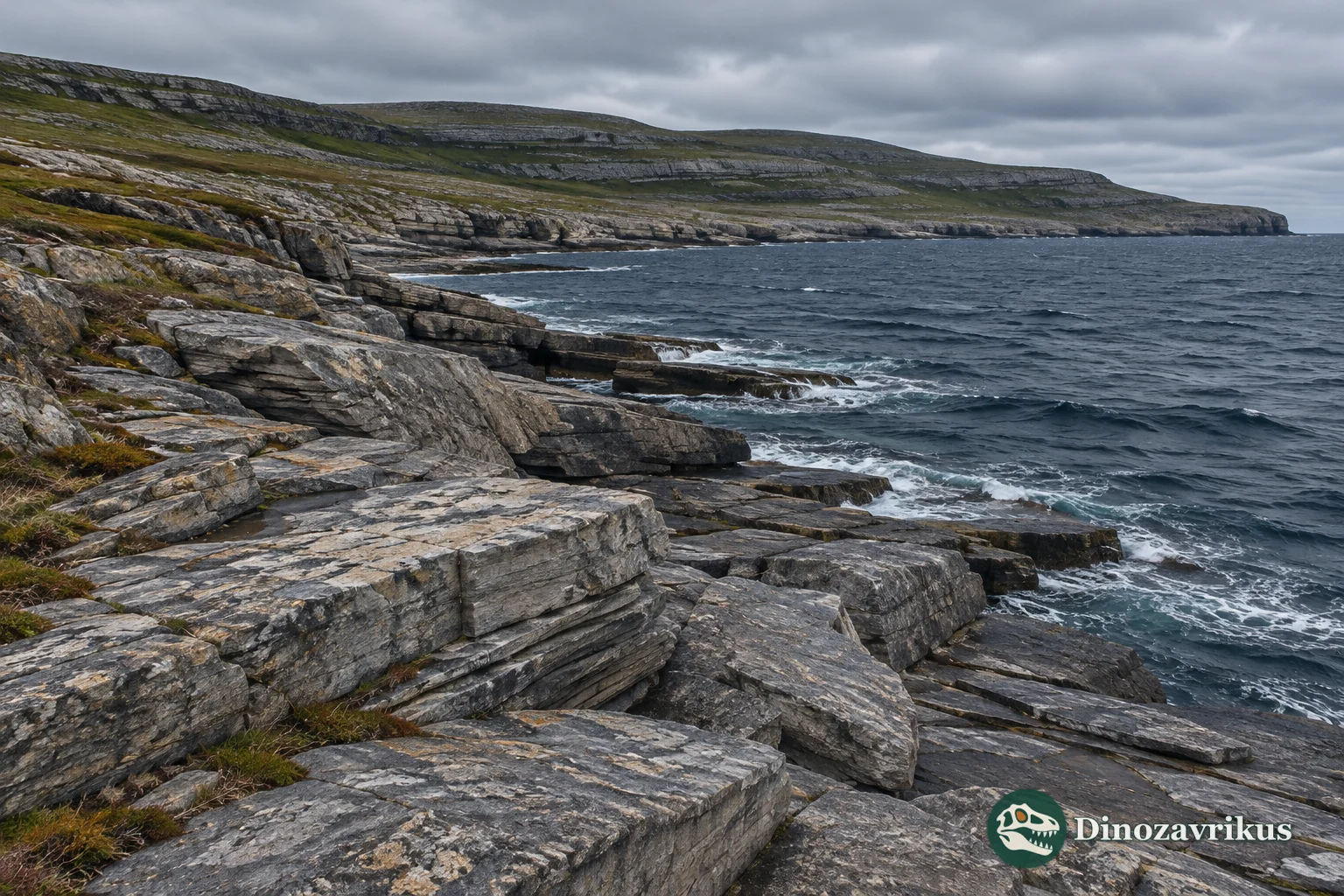
Samples from the Reluctant Head Formation in western Newfoundland include cranidia, the central pieces of head shields, and separate tail shields assigned to Terranovella. Some occur alongside Crepicephalus. Blountia is known from other Cambrian collections in western Newfoundland. Correlating those finds calls for the rock context and the other species in each sample.
What the Arctic specimens preserve
On the Boothia Peninsula, researchers identified a different species, T. dorsalis. They examined 50 cranidia, 14 tail shields and two free cheeks from three localities. The observable features agreed with specimens from nearshore sandy rocks in Wisconsin.
The Arctic fossils retained their outer surface particularly well. A faint narrow border and fine lengthwise lines appear near the front of the head shield. A similar pattern is reported from Tennessee. Older descriptions assigned material now included in T. dorsalis to Lonchocephalus sospita and Terranovella buttsi.
The rocks in which it occurs
In several United States sections, T. dorsalis characterizes parts of the Crepicephalus Zone. Researchers found it particularly common in nearshore sandy deposits. That distribution describes the places where the species was preserved. Its diet remains unknown.
Frequently asked questions
Where was the type species found?
T. obscura comes from the Cambrian of western Newfoundland, Canada.
What parts were collected on the Boothia Peninsula?
The Arctic collections include cranidia, tail shields and free cheeks of T. dorsalis.
What surface details do the Arctic fossils show?
They preserve a narrow border and faint longitudinal lines near the front of the head shield.
Which biozone contains T. dorsalis?
It occurs in the Crepicephalus Zone in several North American sections.