

Helvetisaurus was an extinct member of the lizard family Anguidae. Its type species was described from Late Eocene fossils in Switzerland. Finds in France provided several details of the lower jaw that palaeontologists use in comparisons with other anguids.
Quick facts
| Group | Anguimorphs (Anguimorpha), anguids (Anguidae) |
|---|---|
| Age | Late Eocene and early Oligocene |
| Region | Europe, Switzerland and France |
| Type species | Helvetisaurus picteti |
| Scientific name | Helvetisaurus |
| Diet | Diet unknown |
What can the fossils tell us?
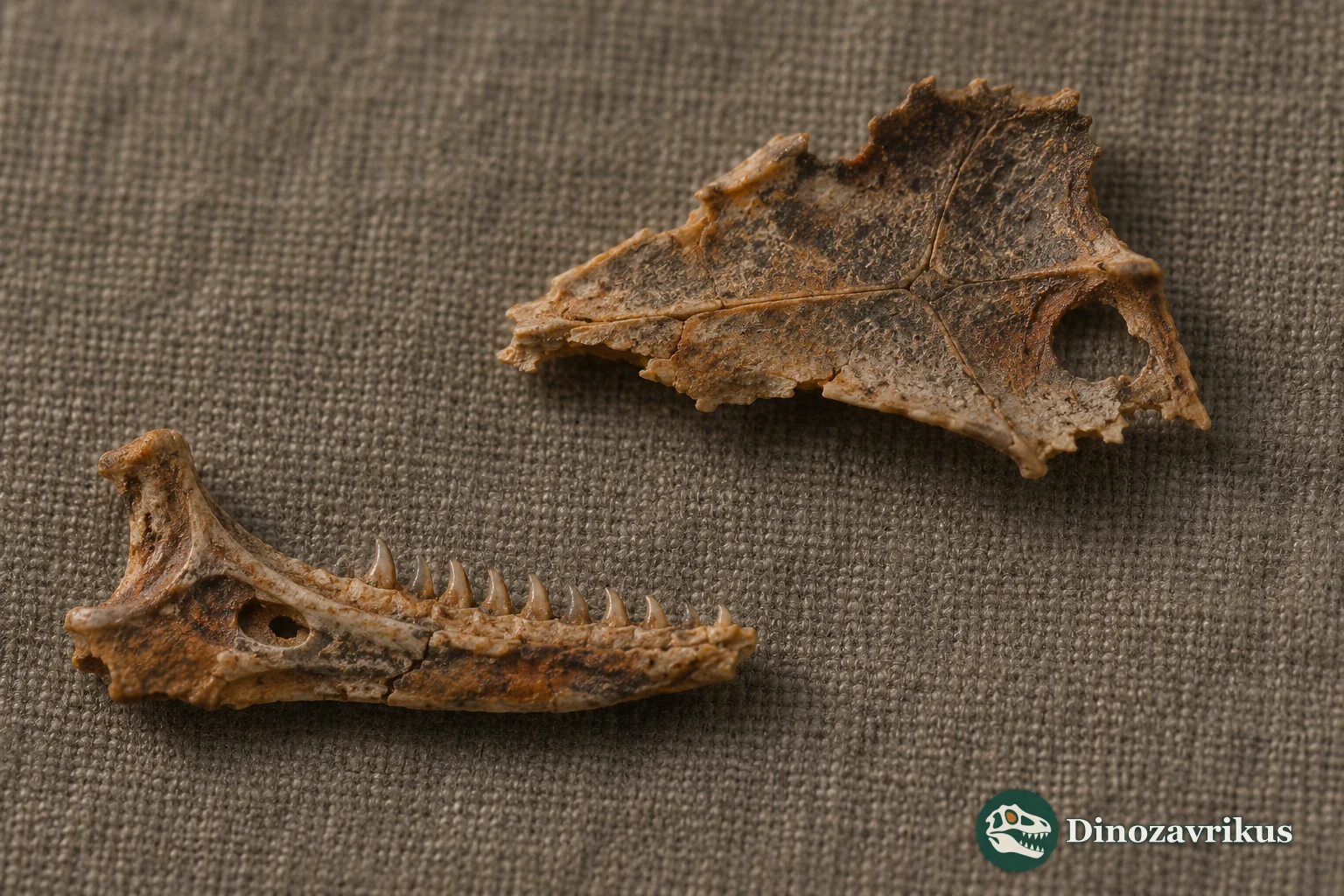
Referred fossils include lower jaw bones, a palatine and parts of the skull base. Isolated vertebrae and osteoderms have also been described.
The French dentary lacks the notch for the coronoid bone. This feature helps distinguish it from some later anguids.
Some diagnostic features were recorded on French material. The Swiss type material needs modern redescription before all of these comparisons can be tested.
A Swiss species under a new name
Robert Hoffstetter described the type species as Parapseudopus picteti in 1942. Marc Louis Augé established Helvetisaurus for it in 2005. The Swiss material comes from Priabonian deposits of the Late Eocene. Similar remains have been reported from France, including the Quercy phosphorites.
Distinguishing isolated jaws
The dentary referred to Helvetisaurus by Augé lacks a notch for the coronoid bone at the back of the jaw. Another point of comparison is the anterior inferior alveolar foramen, an opening that leaves no visible trace on the described material. Parophisaurus, another fossil anguid, is also compared with other lizards using several features of the teeth and jaws together.
Across the Eocene–Oligocene boundary
Fossils referred to Helvetisaurus have also been reported from the earliest Oligocene. The genus thus represents one of the lizards that persisted through a major change in European faunas. Some remains can only be assigned to the genus. Their species identity remains open.
Frequently asked questions
Where was the type species found?
The type material comes from Late Eocene deposits in Switzerland. Other remains from France have also been assigned to the species.
What was its original name?
Hoffstetter described the species as Parapseudopus picteti. It has been placed in Helvetisaurus since 2005.
What bones are known?
Fragments of the jaws and skull, isolated vertebrae and small bony plates from the skin have been described.
Was Helvetisaurus limbless?
The material does not reveal the state of the limbs with confidence.