

Parophisaurus was a North American member of the lizard family Anguidae. Its Oligocene type species had well-developed limbs and osteoderms, small plates of bone within the skin. The pattern on these plates and the shape of the teeth help palaeontologists compare its remains with those of other fossil lizards.
Quick facts
| Group | Anguimorphs (Anguimorpha), anguids (Anguidae) |
|---|---|
| Age | Early Eocene and early Oligocene |
| Region | North America, United States |
| Type species | Parophisaurus pawneensis |
| Scientific name | Parophisaurus |
| Diet | Diet unknown |
What can the fossils tell us?
The Oligocene type species had developed limbs, conical teeth and dermal bones with a winding texture.
One interpretation links Parophisaurus with American glass lizards. Another analysis of skeletal features places it closer to gerrhonotines.
The material does not establish Parophisaurus as a direct ancestor of any living species.
Why the species changed names
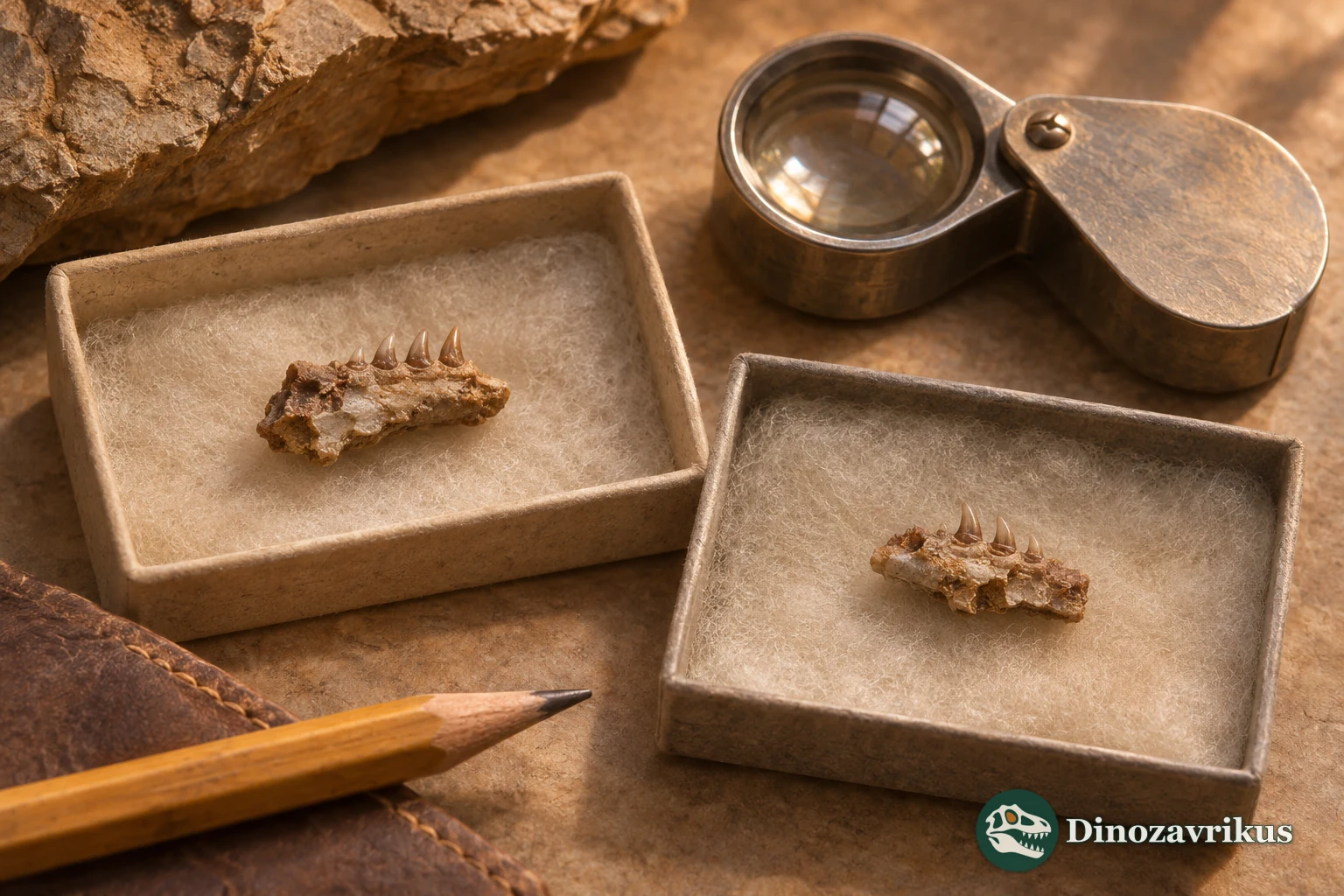
Charles Gilmore described the Oligocene species in 1928 as Xestops pawneensis. Robert Sullivan re-examined its anatomy and named the genus Parophisaurus in 1987. Conical teeth and the winding pattern on the osteoderms helped distinguish it from other anguids. Tooth crowns are also useful for telling apart fossils of Dormaalisaurus, another Palaeogene lizard.
Legs and family relationships
Sullivan described a fully limbed lizard and suggested a relationship to New World glass lizards, which have lost their limbs. A later analysis instead recovered P. pawneensis among gerrhonotines, another anguid lineage. The limb bones tell us a fair amount about the Oligocene animal, but its place among the living branches of the family remains debated.
An older species in Virginia
Robert Weems named Parophisaurus mccloskeyi in 1999 from the early Eocene Nanjemoy Formation. Michael McCloskey collected the holotype in Stafford County, Virginia, in 1995. It is held by the Smithsonian National Museum of Natural History as USNM PAL 498662.
Frequently asked questions
Did Parophisaurus have legs?
The type species, Parophisaurus pawneensis, had well-developed limbs.
Why do palaeontologists study osteoderms?
The shape and surface pattern of these bones help compare fossil lizards even when their jaws or skulls are incomplete.
Where was the Eocene species found?
Parophisaurus mccloskeyi was described from a fossil found in Stafford County, Virginia.
Can conical teeth reveal its diet?
They are useful for comparisons between lizards, but the shape alone cannot establish what Parophisaurus ate.