

Herbstosaurus pigmaeus was named from an incomplete hind skeleton in Argentina. The fossil was first identified as a small dinosaur, then recognised as a pterosaur. A 2025 revision examined the pelvic and femoral impressions again, while an ammonite in the same nodule helped fix its age in the latest Jurassic. Its skull and wings are still unknown.
Quick facts
| Scientific name | Herbstosaurus pigmaeus, Casamiquela, 1975 |
|---|---|
| Holotype | CTES-PZ 1711, mostly impressions of the sacrum, pelvis and two femora |
| Locality | Arroyo Picún Leufú area, Neuquén, Argentina |
| Rock and age | Vaca Muerta Formation, probably late Tithonian |
| History | First described as a small theropod dinosaur |
| Wingspan | Unknown: wing bones are not preserved |
| Relationships | Pterodactyloid; the proposed dsungaripteroid link is weakly supported |
What can the fossils tell us?
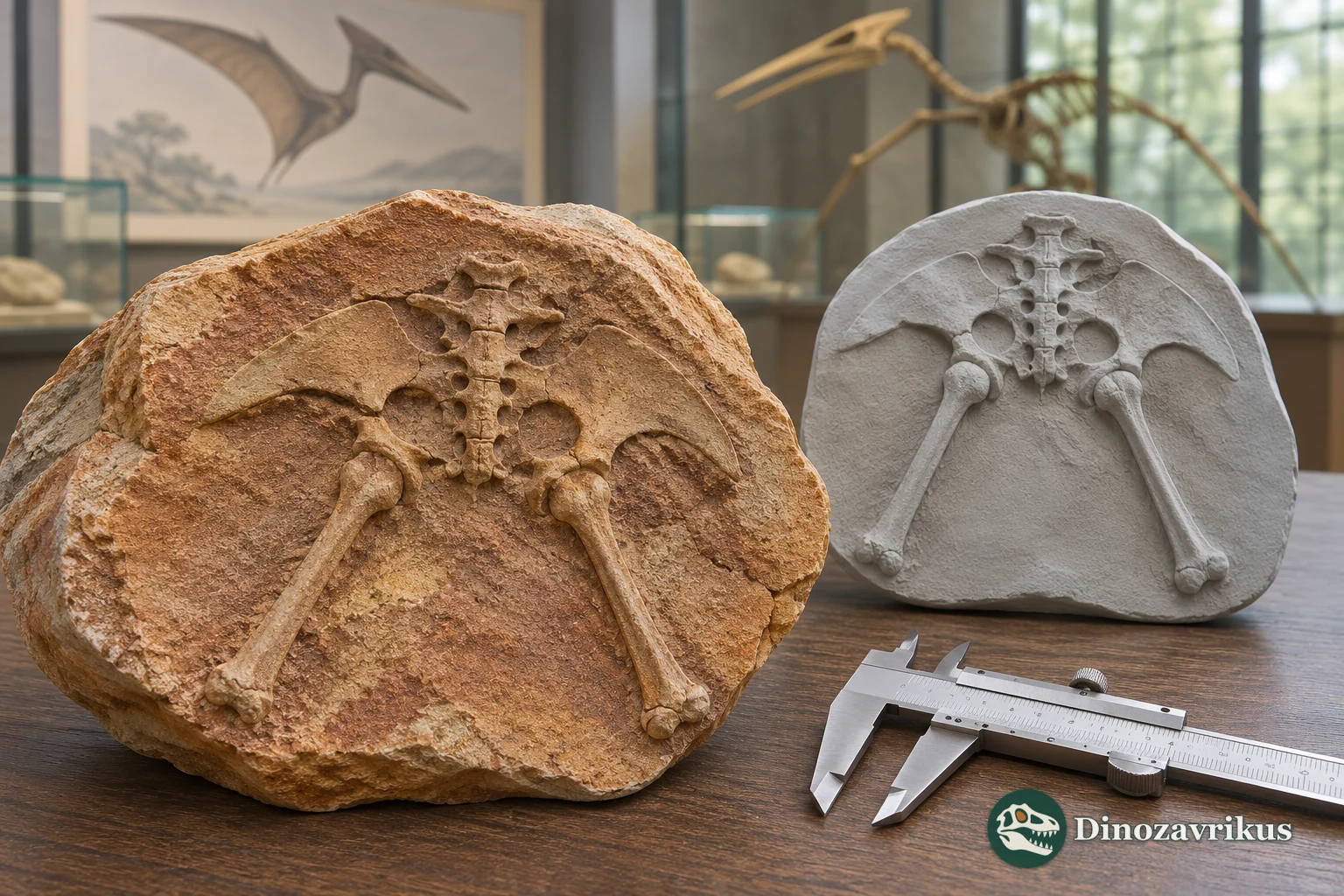
CTES-PZ 1711 preserves natural moulds of sacral and pelvic elements and both femora. It provides no direct view of the skull, teeth or wings.
An ammonite in the same nodule was reassigned to Lytohoplites alternans. Its stratigraphic occurrence supports a late Tithonian age in the Vaca Muerta Formation.
The 2025 revision identified an unusual combination of bumps on the ilium, ridges on the prepubis and femoral-neck shape to diagnose the species.
A phylogenetic analysis recovered Herbstosaurus within pterodactyloids near dsungaripteroids, but that closer placement relies mainly on femoral characters.
A fossil with a complicated history
Palaeobotanist Rafael Herbst collected the fossil in Neuquén Province. Rodolfo Casamiquela named Herbstosaurus pigmaeus in 1975, honouring the collector and referring to the animal's presumed small size. At the time he interpreted the preserved rear skeleton as a small predatory dinosaur. Later comparisons found a pterosaur better matched its pelvis and femora.
The holotype, CTES-PZ 1711, is kept in the palaeontological collection of Argentina's National University of the Northeast. Much of the bone survives as a natural mould rather than complete three-dimensional material. A positive cast helps reveal its shape. The 2025 revision redescribed the sacrum, right ilium and prepubis, and both femora; small foot bones proposed in the original work could not be confidently identified.
The ammonite and the rock's age
Casamiquela originally assigned the nodule to Middle Jurassic rocks of the Lotena Formation. An ammonite preserved on its reverse prompted a later reassignment to the Vaca Muerta Formation. In 2025 researchers reported its reidentification as Lytohoplites alternans, consistent with a probably late Tithonian, latest Jurassic age. The dating comes from a fossil in the same nodule, not from the pterosaur's size.
Wenupteryx is another pterosaur from the Vaca Muerta Formation, represented by a more complete skeleton at a different locality. Sharing a formation does not establish that the two species lived together or fed in the same way.
Why it is a distinct pterosaur
The re-examination found four knob-like projections on the ilium's forward process, three radiating ridges on the prepubis and a distinctive angle of the femoral neck. Their combination allowed the authors to diagnose Herbstosaurus among pterosaurs. These characters concern preserved bones, not the absent head or wing.
The 2025 analysis placed Herbstosaurus among pterodactyloids and near dsungaripteroids. The authors cautioned that this finer placement is weakly supported and largely depends on femoral traits. Since no jaws or teeth are preserved, its diet and exact head shape remain unknown.
What the reconstruction cannot show
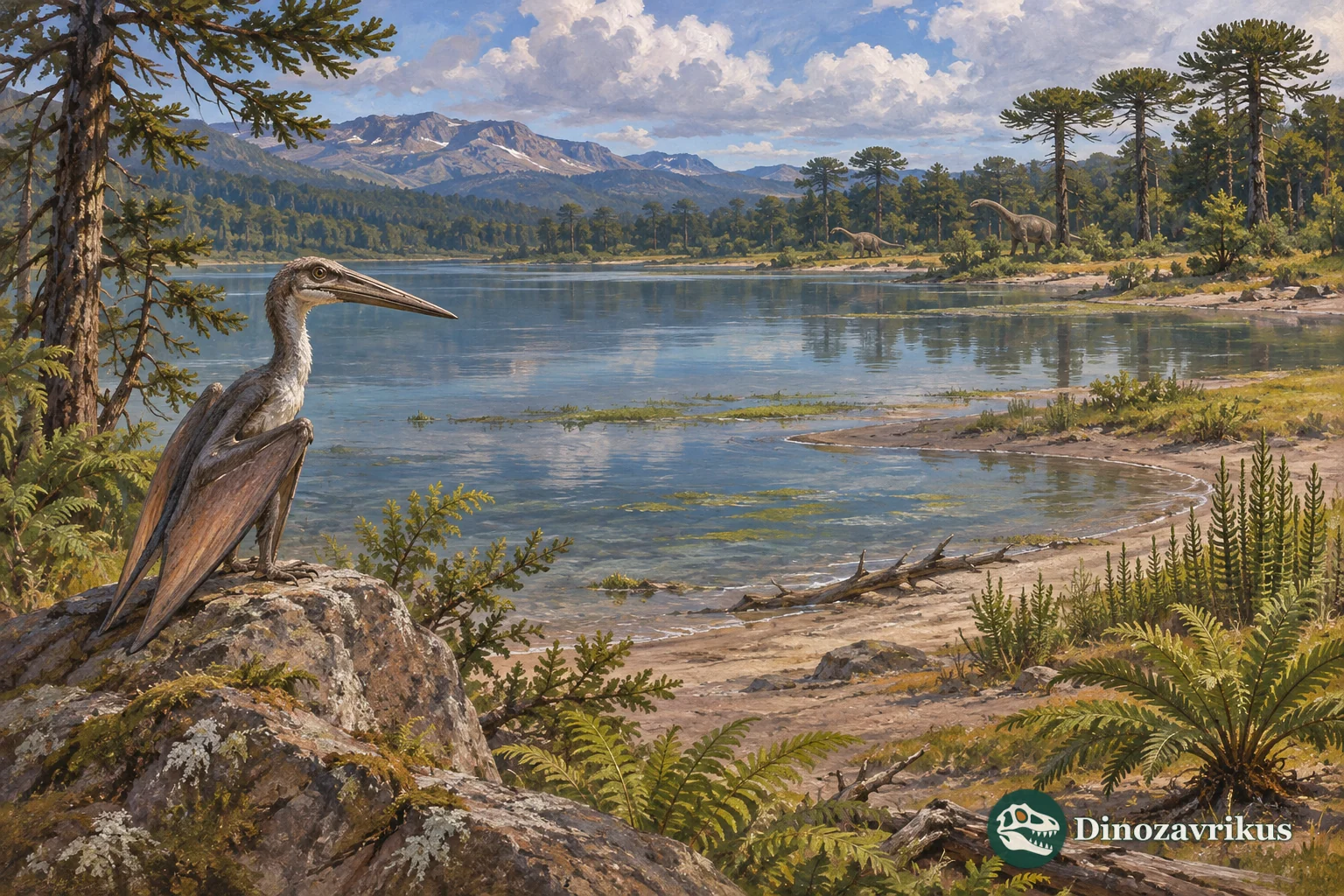
The cover and coastal scene propose a pterodactyloid appearance without claiming to depict the specimen. Wing membranes, skull form, colour and pose come from comparison or artistic choice. Harpactognathus, in contrast, was named from a toothed snout, but its type also lacks wings: different fossils answer different questions.
Frequently asked questions
Where was Herbstosaurus found?
Its holotype came from the Arroyo Picún Leufú area of Neuquén Province, Argentina, in the Vaca Muerta Formation.
Why was it once called a dinosaur?
The partial rear skeleton was first interpreted as that of a small theropod. Later anatomical comparisons identified pterosaur traits.
How was its Jurassic age established?
An ammonite on the reverse of the same nodule was identified as Lytohoplites alternans, supporting a late Tithonian age.
Do we know its head or wings?
No. Neither skull nor wing material is preserved in the holotype, so any whole-body image is interpretive.