

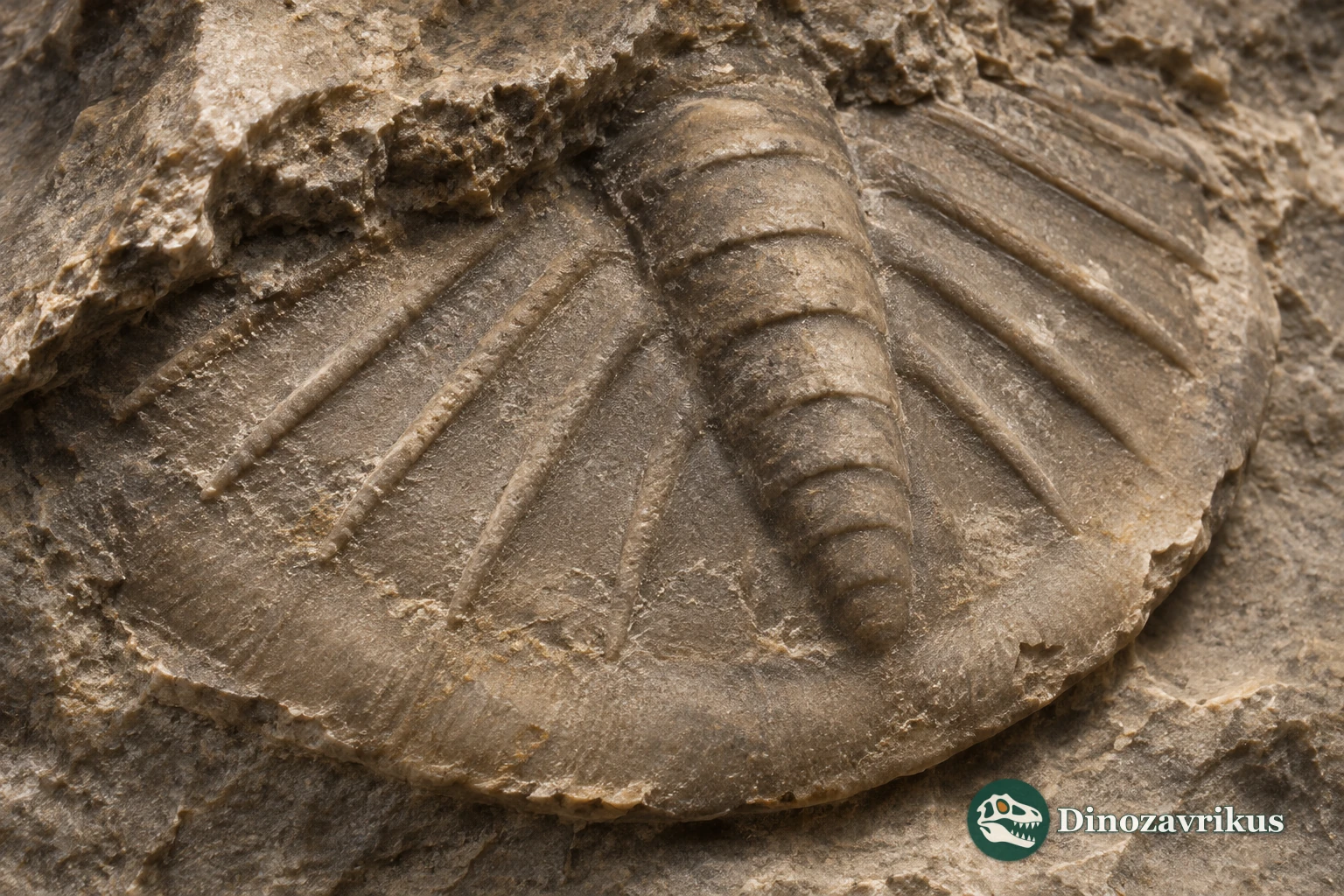
In Hesslerides from the early Carboniferous rocks of New Mexico, the ribs of the tail shield extend onto its wide border almost to the edge. David Brezinski used this feature and details of the head to establish a genus for several North American trilobites.
Quick facts
| Group | Phillipsiid trilobites |
|---|---|
| Age | Early Carboniferous |
| Genus established | David Brezinski, 2000 |
| Type species | Hesslerides bufo |
| Localities | North America |
| New Mexico holotype | Cranidium CM 45996 |
What can the fossils tell us?
The pear-shaped glabella almost eliminates the separate frontal border. The feature can be seen on detached head shields.
In the New Mexico species, nine or ten paired ribs extend sideways almost to the outer margin.
The trilobite assemblage in the Lake Valley Formation can be compared with early Carboniferous assemblages in the central United States.
North American species once assigned to Griffithides
Fielding Meek and Amos Worthen originally called the type species Griffithides bufo in 1870. In 2000 Brezinski moved it and G. pustulosa to Hesslerides. These trilobites resemble Eurasian Griffithides, especially in the inflated front of the glabella, the raised central part of the head shield.
The North American specimens have shorter rear branches of the facial suture and more semicircular tails. Brezinski used the combination to define the genus and described an additional species, H. arcentensis.
The type series from the Lake Valley Formation
The holotype of H. arcentensis is cranidium CM 45996 from the uppermost Arcente Member. The type series also includes more pieces of the head and several tails, among them the nearly complete CM 45999 and CM 46000. The detached specimens preserve details from both ends of the shell.
The pear-shaped glabella narrows between the eye lobes and reaches the front margin. The eyes are kidney-shaped and stand on raised platforms. The pygidium, or tail shield, has eleven axial rings and nine or ten pairs of lateral ribs. The tail of this species is shorter and less vaulted than that of H. bufo.
Using fossils to compare rock layers
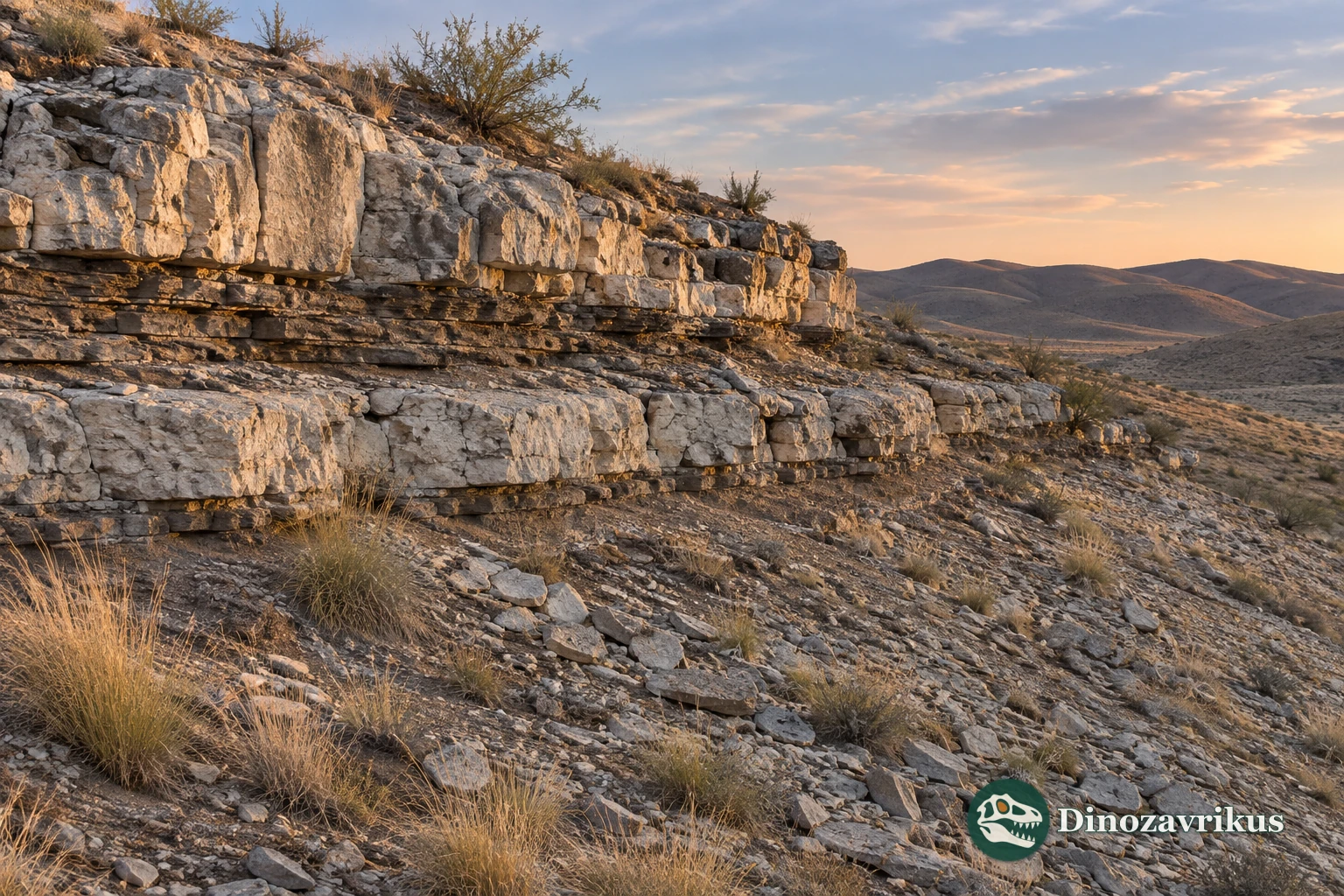
The range of H. arcentensis in the studied section extends from the upper Tierra Blanca Member through Arcente to the base of Dona Ana. Brezinski correlated the Lake Valley assemblage containing the species with the Exochops portlockii assemblage of the central United States. The comparison uses several species and their positions in the rock sequence.
Frequently asked questions
Which species is the type of Hesslerides?
Hesslerides bufo. It was originally described as a species of Griffithides.
What is the holotype from the Arcente Member?
It is the central part of the head shield of Hesslerides arcentensis, catalogued as CM 45996.
How many rings are on the New Mexico species’ tail?
There are eleven along the axis, flanked by nine or ten pairs of lateral ribs.
What do its eyes look like?
The eyes of the New Mexico species are kidney-shaped and stand on raised platforms.