

Hillyardina was an Early Ordovician hystricurid trilobite. In its type species the raised centre of the head forms a conspicuous rounded profile. The front of the shield slopes steeply below it, which makes the central head piece identifiable even when other parts of the shell are missing.
Quick facts
| Group | Trilobita, Hystricuridae |
|---|---|
| Age of the type material | Early Ordovician |
| Type species | Hillyardina semicylindrica |
| Genus established | Reuben James Ross, 1951 |
| Type locality | Garden City Formation, Idaho, USA |
| Known material | Cranidia, free cheeks and tail shields |
What can the fossils tell us?
Its rounded section, the steep brim in front and the small eye lobes help identify the genus.
Both were assigned to the type species. They are separate fossils, so the bed does not establish a single individual.
Some isolated cheeks can be compared with form A. At least one assignment was made provisionally.
The raised centre of the head
Reuben James Ross erected Hillyardina in 1951 from the Garden City Formation. The type species is H. semicylindrica. Its glabella forms a prominently arched ridge with a rounded front. In front of it, a broad sloping area descends to a thin, flattened rim. The small palpebral lobes are plate-like.
The narrow fixed cheeks end towards the rear in acute triangular areas. A cranidium preserves the middle and fixed sections of the head but excludes the outer free cheeks. Shape and relief here give more evidence than the overall outline of a worn fragment.
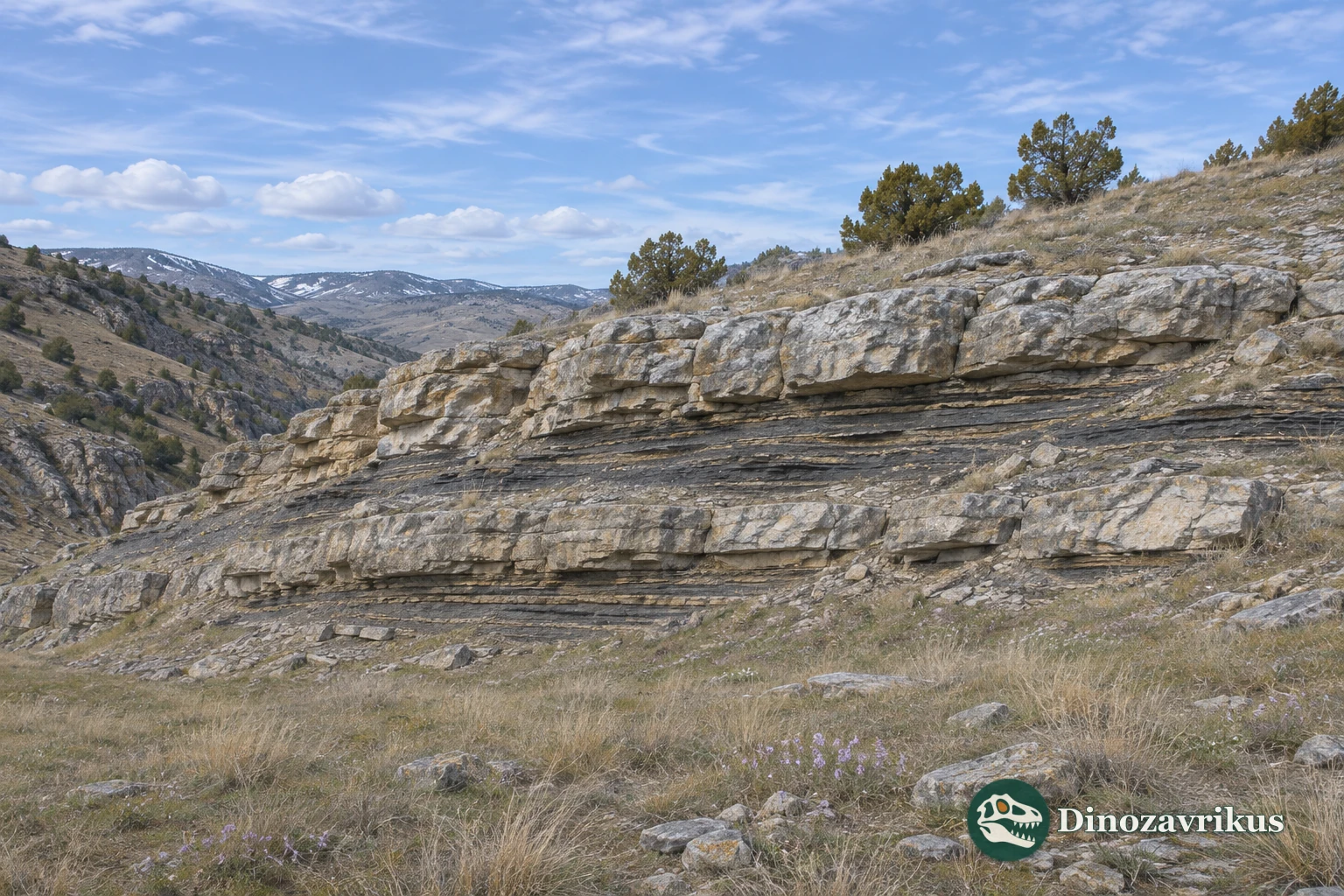
Two fossils from one Idaho horizon
Jonathan Adrain and colleagues redescribed the fauna of the Bear River Range in 2014. They figured cranidium SUI 134221 and pygidium SUI 134222 from the 130.5 m level of section HC6. Both belong to H. semicylindrica in their treatment, and the layer lies in the Pseudoclelandia cornupsittaca Zone.
The same zone produced cranidia of Parahystricurus. When a layer contains several similar trilobites, the fossil outlines and relief are needed to determine which parts are comparable. An equal position in the section gives a shared stratigraphic context for separate pieces.
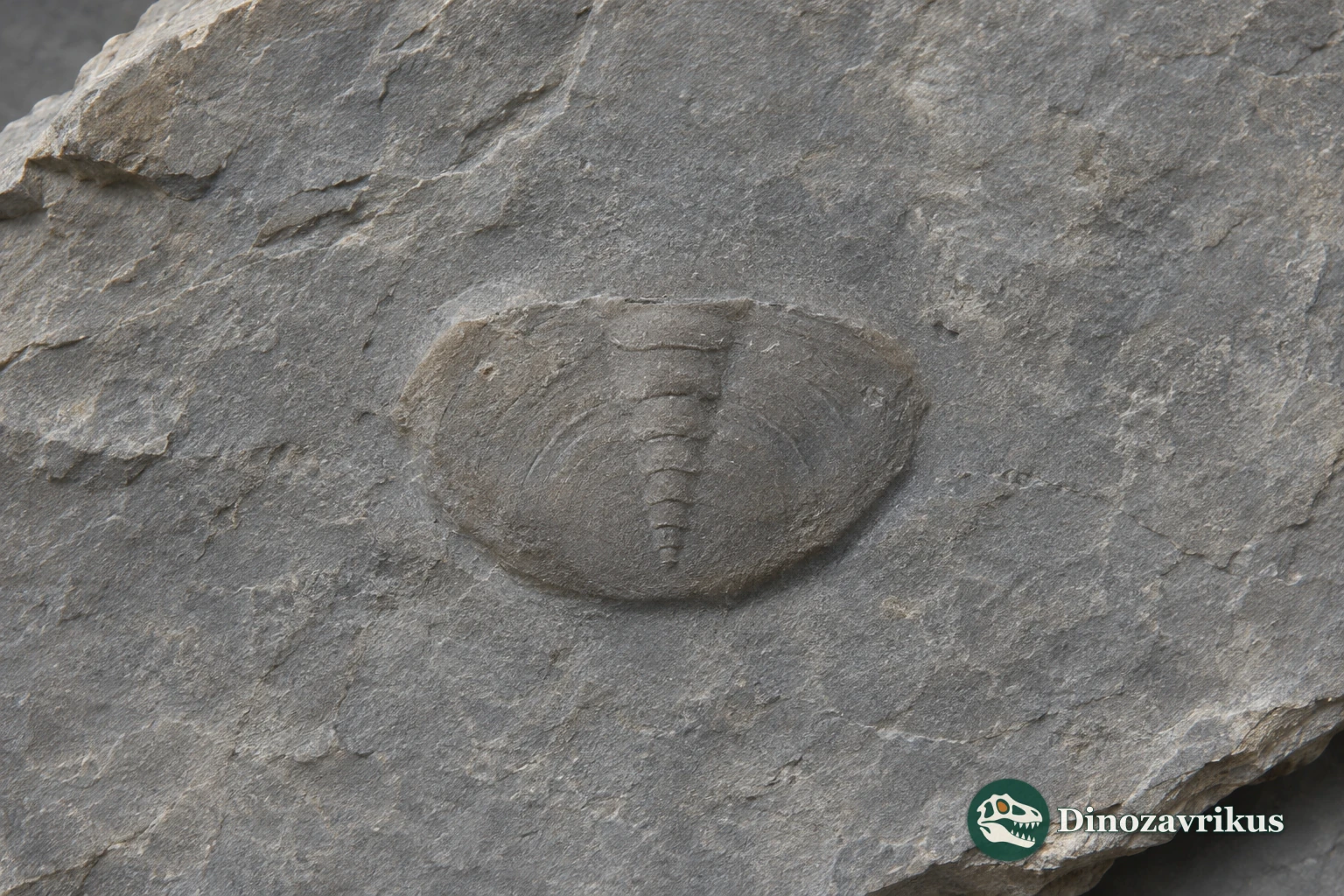
An informal identification in Utah
Forrest Terrell illustrated detached free cheeks and a cranidium from the lower Fillmore Formation of western Utah. He associated them with Hillyardina sp. A, a form known from earlier work. He only tentatively identified one of the cheeks, BYU 1632, while the cranidium BYU 1635 was listed directly under the informal designation.
This treatment records the Fillmore fossils without assigning them to the Idaho type species. It leaves open the exact relationship between those occurrences while preserving which elements were actually found and figured.
Frequently asked questions
What shape does the type species name describe?
It refers to the roughly semicylindrical profile of the raised glabella.
Where is the type species from?
Ross described it from the Early Ordovician Garden City Formation in Idaho.
Are tail shields known for Hillyardina?
Yes. Specimen SUI 134222 from the Bear River Range is a figured example.
What does form A mean in the Utah study?
It is an informal label for the material, rather than an established species name.