

Huilatherium is a genus of South American notoungulates described from the Miocene fauna of La Venta in Colombia’s Huila Department. The clearest published anatomical account concerns Huilatherium pluriplicatum: upper and lower deciduous teeth were described in detail and compared with the permanent dentition.
The genus belongs in the ancient mammal catalogue. It is a member of Notoungulata, the large extinct South American ungulate radiation that also includes the Argentine Nesodon; that shared order does not imply close generic relationship or identical ecology.
Quick facts
| Scientific name | Huilatherium Villarroel & Guerrero Díaz, 1985 |
|---|---|
| Group | Notoungulata; family Leontiniidae |
| Age | Middle Miocene; the best-known species comes from La Venta |
| Range | Colombia, including La Venta and the Castilletes Formation |
| Best-described evidence | Upper and lower deciduous tooth rows of H. pluriplicatum |
| Additional records | Castilletes specimens identified as Huilatherium sp. |
| Body size | No reliable genus-wide estimate established in the sources reviewed |
| Key limitation | The Castilletes material is not assigned to H. pluriplicatum |
What do the teeth and localities actually show?
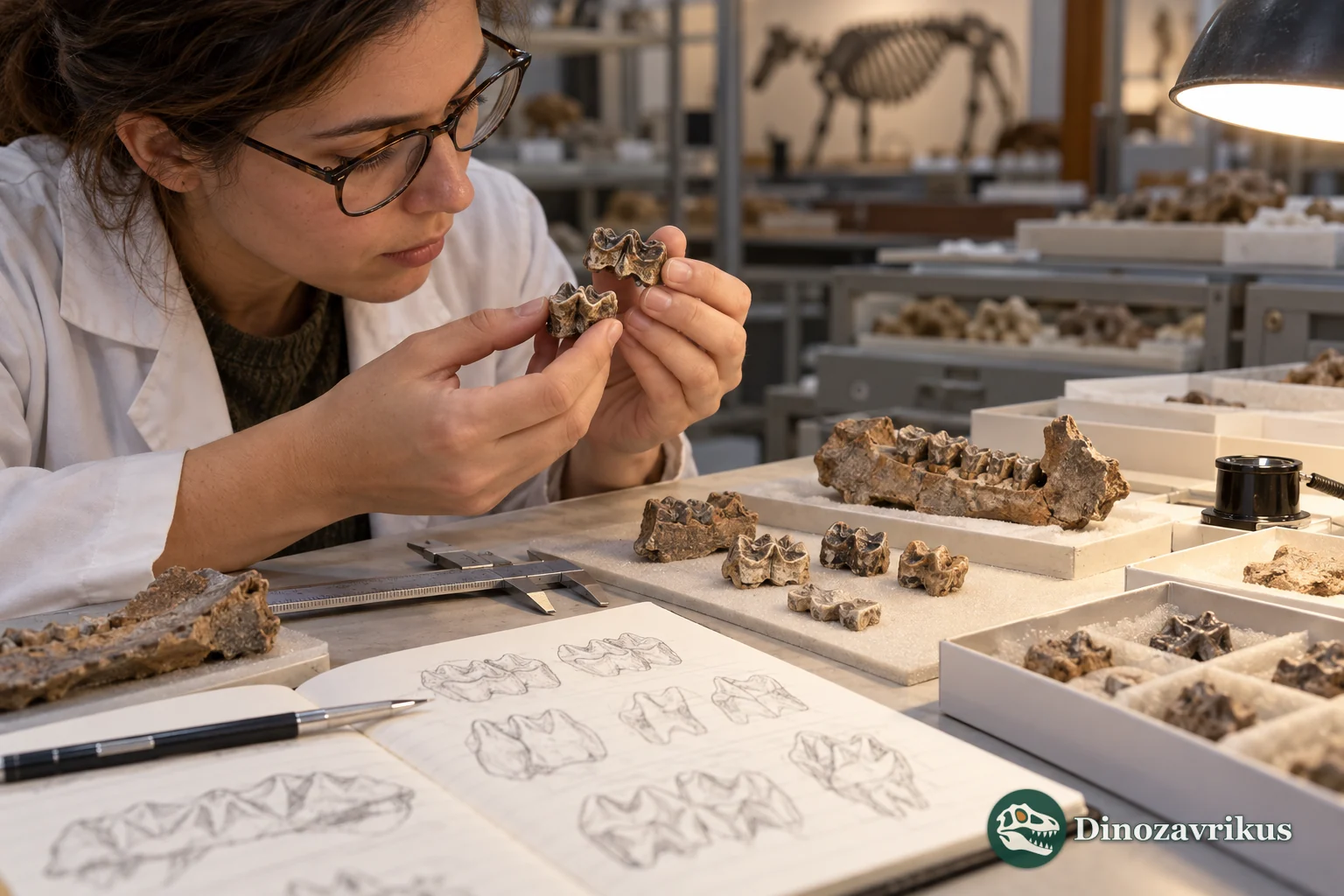
Carlos Villarroel’s 1997 study details upper and lower deciduous teeth of Huilatherium pluriplicatum and compares them with the permanent dentition. This directly documents dental form; it does not by itself establish diet or growth rate.
H. pluriplicatum is associated with the Miocene fauna of La Venta in Huila. A 2025 paper adds specimens from the Castilletes Formation but identifies them only as Huilatherium sp., not as the named species.
Villarroel and Guerrero Díaz described Huilatherium as a leontiniid. Later phylogenetic analyses placed it among tropical leontiniids, but support for some internal branches is limited. This is a relationship hypothesis, not a directly observed property of a fossil.
The published description allows comparisons between deciduous and permanent teeth. It does not establish exact mass, coat, colour or behaviour. Such details remain artistic unless supported by separate evidence.
The name and the dental record
Carlos Villarroel and Mario Guerrero Díaz introduced Huilatherium in 1985 in a paper on an unusual leontiniid from Miocene La Venta. Later work has treated the genus chiefly through teeth and jaw material. Villarroel’s 1997 study described the deciduous teeth of the upper and lower tooth rows of H. pluriplicatum, then compared them with the permanent teeth.
That comparison matters because a milk tooth row is not simply a smaller copy of the adult one. Tooth shape and position change during replacement, so a fossil must be interpreted in the context of its jaw and the sequence of eruption. The study proposed terminology suited to these dental features. It did not turn tooth morphology into direct evidence of a specific menu.
La Venta and newer Colombian records
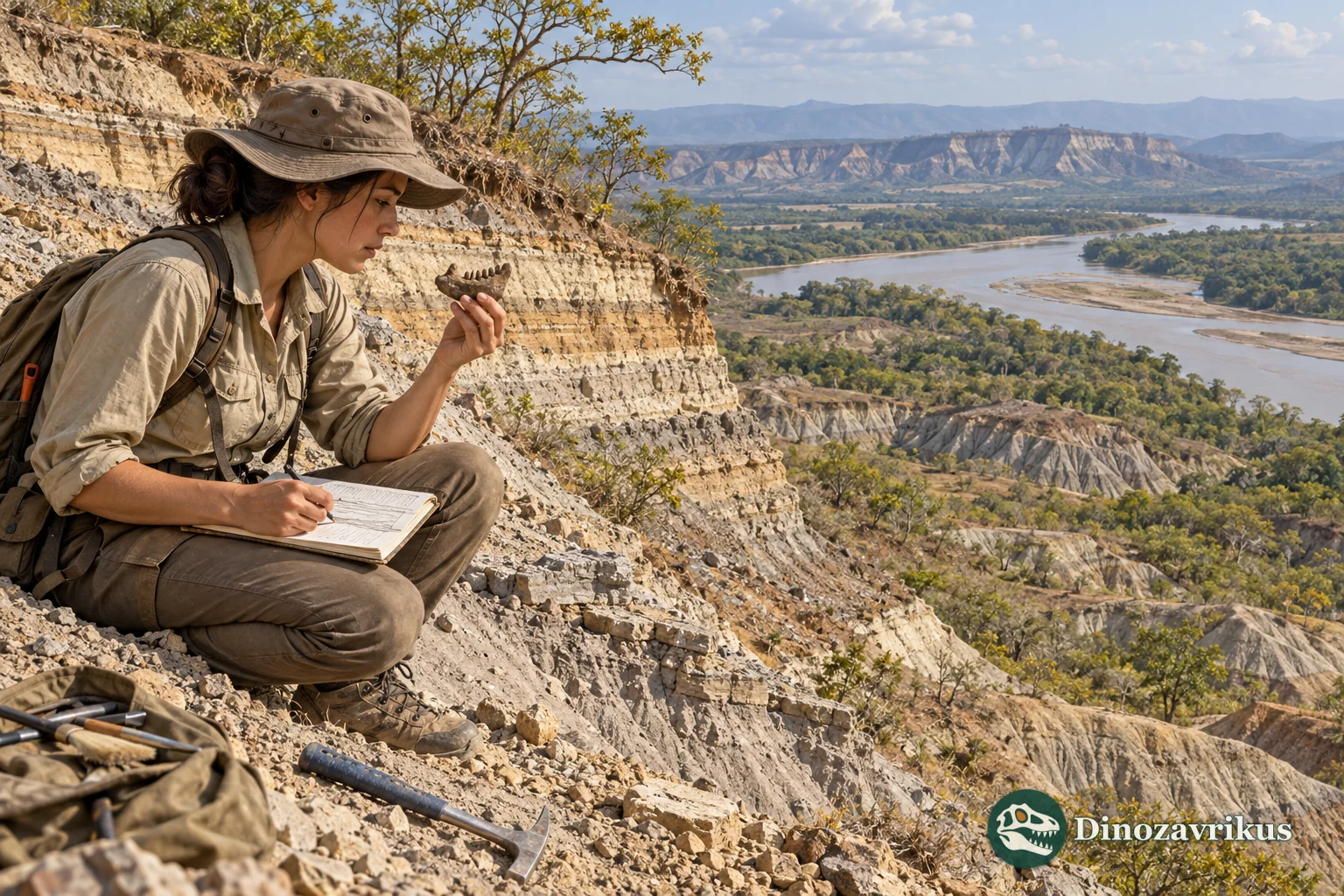
La Venta, in the Magdalena Valley, is one of the best-known Middle Miocene vertebrate localities in northern South America. The species name H. pluriplicatum is tied to this fauna. Local age estimates depend on stratigraphic and biochronological frameworks, so the genus name alone cannot date an isolated fossil to a precise interval.
A 2025 study of the Castilletes Formation in northern Colombia reported additional Huilatherium specimens. The authors kept those fossils at genus level as Huilatherium sp. They could recognize the genus without claiming that the material met the evidence needed for H. pluriplicatum. Castilletes and La Venta broaden the geographic record, but they remain separate localities and should not be merged into one specimen sample.
Classification and what remains unknown
Huilatherium is assigned to Leontiniidae within Notoungulata. Phylogenetic analyses have placed it among tropical leontiniids alongside several South American forms. Some relationships within the family, however, receive weak support and depend on which characters and taxa are included. The family-level placement is more secure than a claim about a single closest relative.
Teeth show crown form and permit comparisons between milk and permanent dentitions. They do not reliably reveal body mass, running speed, coat colour or social behaviour. Membership in a broad herbivorous mammal group also does not identify the exact plants this genus ate.
The cover is a generalized reconstruction for a Miocene Colombian woodland. It is not a fossil photograph. Body proportions, colour and soft tissues are interpretive because they are not preserved in the evidence discussed here.
Frequently asked questions
When did Huilatherium live?
The genus is known from Middle Miocene Colombian faunas. H. pluriplicatum is associated with La Venta, and additional genus-level material comes from the Castilletes Formation.
What is known about its teeth?
A 1997 paper describes upper and lower deciduous teeth of H. pluriplicatum and compares them with the permanent dentition. Those data document dental anatomy but do not establish a precise diet.
Do all Colombian finds belong to one species?
No. The 2025 Castilletes specimens are identified as Huilatherium sp. and are not confidently assigned to H. pluriplicatum.
How large was Huilatherium?
The sources reviewed do not establish a reliable body-size estimate for the genus, so numerical comparisons would be speculative.