

Iddingsia was a Late Cambrian trilobite from North America. The cranidium of its type species has closely spaced low granules and a much smoother strip across the front. These features can be lost when the outer layer of the shell peels away. A smooth internal mould therefore offers fewer clues to the species than an intact surface.
Quick facts
| Group | Trilobites |
|---|---|
| Age | Late Cambrian, Furongian |
| Region | North America: Nevada, Utah and Missouri, USA |
| Diet | Unknown |
| Type species | Iddingsia similis |
| Material | Cranidia, free cheeks, tail shields and other isolated shell parts |
What can the fossils tell us?
In Iddingsia similis, small raised granules ornament the glabella and parts of the fixed cheeks. The anterior border is much smoother.
A Nevada section yielded cranidia as well as a tail shield, thoracic segment and hypostome assigned to the same species.
A poorly preserved Utah tail shield resembles material attributed to more than one genus and remains unidentified.
The type species from Nevada
Charles Walcott described Ptychoparia similis in 1884 and later designated that species as the type of Iddingsia. He named the genus for geologist Joseph Iddings, a fellow worker in Nevada. In 2010, revisers selected the incomplete cranidium USNM 24641a as the lectotype. It came from the Dunderberg Formation in the Eureka district.
The cranidium has a raised glabella, narrow fixed cheeks and a front area divided by a furrow. Allison Palmer described low coarse granules on much of the glabella and fixed cheeks. The border and the strip immediately behind it are usually smooth or very finely ornamented. The outer shell preserves these differences most clearly, since the internal mould can appear smooth.
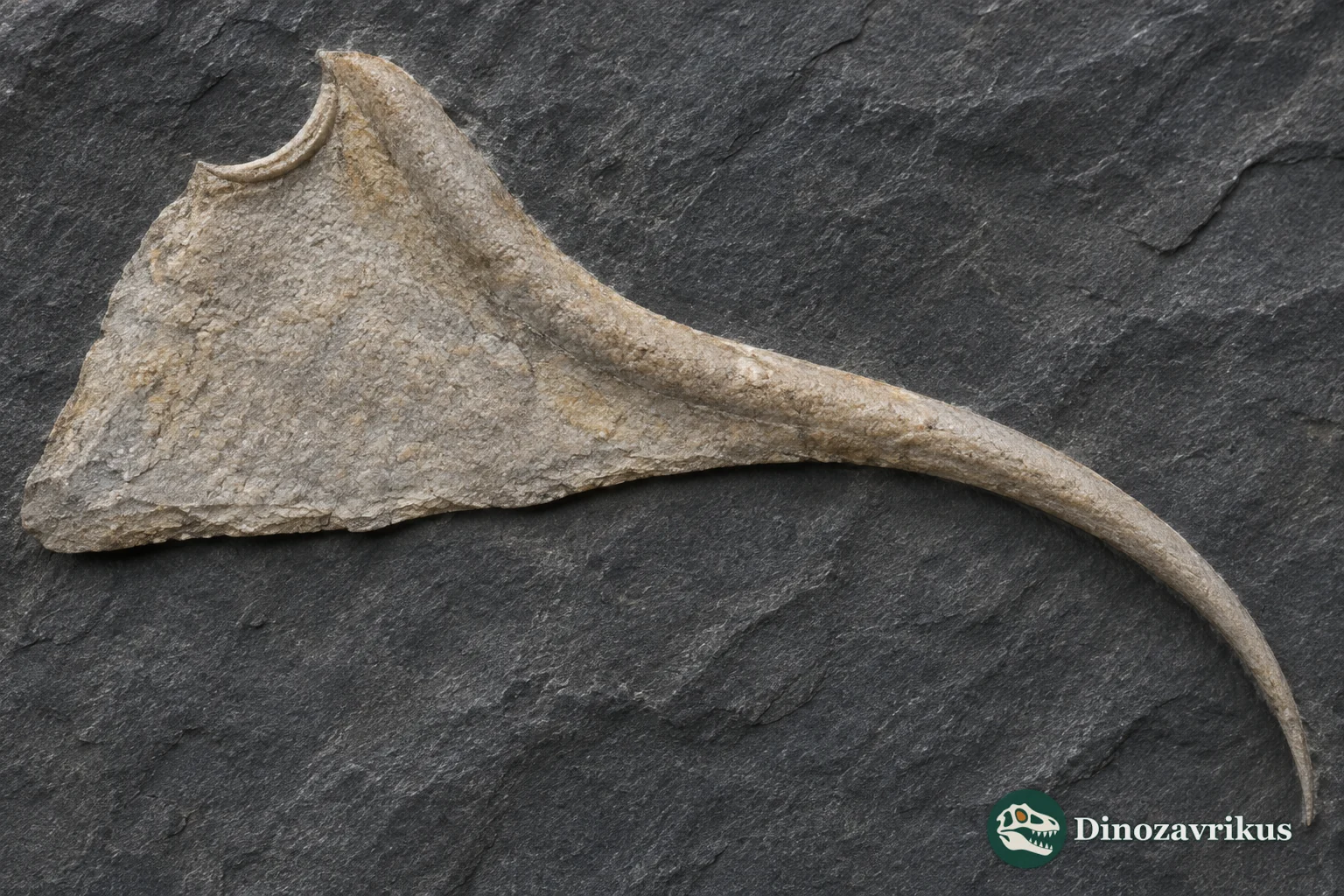
A free cheek, a tail and a plate below the head
Palmer's description of I. similis included a free cheek with a long spine that curves inwards at its tip. Later accounts of the genus and its relatives included cheeks with different spine proportions. Large cheeks from Smithfield Canyon in Utah were compared with Palmer's material and identified to genus.
At Patterson Pass in Nevada, a tail shield, a thoracic segment and a hypostome were also assigned to I. similis. The hypostome is a plate below the head. Another species, I. missouriensis, was described from the Davis Formation of Missouri. Its cranidia lack the original outer surface.
A tail shield with an uncertain identity
A Utah tail shield from the St. Charles Formation has a semicircular outline and a narrow border. It resembles material that has been variously assigned to Kindbladia or compared with Iddingsia. Because the specimen is poorly preserved, Frederick Sundberg left its identity open. Finding a similar shield still joined to a head could resolve the comparison.
Frequently asked questions
Who was Iddingsia named for?
Joseph Iddings, a geologist who worked with Charles Walcott in the Eureka district of Nevada.
Where is the reference specimen for the type species?
The lectotype of Iddingsia similis is housed in the Smithsonian collection as USNM 24641a.
What is a hypostome?
It is a plate beneath the trilobite's head. A specimen assigned to Iddingsia similis was found at Patterson Pass.
Why can internal moulds be hard to identify?
Their relief follows the inside of the shell. This can conceal granules on the outer surface that help separate similar species.