

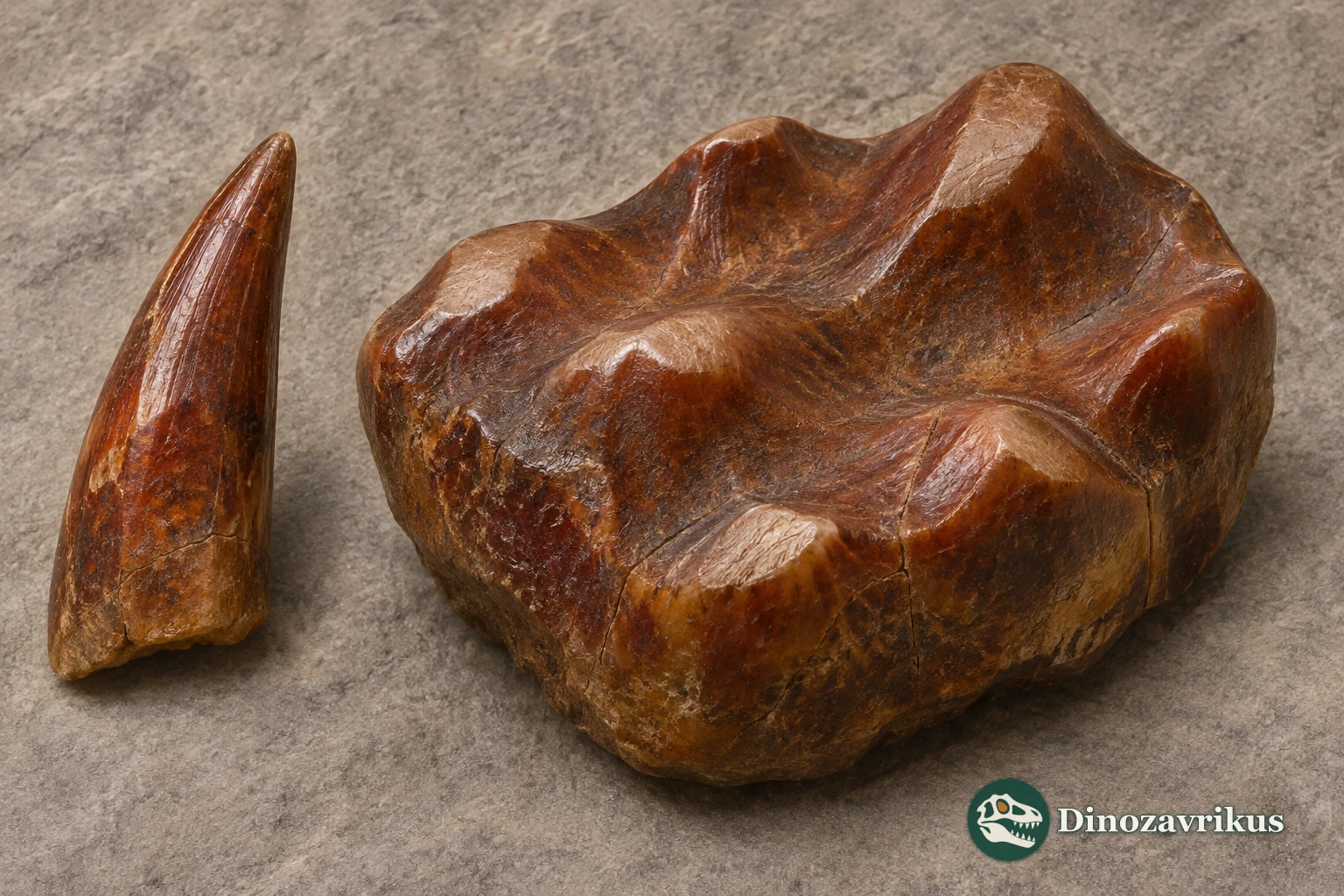
Iharkutosuchus makadii was a small crocodyliform from Late Cretaceous Hungary. Its narrow front teeth were followed by broad, multicusped crowns. Wear on the teeth records sideways movement of the lower jaw as the animal ground its food.
Quick facts
| Species | Iharkutosuchus makadii |
|---|---|
| Group | Hylaeochampsid eusuchian |
| Age | Late Cretaceous, Santonian |
| Locality | Iharkút, Bakony Mountains, Hungary |
| Type skull length | 11.1 cm |
| Estimated body length | About 80 cm in the original description |
What can the fossils tell us?
Cusps and worn patches are visible on the same crowns. Their arrangement helps identify how the teeth met during chewing.
The direction of scratches and the geometry of the joint support a lateral grinding motion. A plant-heavy diet is inferred from several lines of evidence.
The enamel has a distinctive structure that may have helped resist wear. Its structure cannot identify individual food plants.
A palm-sized skull
Attila Ősi, James Clark and David Weishampel named Iharkutosuchus in 2007 from fossils collected at the Iharkút bauxite mine in the Bakony Mountains. The type skull, MTM 2006.52.1, comes from the Santonian Csehbánya Formation and is held by the Hungarian Natural History Museum. It measures 11.1 cm. The authors estimated an adult length of about 80 cm.
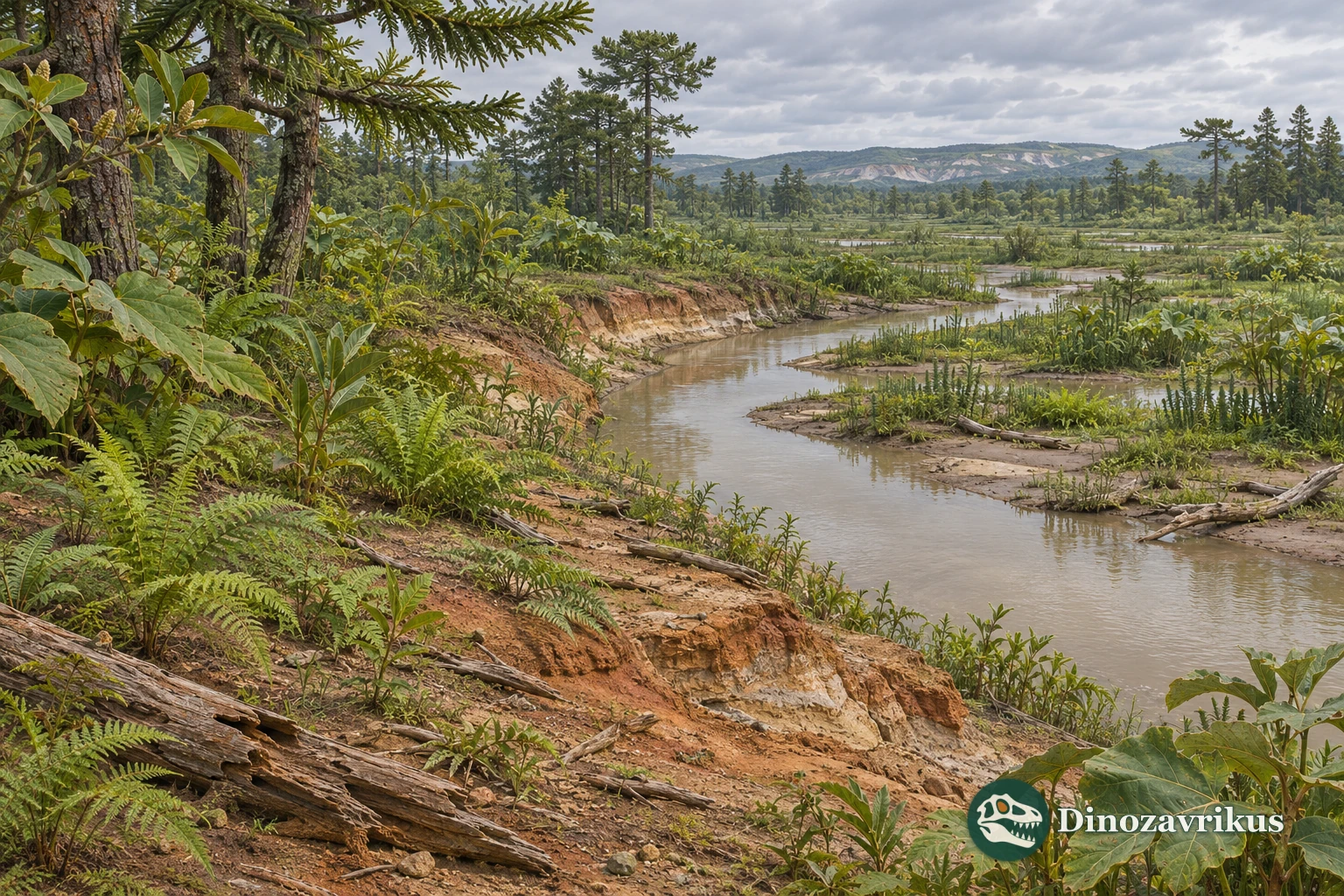
The mine yielded further skull material, jaws and isolated teeth. Two teeth attributed to the species were also described from the Ajka Coal Formation. At Iharkút, the fossils accumulated in a river system in what is now western Hungary.
Slicing followed by grinding
A short, low muzzle broadens abruptly beneath the eyes. The narrow front teeth give way to broad crowns with several cusps. The rear crowns of another early eusuchian, Acynodon, are also enlarged, though their shape and evidence for chewing movements differ.
Joint anatomy and the direction of scratches indicate two phases in the chewing stroke. The front teeth first sliced and crushed food. The lower jaw then moved substantially sideways while the back teeth contacted their upper counterparts and ground food. Tough, fibrous vegetation is the leading dietary inference from that combination.
Unusual enamel beneath the surface
A 2026 study found wavy enamel resembling that of some plant-eating dinosaurs and another pattern resembling mammalian Hunter–Schreger bands. X-ray diffraction tomography showed that crystal size and orientation varied across the enamel. The authors suggested that the structure could have helped resist abrasion and slow the spread of cracks.
A skull with possible bite marks
A fragment of skull roof, MTM PAL 2013.94.1, has several pits and scores. Their shape and the structure of the damaged bone led researchers to interpret them as probable bites from another crocodyliform. The fragment provides a rare record of possible predation in the Iharkút fauna, although the animal that made the marks is uncertain.
Frequently asked questions
How large was Iharkutosuchus?
The type skull is 11.1 cm long. The original description estimated total adult length at about 80 cm.
What did it eat?
Tooth form and wear support regular processing of tough plant food. The individual plants are unknown.
How do we know it could move its jaw sideways?
Researchers compared the direction of scratches, the wear on opposing back teeth and the shape of the jaw joint.
Where were the fossils found?
Most of the material is from the Iharkút bauxite mine in the Bakony Mountains. Teeth attributed to the species are also known from the Ajka Coal Formation.