

Indophis was a small Late Cretaceous snake from India. Its remains came from sedimentary beds between Deccan lava flows. The finds include bones from different parts of the spine, allowing comparisons between trunk and tail vertebrae.
Quick facts
| Group | Snakes (Serpentes) |
|---|---|
| Age | Late Cretaceous, Maastrichtian |
| Region | Asia, India, Naskal |
| Type vertebra length | 2.65 mm from front to rear articular processes |
| Type species | Indophis sahnii |
| Scientific name | Indophis |
| Diet | No direct evidence |
What can the fossils tell us?
About 160 vertebrae were referred to the species. They represent different portions of the trunk and tail.
Tall, narrow vertebrae and low rib articulations led the authors to suggest aquatic habits.
The nigerophiid assignment was tentative. Additional bones, including skull material, could help test it.
The Naskal material
Jean-Claude Rage and Guntupalli Prasad described Indophis sahnii in 1992. They referred about 160 isolated vertebrae from near Naskal, west of Hyderabad, to the species. The locality is in present-day Telangana. The sedimentary layers between basalt flows date to the Maastrichtian, the final stage of the Cretaceous.
What the bones reveal
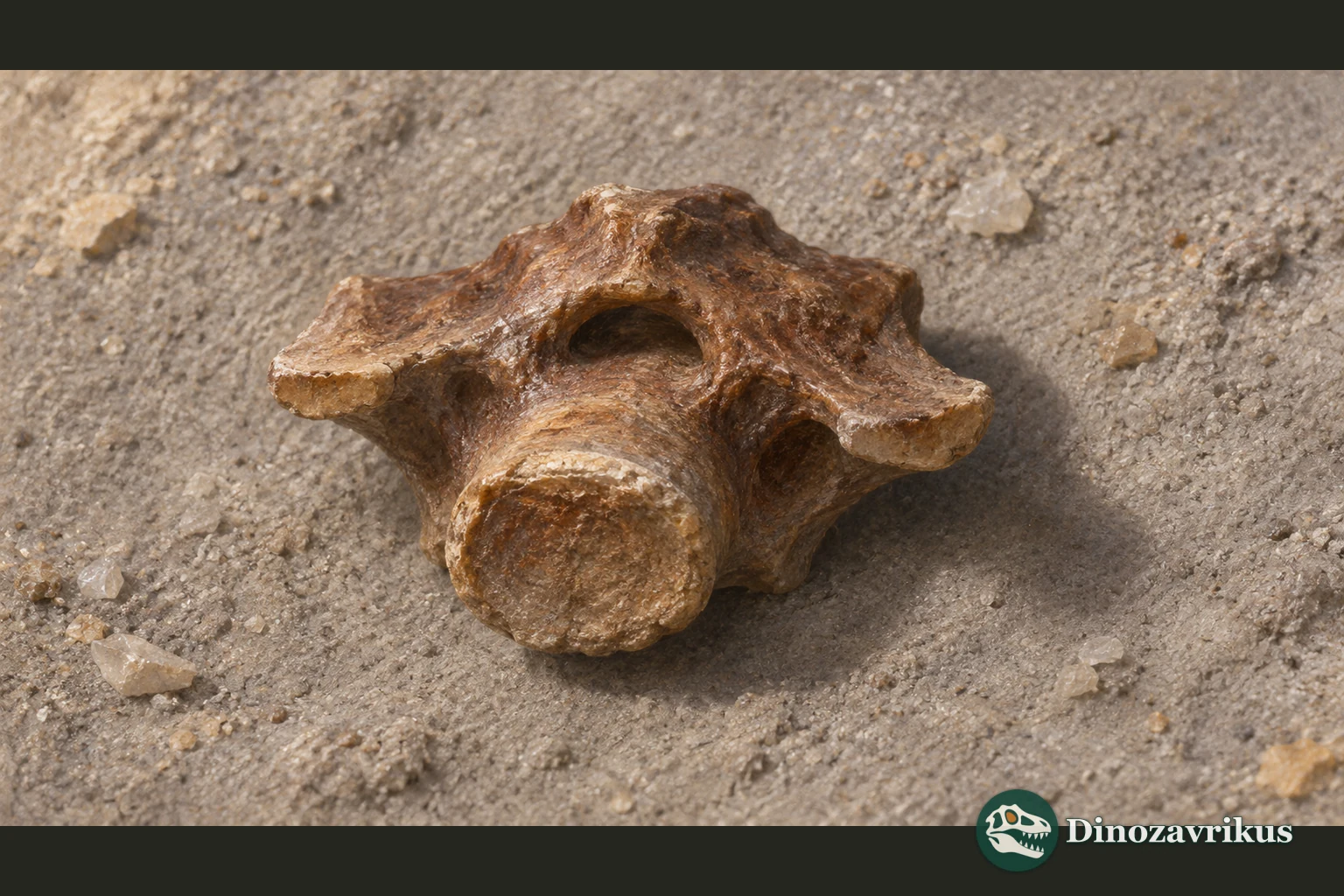
The holotype, VPL/JU/500, is a mid-trunk vertebra. It measures 2.65 mm from the front to the rear articular processes and reaches 2.55 mm across at the front. Other vertebrae were assigned to the front and back of the trunk or to the tail. Position along the spine is also considered when identifying other fossil snakes, including Alamitophis.
Why aquatic habits were proposed
The original authors drew attention to tall, narrow vertebrae and rib articulations set low on them. They compared these features with the anatomy of other snakes interpreted as aquatic. They assigned Indophis to Nigerophiidae with reservations. An exact habitat and diet remain unresolved.
Frequently asked questions
Is there an articulated skeleton of Indophis?
The described material consists of isolated vertebrae. Their shape was used to identify which part of the spine they came from.
Why are the fossils between basalt flows?
Sediment accumulated in the interval between eruptions. The vertebrae were recovered from a sedimentary layer deposited during such an interval.
Which vertebra is the type specimen?
VPL/JU/500 is a mid-trunk vertebra that measures 2.65 mm from the front to the rear articular processes.
What led to the suggestion of aquatic habits?
Low rib articulations and tall, narrow vertebral proportions provided the anatomical basis for that interpretation.