

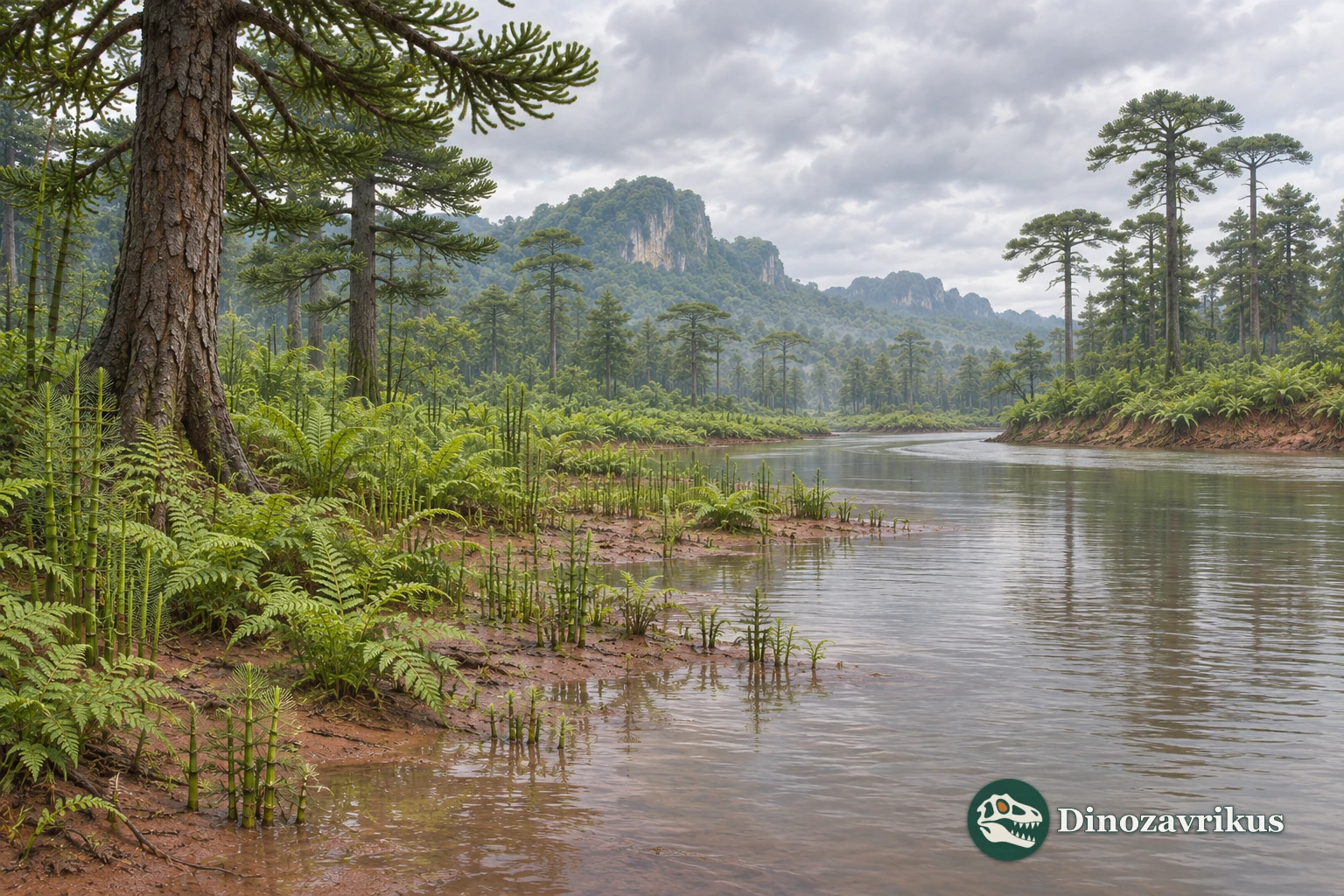
Indosinosuchus was a teleosaurid from Thailand. Skull fossils and isotope evidence from Phu Noi support a freshwater habitat for the type species. Finds from farther south led to the description of a second species, while re-examination of a Phu Noi skull changed how researchers counted species at that locality.
Quick facts
| Group | Teleosauridae |
|---|---|
| Age | Jurassic, with age estimates differing by locality |
| Type species | Indosinosuchus potamosiamensis |
| Type species holotype | PRC 11, skull and lower jaw |
| Second species | Indosinosuchus peninsularensis, PRC 205 and 206 |
| Localities | Phu Noi and Ban Nam Pun, Thailand |
What can the fossils tell us?
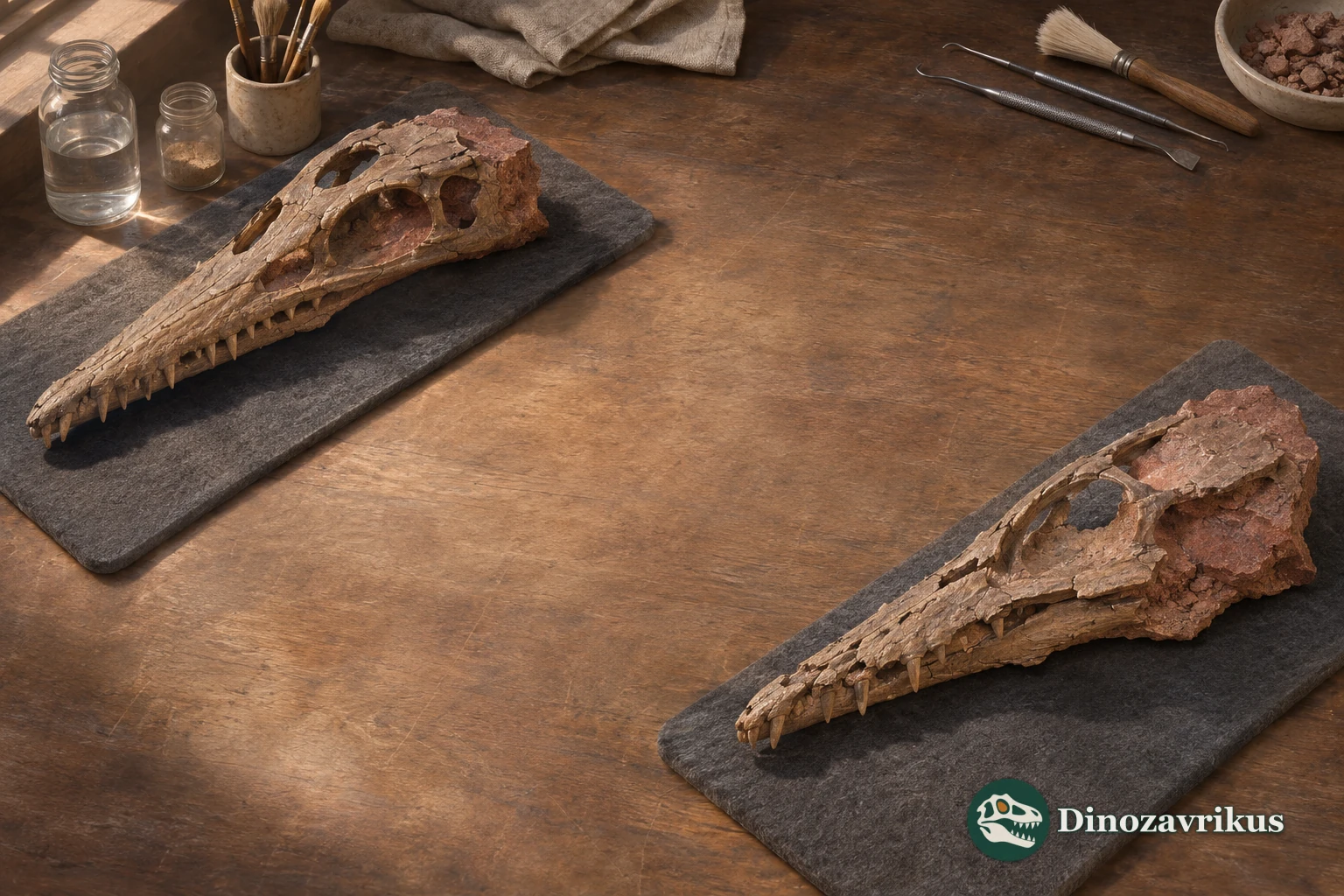
PRC 11 preserves a skull with the lower jaw. Once PRC 239 was removed from its plaster jacket, more of it could be compared with the other Phu Noi specimens.
One holds the front of the snout and vertebrae. The other contains vertebrae and bony scutes. Both come from the lower Khlong Min Formation.
The isotope evidence comes from the same locality as freshwater and terrestrial animals. The habitat evidence for each locality has to be evaluated separately.
The Phu Noi skulls
Jeremy Martin and colleagues described I. potamosiamensis from the Phu Kradung Formation in Kalasin Province. PRC 11 preserves a skull and articulated lower jaw. Other skulls, vertebrae and isolated bones provide a broader view of teleosaurids from outside the better-known European marine deposits.
In the type species the snout is moderately long and narrows in front of the eyes. Each maxilla has at least 27 tooth positions. Isotopes and associated turtles, amphibians and land dinosaurs support a freshwater interpretation. Chalawan comes from other localities in the same geological formation.
Why the identification of one skull changed
In 2020 the skull PRC 239 was made the type of I. kalasinensis on the basis of features of the snout and skull roof. In 2025 it was fully removed from its plaster jacket, allowing more of the bone to be compared directly.
The 2026 reassessment concluded that the remaining differences could reflect variation within I. potamosiamensis and the way the specimens were preserved. The authors treated I. kalasinensis as a junior synonym, using the earlier name for the same species.
The southern species from Ban Nam Pun
The same study described I. peninsularensis from Nakhon Si Thammarat Province. PRC 205 preserves the front of the snout and vertebrae, while PRC 206 preserves vertebrae and osteoderms. The two blocks were found in 2004. The lower Khlong Min Formation at the site is thought to date to the late Middle or early Late Jurassic.
The front of the upper jaw and the extent of the nasal bones were among the features that helped distinguish the new species. This material documents the genus in southern as well as northeastern Thailand. The freshwater evidence for the type species comes specifically from Phu Noi.
Frequently asked questions
Where was the type species found?
At Phu Noi in Kalasin Province, northeastern Thailand.
What supports freshwater residence?
Isotopes and associated freshwater fossils from Phu Noi are consistent with life in fresh water.
What did the new preparation of PRC 239 change?
The 2026 study referred the skull to the type species and treated its later name as a junior synonym.
What survives of the southern species?
The front of the snout, vertebrae and osteoderms from Ban Nam Pun.