

Interatherium was a notoungulate known from skull and dental material in Miocene Patagonia. Its taxonomic history shows how comparing name-bearing specimens can change genus boundaries: a dedicated 2023 revision recognized two species and placed Icochilus in synonymy.
The genus appears in the ancient mammal catalogue. The early Henricosbornia offers a useful contrast: its record is dominated by isolated teeth and jaw fragments rather than the more substantial cranial material available for Interatherium.
Quick facts
| Scientific name | Interatherium Ameghino, 1887 |
|---|---|
| Type species | Interatherium rodens Ameghino, 1887 |
| Group | Notoungulata, family Interatheriidae |
| Age | Miocene; major samples come from the Santa Cruz Formation |
| Range | Patagonia, Argentina |
| Type specimen | MLP 12-2826, a right upper jaw with cheek teeth |
| Other type material | MACN-A 1083 and 1084, skull and mandible of I. extensus |
| Accepted species | I. rodens and I. extensus in the 2023 revision |
What can the fossil evidence tell us?
The type of Interatherium rodens is right upper jaw MLP 12-2826. MACN-A 1083 and 1084, a skull and mandible treated as one individual, were selected as type material for I. extensus.
Researchers compare cheek-tooth structure with the position in the row and other cranial characters. Wear changes visible crown relief, so an isolated tooth must be assessed with its age and preservation in mind.
The dedicated revision treated Icochilus as a junior synonym of Interatherium and recognized I. rodens and I. extensus. Some historical names remain uncertain or in need of review.
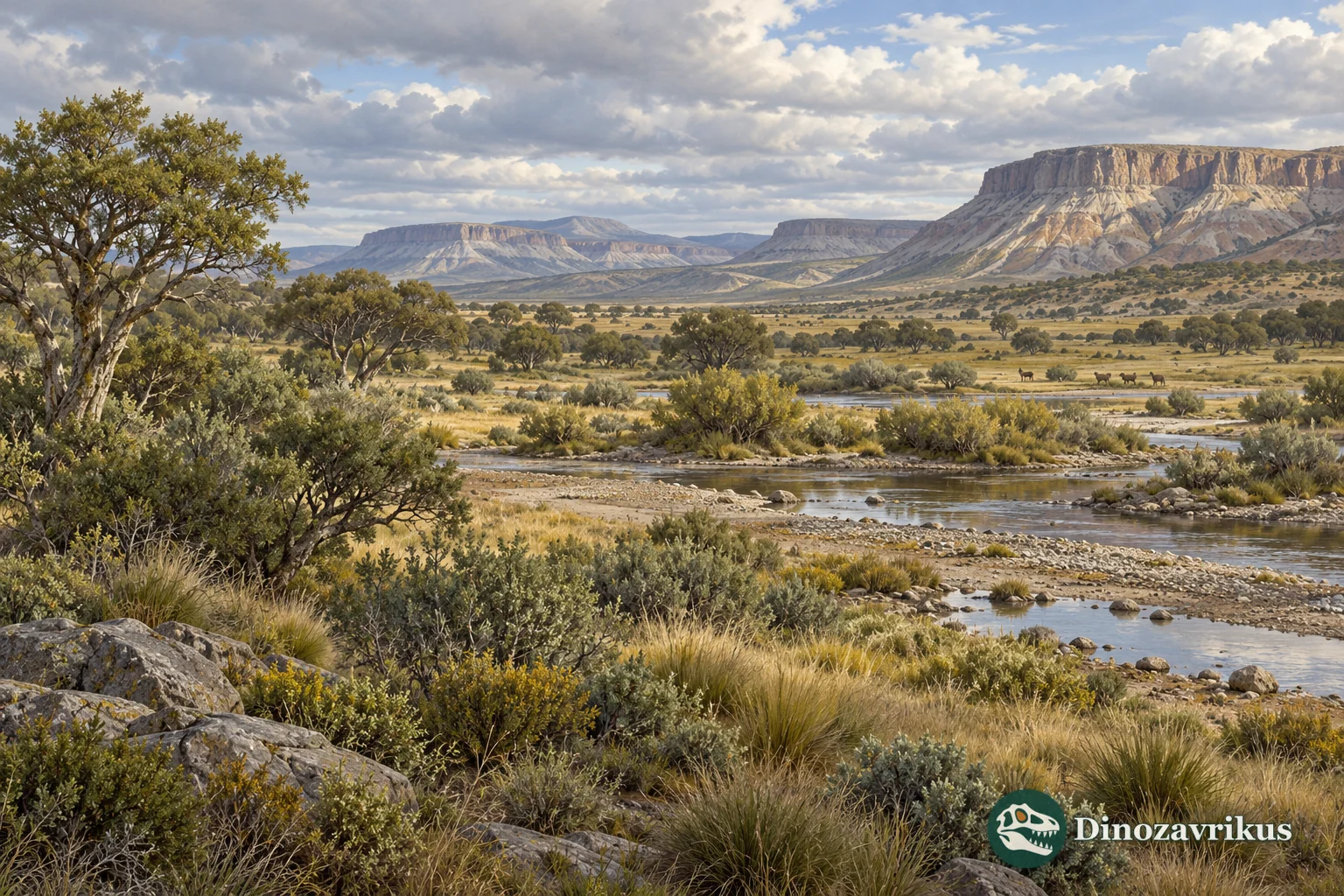
The formation records rivers and floodplains. Regional studies infer a mosaic of semi-deciduous forest, gallery forest and more open settings; this is not a description of one exact site or one individual’s behaviour.
Name and type specimens
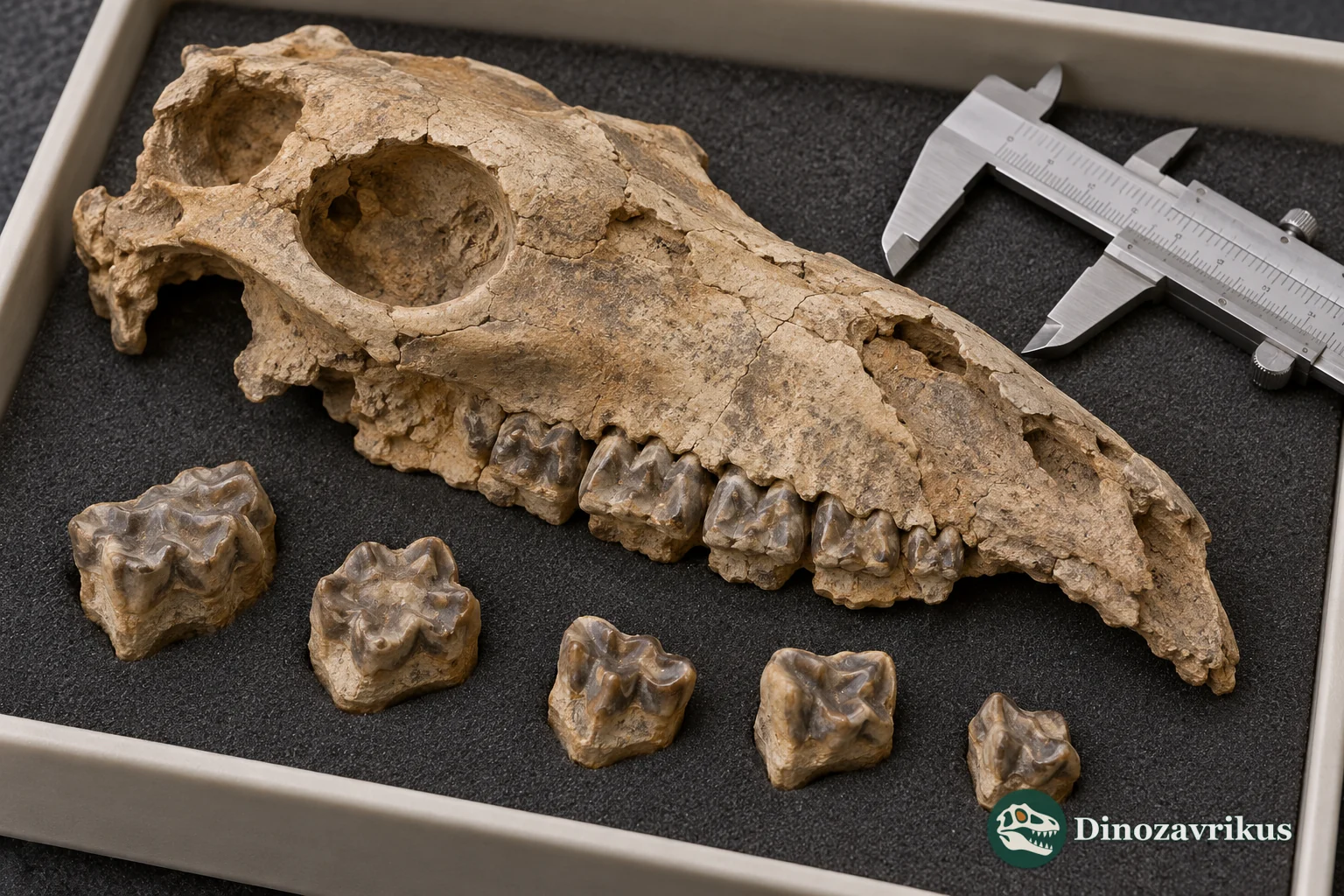
Florentino Ameghino established Interatherium in 1887. The type species, I. rodens, is anchored by MLP 12-2826, a right upper jaw with an alveolus for a deciduous premolar, a second deciduous premolar and permanent premolars and molars. The sequence provides more information than an isolated crown because the teeth can be compared in their positions within one row.
The type material of I. extensus is more complete. A 2019 revision selected MACN-A 1083 and 1084, a nearly complete skull and mandible with their dentitions, as lectotype material. The authors treated these pieces as belonging to one individual. A 2023 systematic study later reassessed the genus and included Icochilus within Interatherium.
Two accepted species and uncertain names
The dedicated 2023 revision recognizes two species: Interatherium rodens and I. extensus. It treats Icochilus as a junior synonym of Interatherium, concluding that the compared type material does not support maintaining separate genera under the authors’ diagnosis. This conclusion is based on a direct taxonomic reassessment, rather than merely on name matching in online catalogues.
Several historical names require qualification. The revision treated I. supernum as a nomen nudum, a name lacking an adequate formal description, and considered I. brevifrons and Icochilus curtus species inquirendae, names needing further taxonomic investigation. Older lists may therefore include more species than the current dedicated revision. It is useful to distinguish names found in historical literature from those accepted in a recent review.
Within Notoungulata, the 2023 phylogenetic analysis recovered Interatherium as monophyletic in its sample and placed it near a clade including Neoicochilus and Cochilius. The genus occurs through many levels and localities in the Santa Cruz Formation, so it is not a narrow age index by itself.
Teeth, skull and limits of reconstruction
Jaw and tooth rows allow comparisons of cheek-tooth structure with other interatheriids. Crown shape, crests, basins, tooth proportions and cranial features are considered together. Wear progressively alters the relief, so comparisons between young and adult individuals must account for tooth condition.
Preservation varies between the species: the I. rodens holotype is an upper jaw, while material assigned to I. extensus includes much more of the skull and lower jaw. This supports anatomical descriptions of parts of the head, but not a complete skeleton for every species. The life reconstruction on this page is an artistic interpretation based on small notoungulates; it does not restore soft tissues or colour from direct evidence.
Santa Cruz Formation and environment
Major samples of Interatherium come from the Santa Cruz Formation of Patagonia. Its rocks include deposits of ancient rivers, floodplains and temporary flows. Channels shifted through time, while flood deposits and soil formation produced different layers. The context of an individual fossil therefore matters for both age and environmental interpretation.
Regional reconstructions describe a mosaic of semi-deciduous forest, gallery vegetation along watercourses and more open habitats. This conclusion combines plant, sedimentary and faunal evidence. It does not show that every Interatherium lived in open grassland or ate one specific kind of plant.
The genus occurs at multiple stratigraphic levels and across a wide area of the formation. It is an important part of the fauna, but its broad distribution limits its usefulness as a precise biostratigraphic marker. The age of an individual find should be established from its layer and independent evidence, not from the genus name alone.
Diet and locomotion
Dental anatomy supports comparison with other notoungulates, but a precise menu cannot be read from a general crown type alone. Diagnostic wear traces, isotope measurements or other independent evidence would be needed for stronger conclusions about particular specimens. The presence of varied vegetation in the formation does not by itself establish which plants the animal ate.
The available anatomy is consistent with a small terrestrial mammal, but the type material does not justify precise claims about speed, gait or behaviour for the whole genus. Popular illustrations sometimes make it resemble a modern rodent or rabbit. Such comparisons may convey scale, but they are not evidence of close relationship or exact ecology.
Frequently asked questions
Which Interatherium species are currently recognized?
The dedicated 2023 revision recognizes Interatherium rodens and I. extensus. Several historical names remain uncertain or require further study.
Why is Icochilus treated as a synonym?
The authors of the 2023 revision compared the type material and concluded that the diagnostic differences did not justify keeping a separate genus. They included Icochilus in the synonymy of Interatherium.
What is preserved for the type species I. rodens?
Its holotype, MLP 12-2826, is a right upper-jaw fragment with a sequence of deciduous and permanent cheek teeth. It is not a complete skull or skeleton.
Can a layer be dated from Interatherium alone?
No narrow age follows from the genus alone. It occurs across several levels in the Santa Cruz Formation, so stratigraphic position and independent geological evidence are needed.