

Henricosbornia was an early South American notoungulate known mostly from isolated teeth and jaw fragments. Those fossils help document Paleogene diversity, but they do not preserve the animal’s complete body. Its type jaw also has no precise collection locality recorded in the museum catalogue.
The genus is included in the ancient mammal catalogue. A comparison with the later Interatherium shows how the completeness of notoungulate fossils varies between lineages and geological intervals.
Quick facts
| Scientific name | Henricosbornia Ameghino, 1901 |
|---|---|
| Type species | Henricosbornia lophodonta Ameghino, 1901 |
| Group | Notoungulata; traditionally Henricosborniidae |
| Age | Late Paleocene to middle Eocene in the combined published record |
| Range | Argentina, especially Patagonia |
| Type specimen | MACN-A 10808, a right upper-jaw fragment with cheek teeth |
| Known remains | Mainly isolated teeth, tooth rows and jaw fragments |
| Main limitation | No complete skeleton; family relationships remain debated |
What can the fossil evidence tell us?
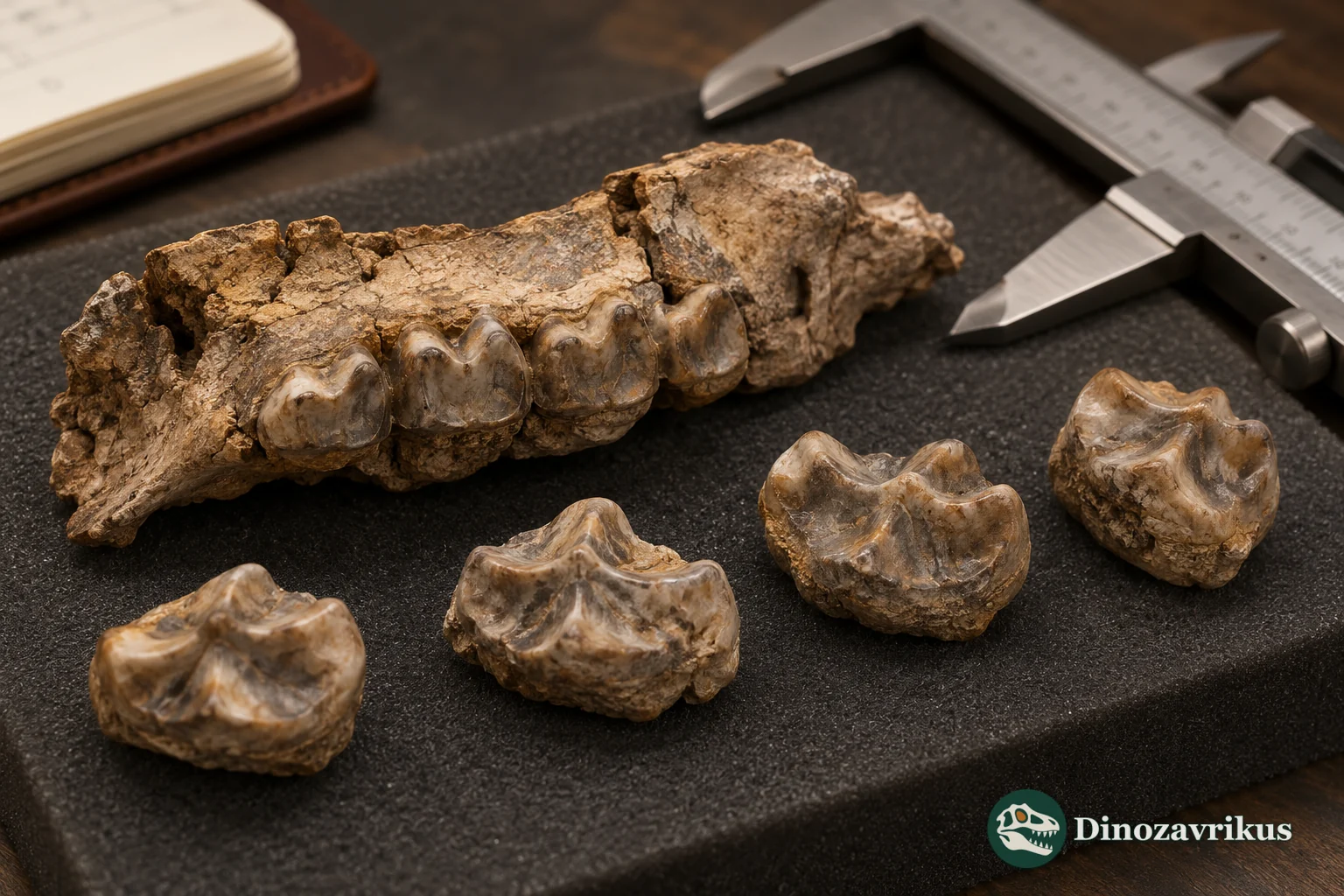
The holotype of Henricosbornia lophodonta is a right upper-jaw fragment with premolars and molars. The collection catalogue records no precise locality, so the type cannot be confidently tied to one outcrop.
Descriptions discuss low crowns, folds on upper molars and variable crests. Similar traits occur in other early notoungulates, so a single fold alone cannot establish a genus or close relationship.
Simpson’s 1948 revision treated several previously named forms as synonyms of Henricosbornia, citing dental variation. Later work continues to examine species limits and the composition of Henricosborniidae.
Material assigned to the genus comes from several Paleogene Argentine faunas. Occurrences in different formations and regions must be evaluated separately; the broad combined age range is not one population’s lifespan.
The name and type specimen
Florentino Ameghino named Henricosbornia in 1901, with H. lophodonta as the type species. The holotype, MACN-A 10808, is a fragment of a right upper jaw preserving cheek teeth. The collection catalogue gives no precise locality. Fossils later reported from Cañadón Vaca and other Patagonian sections therefore cannot automatically be treated as parts of the type series.
George Simpson’s 1948 account described the holotype as preserving P3–M3 and discussed whether neighbouring teeth belonged to one associated row. This distinction matters: a name-bearing specimen anchors a taxon, but it need not display every variation later included in that genus.
Dental variation and species names
Teeth provide most of the evidence for Henricosbornia. Researchers compare crown height, folds on the outer surface of upper molars, connecting crests, and proportions of lower molar basins. Tooth wear and position in the row also matter. A feature on one isolated crown is rarely enough to identify a species with confidence.
Early classifications named multiple forms from single teeth or small jaw fragments. In 1948 Simpson synonymized several of these names under Henricosbornia, arguing that some crest differences fell within variation in a larger sample. Later authors have continued to use species names including H. lophodonta, H. minuta, H. waitehor and H. ampla, although catalogues and revisions do not always agree on their status. Assignments based on one tooth are harder to test than those represented by a jaw with several teeth.
Some specimens are therefore referred cautiously as comparable to Henricosbornia rather than assigned definitively. The family’s position is also unsettled: analyses have recovered Henricosborniidae as paraphyletic or polyphyletic, in part because available character matrices rely heavily on limited dental traits.
Age, formations and environments
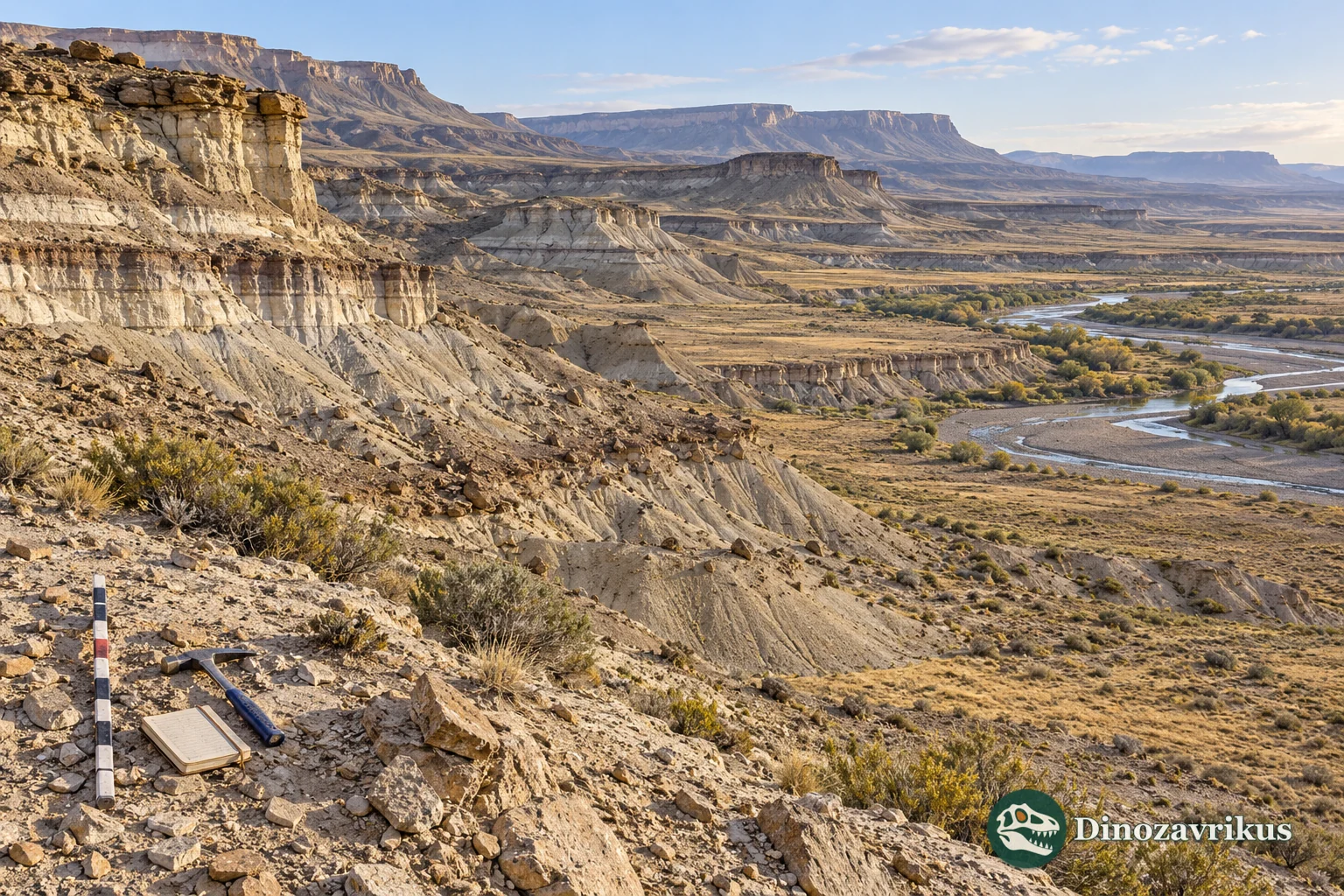
Fossils attributed to the genus occur in several Paleogene Argentine faunas. Reports include early Eocene material from the Las Flores Formation and Paso del Sapo localities, as well as younger levels around Cañadón Vaca and the Río Chico Formation. Some assignments of H. lophodonta have been associated with Riochican and Vacan faunas. These are regional biochronological intervals, not exact calendar ages for each tooth.
The sedimentary settings varied among localities. Researchers reconstruct a specific environment using the sediment, soils, plant fossils and associated animals. A tooth of Henricosbornia by itself does not identify a particular forest type or climate, and conditions at one outcrop should not be generalized to every occurrence.
What remains unknown
The low crowns of Henricosbornia are compatible with processing relatively soft foods, but tooth form alone cannot establish a precise diet. No stomach contents, coprolites or securely associated feeding traces are known. The genus has no described complete skeleton, so body length, mass, limb proportions and gait cannot be measured directly.
The cover is an illustrative comparison with early notoungulates, not a restoration of details preserved for this genus. The secure evidence is narrower: dental material, the history of its classification and the geological context of individual finds. The Eocene Notopithecus, for example, preserves a different combination of dental and postcranial evidence and helps show how incompleteness shapes taxonomic conclusions.
Frequently asked questions
When did Henricosbornia live?
Published records span several Paleogene Argentine faunas, from the late Paleocene to middle Eocene in the combined literature. The exact range depends on which species and uncertain specimens are included.
What is the holotype?
The holotype of Henricosbornia lophodonta is MACN-A 10808, a fragment of upper jaw with cheek teeth. Its collection record does not give a precise locality.
Why have species assignments changed?
Most fossils are isolated teeth or small jaw fragments. Wear, age and variation can make a tooth difference difficult to interpret, so authors have alternately combined or retained names.
Is a complete skeleton known?
No. The published record consists chiefly of teeth and jaw fragments, leaving body proportions, mass and gait uncertain.