

Itemirella cretacea was a small frog from the Central Kyzylkum of Uzbekistan. Lev Nessov named it in 1981 from part of a right maxilla. The fragment preserves the edge that bore the teeth and a ridge and groove on the inner side. These details allowed him to compare it with other Cretaceous frogs from the region.
Quick facts
| Group | Frogs |
|---|---|
| Age | Late Cretaceous, Turonian |
| Region | Asia, Uzbekistan, central Kyzylkum |
| Type species | Itemirella cretacea |
| Scientific name | Itemirella |
| Diet | Exact prey is unknown |
What can the fossils tell us?
ZIN PHA K77-6 is the rear part of a right maxilla. Its outer surface is smooth, while the inner face preserves a ridge and a well-defined groove.
Nessov interpreted the groove above the ridge as a possible contact for the palatine. The outline of the bone and the tooth spacing provided other points of comparison.
The fossil preserves neither the complete skull nor the trunk. It gives no reliable body length and only limited evidence for a family assignment.
A fragment from Dzharakuduk
The holotype, ZIN PHA K77-6, came from the CDZh-17a exposure at Dzharakuduk. Nessov assigned the bed to the late Turonian and the lower part of the Taikarshin Beds. He derived the generic name from the wells of Itemir in the Central Kyzylkum. The species name refers to the Cretaceous age of the material.
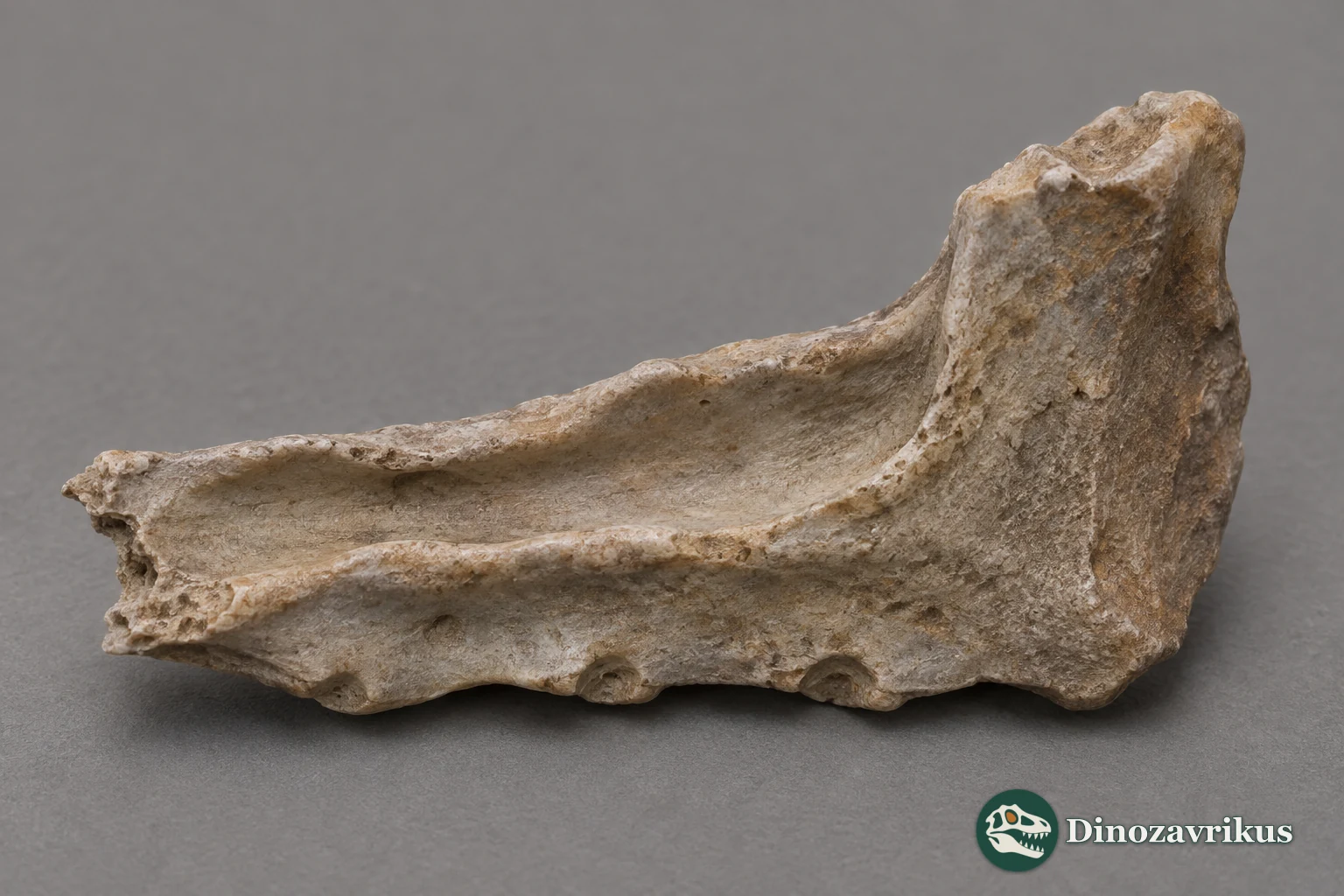
The inner face of the maxilla
The bone remains fairly high and thick behind the end of the tooth row. Its inner ridge is prominent and gradually lowers towards the back. A shallow depression affects the upper margin. Nessov counted approximately twelve tooth positions in five millimetres. A smooth outer surface is shared with other frogs from the region, including Estesina. Features of the inner ridge and the placement of the tooth row give a better basis for comparison.
What the site preserves
Many small bones at Dzharakuduk occur separately in channel sediments. Several kinds of frog maxillae have been described from the area. One bone can reveal features of the jaw and palate, while the proportions of the trunk, the limbs and the diet of Itemirella remain unknown.
Frequently asked questions
Which part of the jaw is known?
The type specimen is the rear portion of the right maxilla, one of the bones of the upper jaw.
What does the name refer to?
Nessov named the genus after the wells of Itemir in the Central Kyzylkum.
How closely spaced were the teeth?
The original description records about twelve positions along five millimetres of the upper jaw.
Where was the fossil found?
It was found in Turonian deposits near Dzharakuduk in what is now Uzbekistan.