

Jiucunella was a small marine arthropod with a two-valved carapace. Its type species comes from Yunnan, China, and a second species was found in South Australia. In the Australian section, the earliest valves occur among the remains of small reef-like buildups, below a fossil marker used to approximate a Cambrian stage boundary.
Quick facts
| Group | Bradoriids |
|---|---|
| Age | Early Cambrian |
| Genus established | Hou Xianguang and Jan Bergström, 1991 |
| Type species | Jiucunella paulula |
| Records | Yunnan and South Australia |
| Fossils | Carapace valves |
What can the fossils tell us?
The Australian valve tilts forwards. Its outline and largely smooth exterior help distinguish it from similar bradoriids.
The distance is measured in the rock succession. The fossil marker is used to approximate a Cambrian stage boundary.
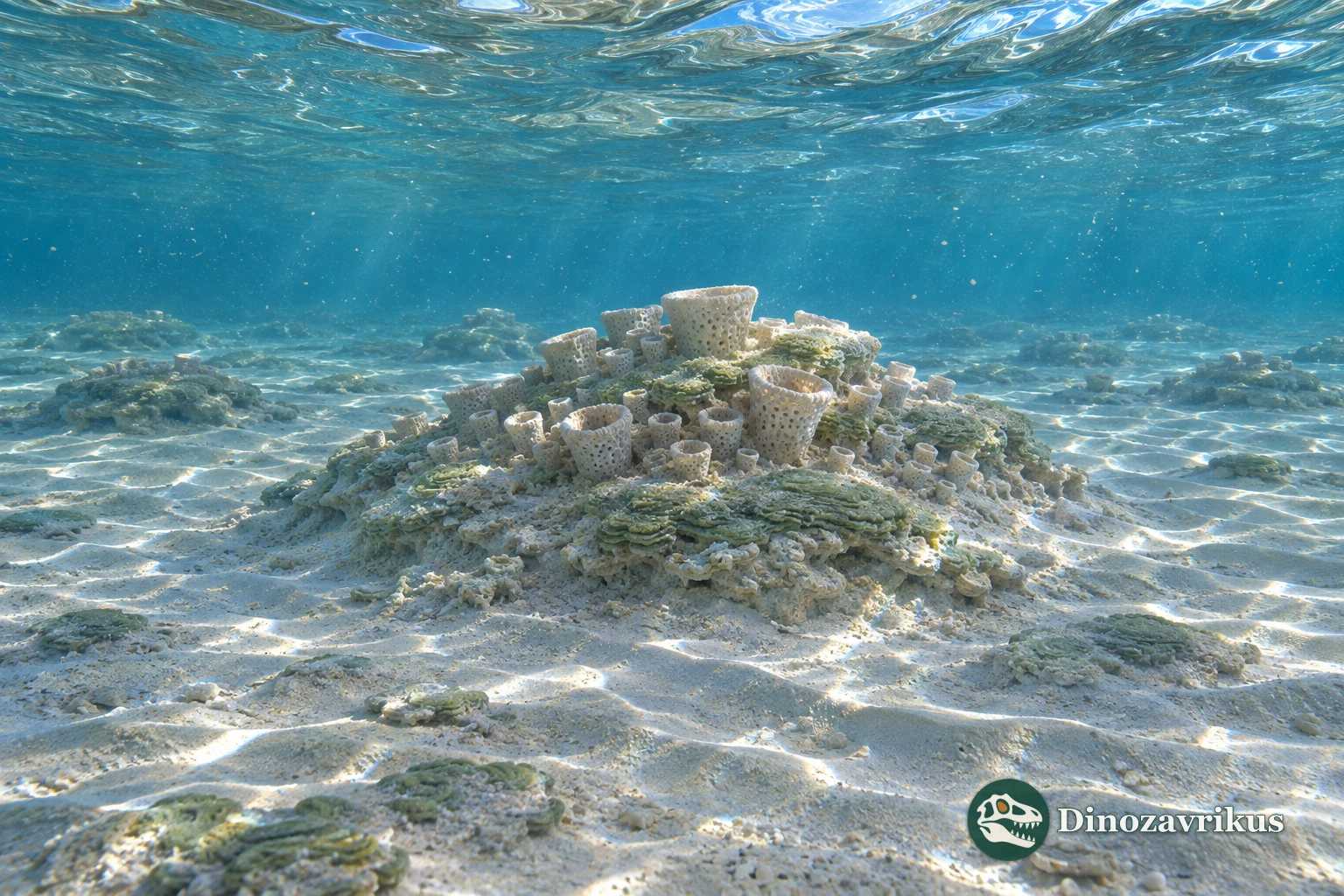
Archaeocyaths and the surrounding carbonate rock indicate a depositional setting. They do not identify the animal’s exact living position.
Records from two early Cambrian regions
Hou Xianguang and Jan Bergström established the genus in 1991. The type species J. paulula comes from the Maotianshan section in Chengjiang County, Yunnan. It occurs in early Cambrian beds assigned to the Eoredlichia–Wutingaspis trilobite zone.
Marissa Betts and colleagues described J. phaseloa from the northern Flinders Ranges. Other bradoriids from those sections include Sinskolutella, whose valves differ in outline and surface details.
What the valves preserve
The Australian species has a forward-tilted outline and a small node near the front of the dorsal edge. Most of the surface is smooth. Jixinlingella daimonikoa from the same sections has a similar silhouette, but its valve surfaces bear a coarse polygonal pattern.
The outline and surface are useful for comparisons between species. The detached valves do not establish the number of limbs or how Jiucunella obtained its food.
Below a local fossil marker
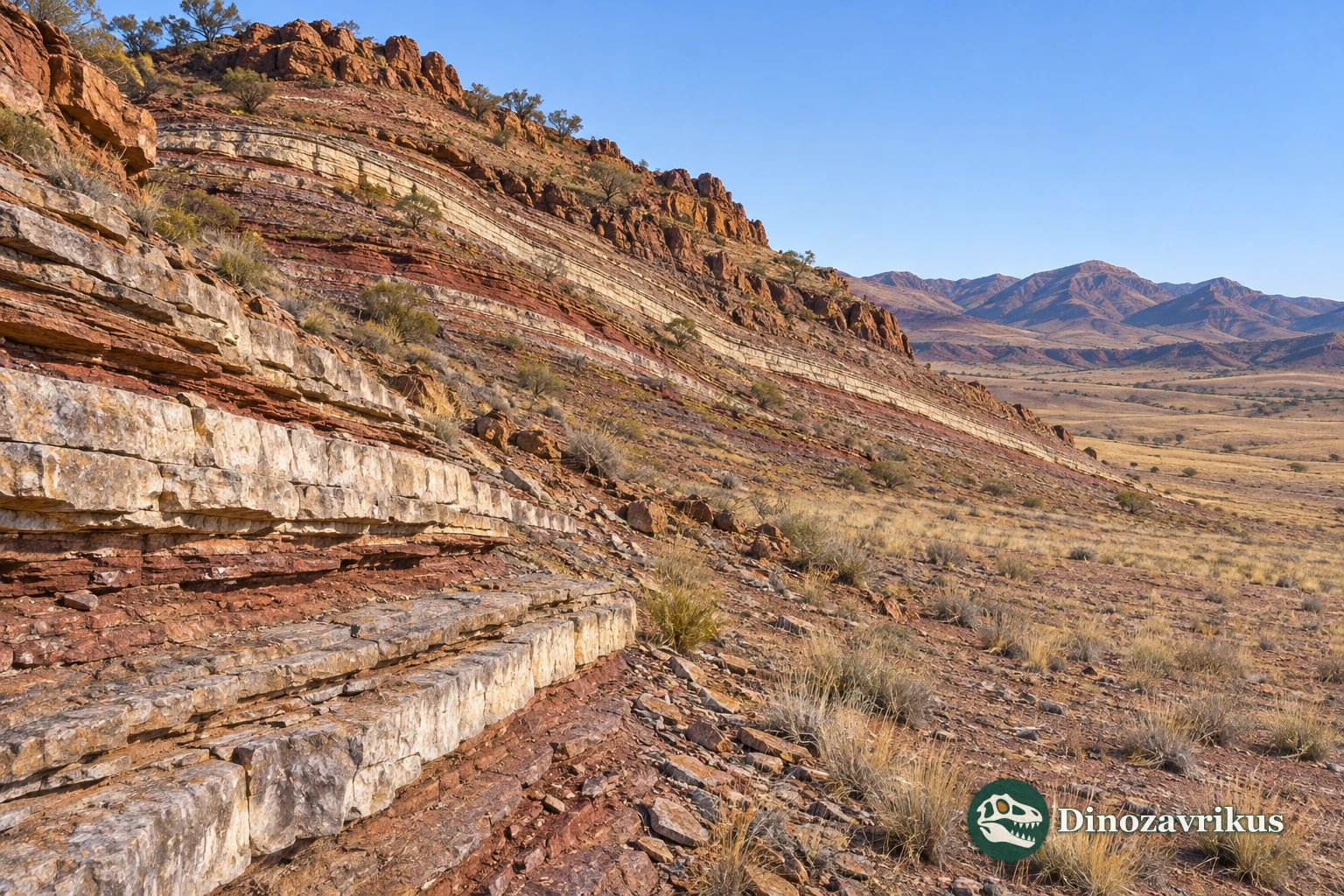
The earliest Australian specimens came from the Hideaway Well Member of the Wilkawillina Limestone. The carbonate accumulated in shallow water around small buildups formed by archaeocyaths and microbial growth.
The first finds lie 47 metres below the first local record of Pelagiella subangulata, a small shelly fossil used to approximate the base of Cambrian Stage 3 in South Australia. The fossils show that bivalved arthropods were present before that marker in this section. The measured interval is a thickness of rock, while its duration depends on correlation and sedimentation.
Frequently asked questions
Where was the type species of Jiucunella found?
At Maotianshan in the Chengjiang area of Yunnan, southwestern China.
When did Jiucunella live?
The two described species come from early Cambrian rocks.
How is its valve distinguished from similar bradoriids?
The Australian species has a forward-tilted outline and a largely smooth surface. A similar form in the same rocks has conspicuous polygonal ridges.
What does the 47-metre interval measure?
It is the thickness separating the earliest Australian specimens from the first local appearance of a marker fossil. It is not a direct measure of elapsed time.