

Kababisha was a salamander from Cenomanian deposits in northern Sudan. The genus is known from isolated vertebrae and pieces of jaws and skulls. These bones allowed researchers to distinguish two species and link them to sirenid salamanders.
Quick facts
| Group | Salamanders, Caudata |
|---|---|
| Age | Late Cretaceous, Cenomanian |
| Region | Africa: northern Sudan |
| Type species | Kababisha humarensis |
| Scientific name | Kababisha |
| Diet | Unknown |
What can the fossils tell us?
Both species come from Cenomanian deposits at Wadi Abu Hashim. The type specimens are parts of the first neck vertebra.
The comparison rests on specific vertebral and jaw features.
Body, limb and tail proportions cannot be worked out from isolated bones. The cover shows a possible setting.
From the Wadi Milk Formation
Susan Evans, Andrew Milner and Christa Werner named Kababisha in 1996. The material came from Wadi Abu Hashim, roughly 200 kilometres north-west of Khartoum. The fossil beds of the Wadi Milk Formation accumulated in a lake during the Cenomanian, early in the Late Cretaceous.
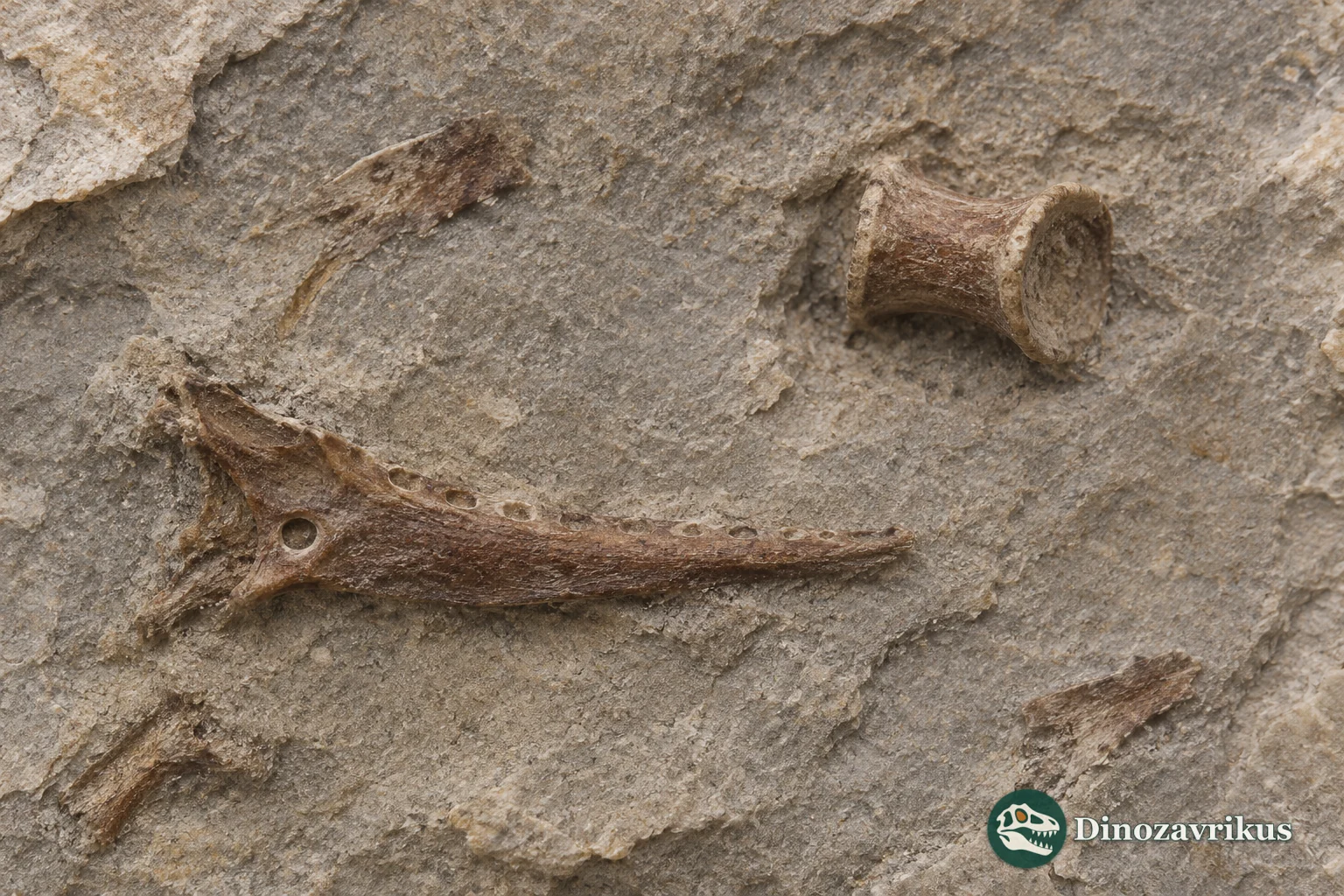
How vertebrae distinguish the species
The original description named K. humarensis and K. sudanensis. The type specimen of each is the centrum of the atlas, the first vertebra at the base of the skull. The authors compared the atlases and trunk vertebrae and described isolated jaw and braincase material from the site.
Other Cretaceous amphibians preserve different parts of the skeleton. For example, the North American frog Tyrrellbatrachus rests on bones of the upper jaw. In Kababisha, the vertebrae were central to the distinction between the two species.
Sirenid affinities and other North African finds
The original authors placed Kababisha in Sirenidae on the basis of vertebral and jaw anatomy. A later study also noted its close morphological resemblance to sirenids. A more complete fossil skeleton would be needed to compare its body proportions with those of living sirens.
Vertebrae from the Douira Formation of Morocco have also been assigned to Kababisha. The two named species were established from Sudanese material. The Moroccan vertebrae have no confirmed species assignment.
Frequently asked questions
Where was the type material found?
It comes from lake deposits of the Wadi Milk Formation at Wadi Abu Hashim in northern Sudan.
When did Kababisha live?
The Sudanese material dates to the Cenomanian, the first stage of the Late Cretaceous.
Which bones are the type specimens?
For both species the type specimen is the centrum of the atlas. The description also discusses other vertebrae and parts of the head.
Can its full appearance be reconstructed?
The bones establish some details of the jaws, skull and spine. They leave the overall shape of the salamander unknown.