

Kansajsuchus extensus was a large neosuchian from the Late Cretaceous of Tajikistan. The original specimen is a bone from the front of the upper jaw. Other fossils from the locality include pieces of the skull roof, the braincase and the bony armour. Together they inform its size and relationships.
Quick facts
| Species | Kansajsuchus extensus |
|---|---|
| Family | Paralligatoridae |
| Age of principal material | Santonian, Late Cretaceous |
| Type locality | Kansai, northern Fergana Valley, Tajikistan |
| Holotype | PIN 2399/301, right premaxilla |
| Estimated length of large individuals | About 5–7 m |
What can the fossils tell us?
The premaxilla formed part of the front of the upper jaw. The sockets vary in size, with the fourth wider than its neighbours.
A 2019 revision reconstructed a skull length of about 70–80 cm and a total length of roughly 5–7 m for large individuals. No complete skeleton has been measured.
CT imaging of a separate Kansai specimen helps reconstruct internal cavities and bone passages obscured in an external view.
The original material from Kansai
Mikhail Efimov named the species in 1975. PIN 2399/301 is a right premaxilla with five tooth positions from the Yalovach Formation at Kansai in the northern Fergana Valley. Recent studies assign the principal Kansai material to the Santonian.
The fossils accumulated on a low plain near an ancient marine gulf. Brackish-water fish support an estuarine interpretation of some deposits. That evidence describes the burial setting and leaves open the full range of habitats Kansajsuchus occupied.
Which features establish its relationships?
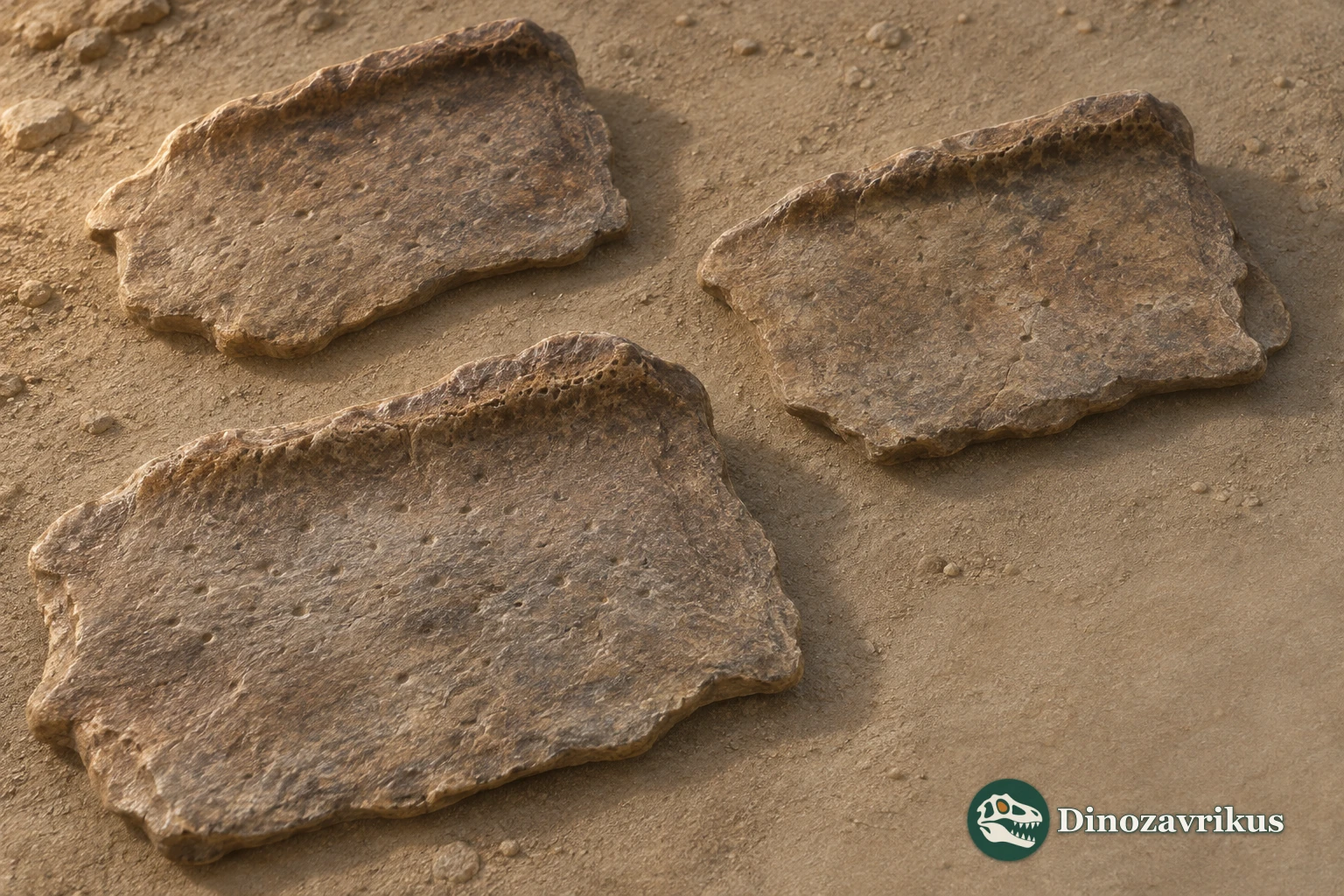
Skull elements referred to Kansajsuchus preserve ridges in front of the eyes and a longitudinal ridge on the cheek bone. Dorsal osteoderms attributed to the genus have a raised keel near the back edge. The combination of skull and armour characters helped place it among the paralligatorids.
Corresponding parts of the braincase have been studied in the Mongolian Paralligator. Fossils from Shakh Shakh in Kazakhstan represent a similarly large and closely related animal, but are harder to identify at species level.
What the braincase preserves
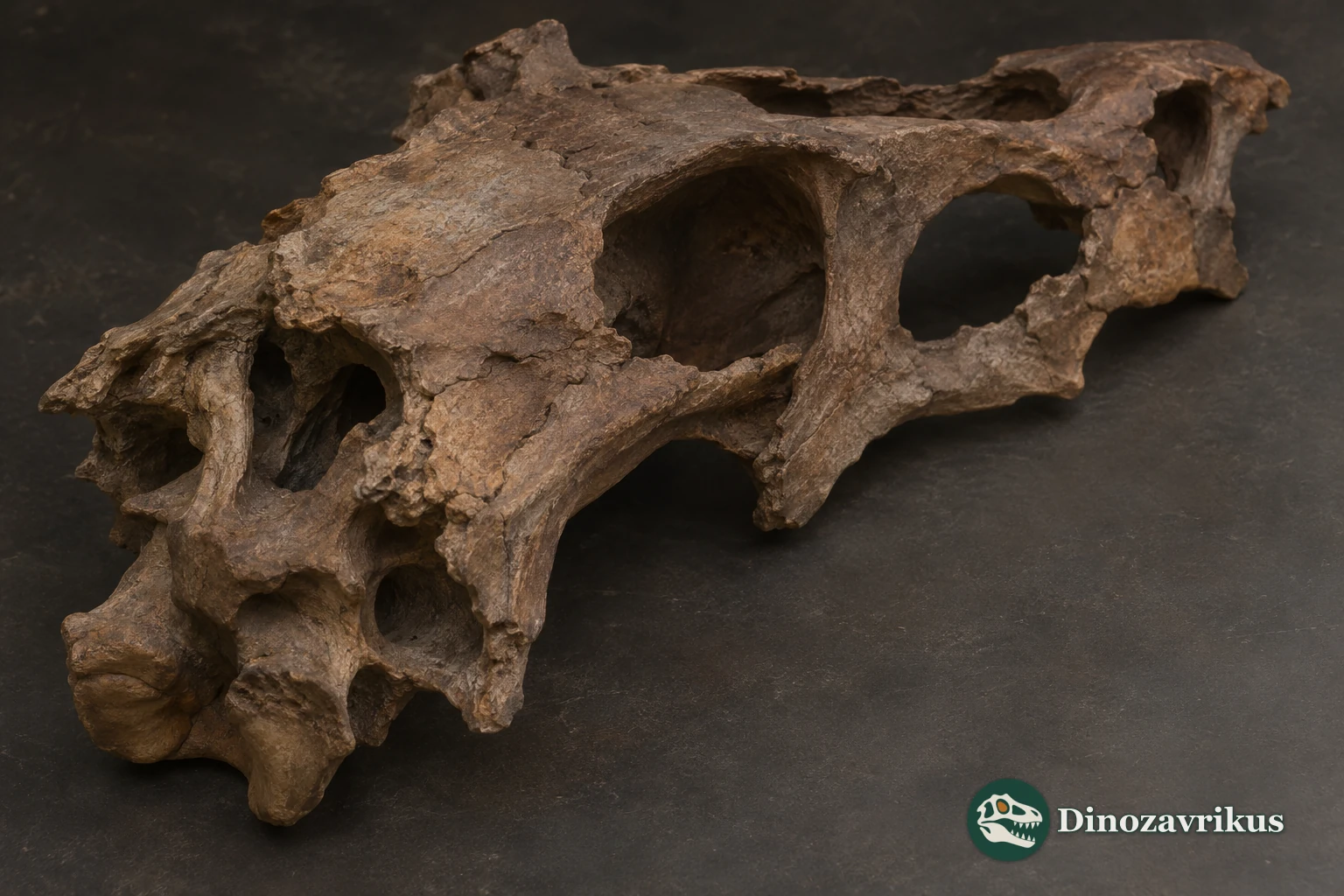
In 2024 researchers scanned a separate Kansai braincase and constructed three-dimensional models of its bones and internal spaces. The scans expose obscured sutures and passages and let researchers compare their shape across neosuchians.
A skull length of roughly 70–80 cm and a body length of about 5–7 m were estimated for large individuals. Those proportions come from different pieces of the skeleton. The recovered material leaves the full outline of the body and its behaviour uncertain.
Frequently asked questions
Where was Kansajsuchus found?
At Kansai in northern Tajikistan, in Late Cretaceous rocks.
What is the holotype?
A right premaxilla, a bone from the front of the upper jaw, preserving five tooth sockets.
How large could it grow?
Large individuals were estimated at around 5–7 m from disarticulated material.
What did CT scanning reveal?
It showed cavities, bone passages and internal features that are difficult to study from the outside.