

Kentisuchus was an Eocene crocodilian known from England and France. The English species was described from an incomplete London Clay skull. The French material is younger and has a more robust snout. Comparing them clarifies which features distinguish the two species.
Quick facts
| Group | Crocodylia, placement debated |
|---|---|
| Age | Early and middle Eocene |
| Type species | Kentisuchus spenceri |
| Type species holotype | NHMUK 19633, partial skull |
| French species | Kentisuchus astrei, MHNT.PAL.2010.0.49 |
| Localities | London Clay and Issel |
What can the fossils tell us?
NHMUK 19633 comes from the early Eocene London Clay. Other skulls supply details missing from the type.
The Issel skull has a more robust snout and a stronger constriction around the seventh and eighth tooth positions. This was one of the characters used to distinguish K. astrei.
Earlier work placed Kentisuchus among tomistomines. A recent analysis places the English species on the stem of the broader gharial lineage.
The English London Clay material
William Buckland named the English species Crocodilus spenceri in 1836. Its type specimen, NHMUK 19633, is held at the Natural History Museum in London. Several other skulls were subsequently assigned to the species. Charles Mook established the genus Kentisuchus in 1955.
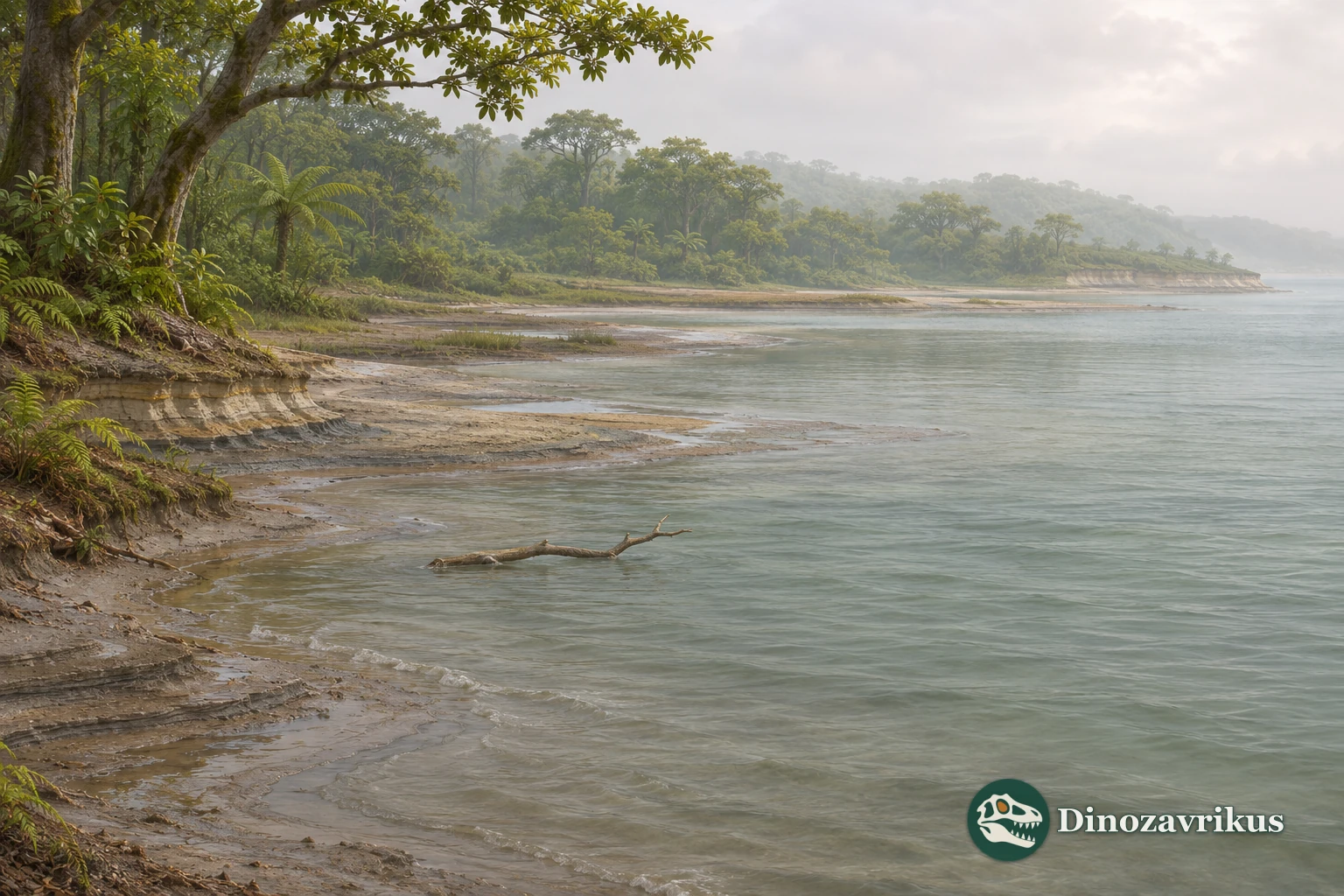
The English fossils come from Ypresian deposits of the London Clay. Early researchers compared them with geographically wider material. A 2007 revision placed a Belgian skull formerly associated with the English species in the separate genus Dollosuchoides, narrowing the set of fossils used to describe Kentisuchus.
A younger skull from Issel
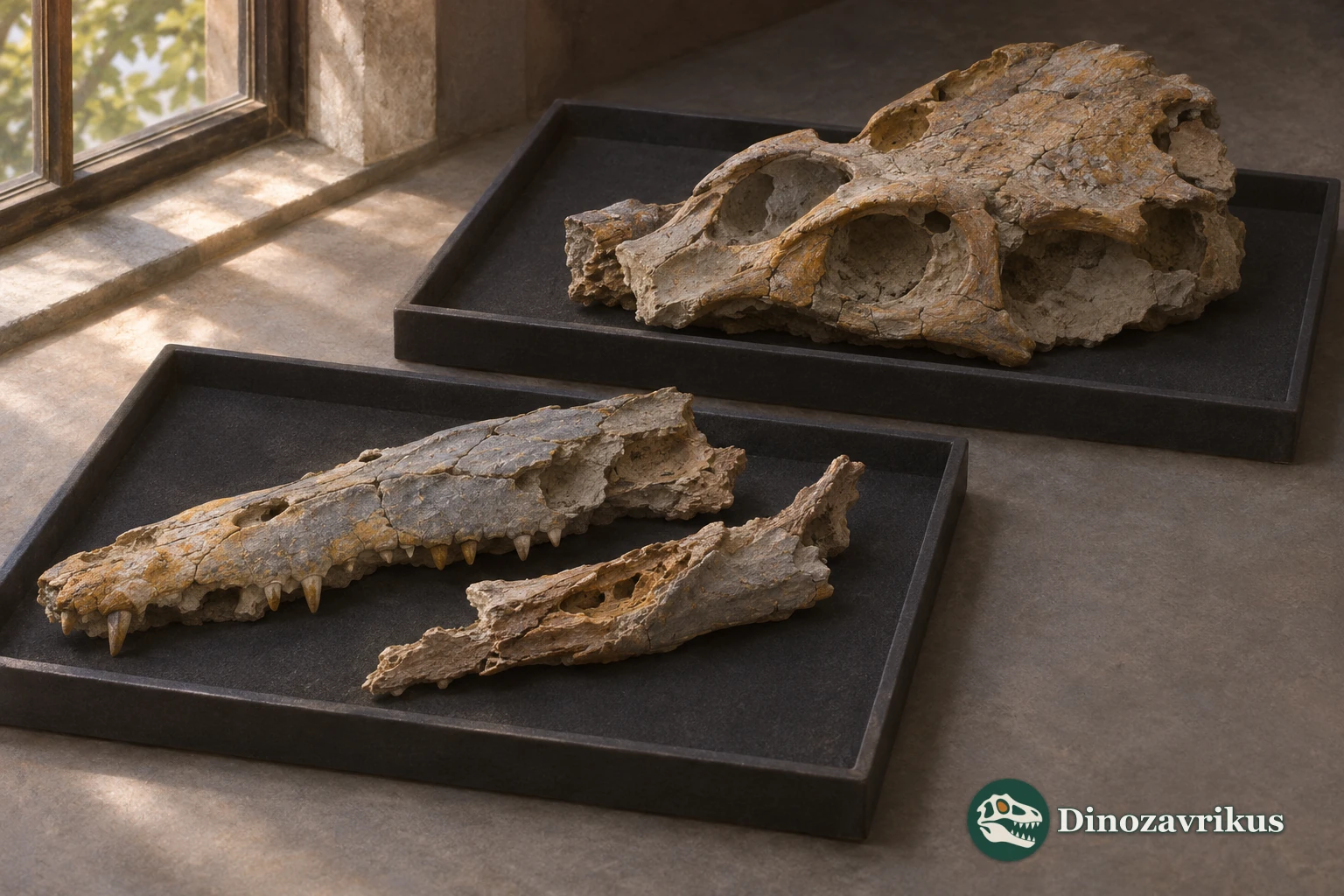
The holotype MHNT.PAL.2010.0.49 came from the Issel sandstone of southern France, dated to the latest Lutetian of the middle Eocene. Stéphane Jouve described it as K. astrei in 2016. The premaxillae, at the very front of the snout, are missing.
The surviving snout is more robust than in the English species. Its width around the seventh and eighth tooth positions is about 80% of the maximum width across the maxillae. It also lacks the shallow depression described along the suture between the lacrimal and maxilla of the English skulls.
What kind of crocodilian was it?
The description of the French species placed Kentisuchus among early tomistomines. A 2025 study combining anatomy, fossil ages and molecular information found K. spenceri on the stem of Gavialoidea. Fossil forms such as Eogavialis from the Fayum offer other points of comparison for long-snouted crocodilians.
Placement on a wider evolutionary branch describes relationships among groups. The available fossils leave the direct ancestry of living gharials uncertain.
Frequently asked questions
Where was the English species found?
In early Eocene London Clay deposits of southeastern England.
How does the French species differ?
Its snout is more robust, with a stronger narrowing near the seventh and eighth tooth positions.
Which species is older?
The English species is Ypresian, whereas the Issel skull is from the end of the later Lutetian stage.
How was Kentisuchus related to gharials?
Some analyses place it on the early branches of Gavialoidea. Its more exact position varies between studies.