

Kestrosaurus was a large-headed temnospondyl of the Early Triassic Karoo Basin in South Africa. Its taxonomic history centres on a simple problem: the type skull is incomplete, and an old plaster restoration made it look as if it combined features from several amphibian groups. Re-examination of the actual pieces changed that interpretation.
The fossils belong in the ancient amphibian catalogue. They identify a capitosaurid skull and a revised stratigraphic position. They do not reveal a complete body, exact mass or witnessed prey.
Quick facts
| Scientific name | Kestrosaurus |
|---|---|
| Type species | K. dreyeri, named by Haughton in 1925 |
| Other proposed species | K. kitchingi in the 2004 revision |
| Group | Capitosaurid temnospondyl |
| Age | Early Triassic, lower Cynognathus assemblage interval |
| Locality | Karoo Basin, South Africa |
| Type specimen | Incomplete skull SAM 3452 |
| Body size | Not securely measured from an associated full skeleton |
What can the fossils tell us?
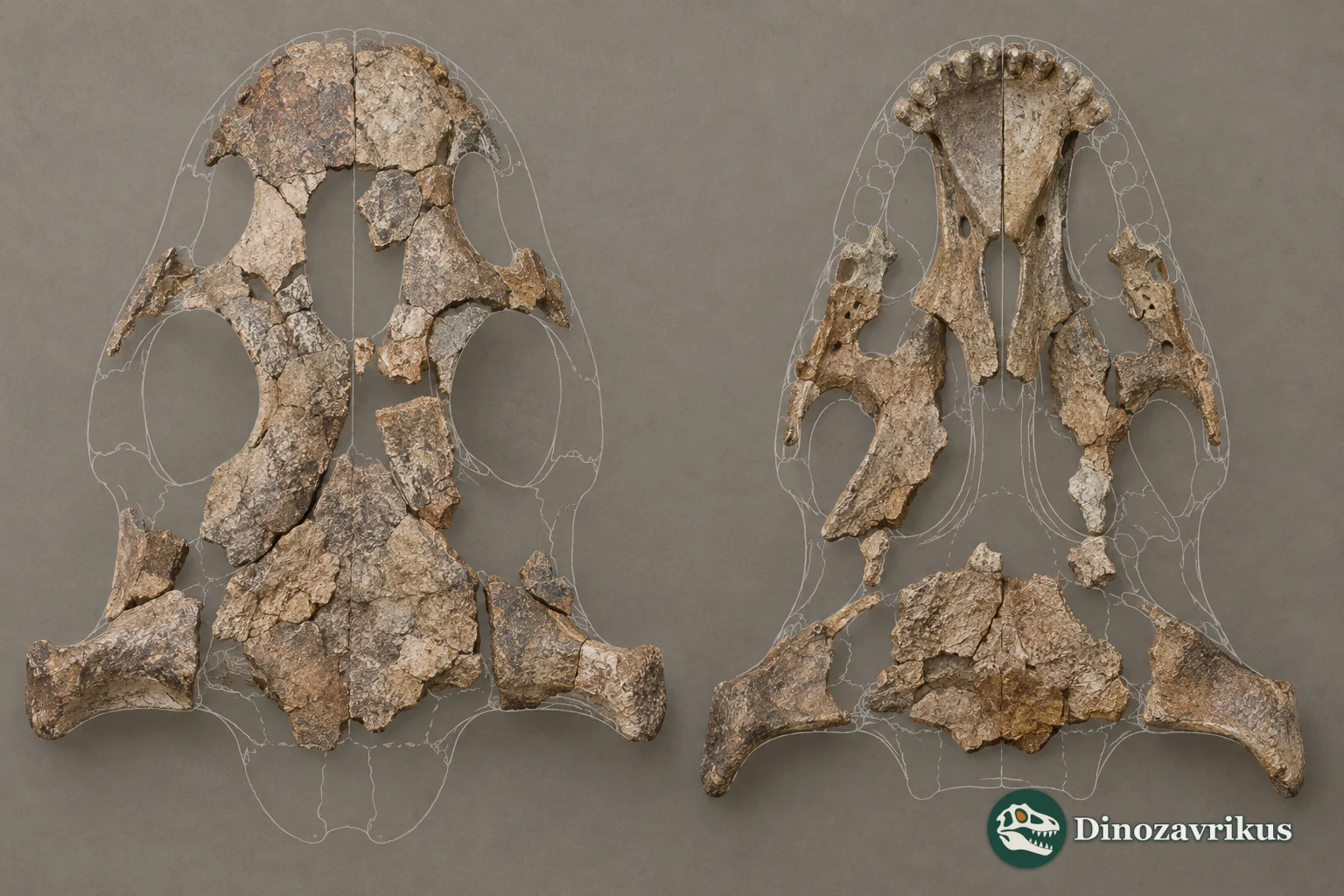
The incomplete SAM 3452 skull preserves actual bone edges and sensory grooves. Old drawings of the front incorporated plaster: missing nostrils and palate openings are not direct observations.
The revising authors placed the type in the lower Cynognathus Assemblage Zone, not the older Lystrosaurus Zone. This is a biostratigraphic placement, not a precise date for the skull.
Holotype BP/1/5359 and associated material were used to name K. kitchingi. Proposed synonymies and the diagnostic value of SAM 3452 have been disputed because some type material is incomplete or lost.
Comparative genuine fragments support a normal capitosaurid palatal arrangement. The precise missing region should not be shown as perfectly preserved in the type skull.
How plaster changed a skull's apparent anatomy
Sidney Haughton named K. dreyeri in 1925 from incomplete skull SAM 3452. Missing parts were joined and filled with plaster. Early drawings appeared to show paired anterior palate openings, rounded nostrils and oddly directed tabular projections. Those apparent traits drew the animal towards different temnospondyl branches and helped sustain decades of disagreement.
Michael Shishkin, Bruce Rubidge, John Hancox and Johann Welman revisited the preserved fragments and compared photographs of their real edges. Some supposedly diagnostic traits came from the arbitrary plaster arrangement rather than fossil bone. The preserved sutures and sensory grooves fit a capitosaurid closely related to Parotosuchus. A restored outline is useful for illustrating a proposal, but cannot independently prove the shape of a missing element.
The type fossil's revised place in the Karoo
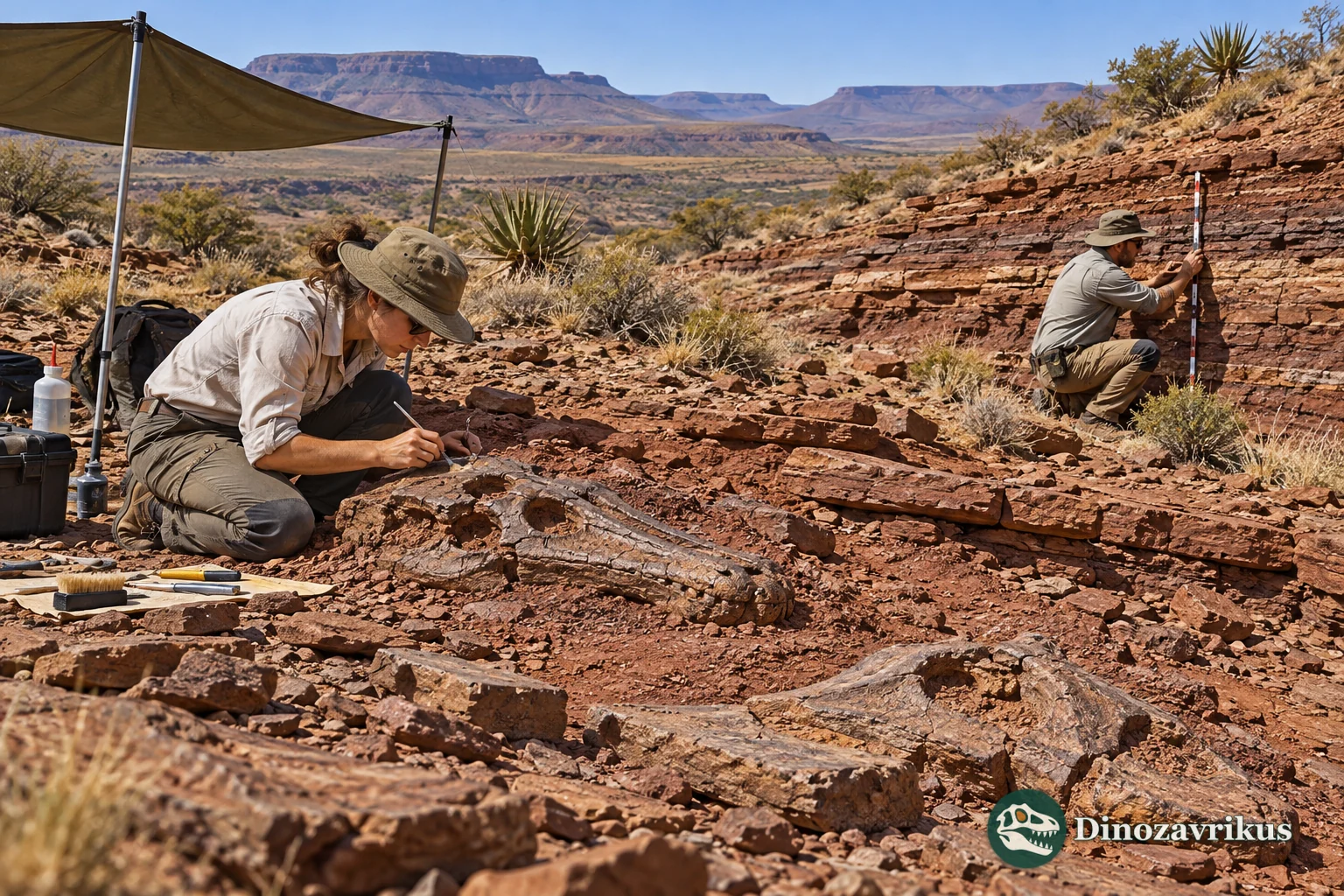
The same team checked where the type was collected in the rock succession. They assigned it to the lower Cynognathus Assemblage Zone rather than the Lystrosaurus Zone used in some earlier accounts. That shift matters when South African faunas are compared with other Triassic sequences. It is based on field position and associated biostratigraphy, not a laboratory date measured on SAM 3452 itself.
Other skull and jaw fragments came from sites in the northwestern Free State. They allowed the authors to compare a series of genuine bones rather than one heavily restored object. Kestrosaurus was reported as a common amphibian in the lower part of that assemblage. The number of fragments should not be converted into an exact number of animals.
Two species, with a real taxonomic dispute
The 2004 revision retained type species K. dreyeri and proposed K. kitchingi from skull BP/1/5359 and comparative material. It also suggested that some older South African names, including material called Capitosaurus haughtoni, belong with Kestrosaurus. The type of that older name has been lost and survives for comparison only through drawings and description.
Ross Damiani had regarded the K. dreyeri holotype as insufficiently diagnostic and interpreted some other skulls differently. Shishkin and colleagues explicitly disagreed. Thus the proposed synonymies and exact species limits are conclusions of a particular revision, not direct labels written on every bone. The skulls preserve a broad flattened head, teeth, palate bones and sensory grooves. They support aquatic predation, but reveal neither a particular meal nor an exact full-body length.
The cover reconstructs an animal at water's edge. Its colour, soft body and pose are artistic choices. A different Triassic temnospondyl, Plagiosuchus, lived in Germany and had a different cranial construction; sharing a period does not make the two close anatomical copies.
Frequently asked questions
Why were older Kestrosaurus restorations misleading?
Plaster completed missing parts of the type skull. Some apparent nostril and palate characters in old drawings were not preserved bone.
How was its geological placement revised?
Field work put SAM 3452 in the lower Cynognathus assemblage interval rather than the Lystrosaurus interval. This is a stratigraphic correction, not a precise calendar date for one fossil.
How many Kestrosaurus species were proposed?
The 2004 revision recognised K. dreyeri and named K. kitchingi. Some proposed synonymies remain dependent on incomplete or lost type material.
Can its whole-body length be read from the skull?
No. A skull describes the head; without a securely associated complete skeleton, body length and mass depend on comparisons with relatives.