

Kirgizemys was named for material from what is now Kyrgyzstan. Its shell plates preserve a raised rim and the grooves made by the outer scutes. A crushed skull from Transbaikalia later added a different source of evidence, both for the anatomy of these turtles and for their relationships.
Quick facts
| Group | Turtles, macrobaenoid lineage (Macrobaenoidea) |
|---|---|
| Age | Early Cretaceous |
| Region | Asia (Kyrgyzstan, Russia, Mongolia, China and South Korea) |
| Type species | Kirgizemys exaratus |
| Holotype | ZIN PT-491, nuchal plate in the original description |
| Scientific name | Kirgizemys |
| Diet | Exact diet unknown |
What can the fossils tell us?
The type preserves the plate at the front of the carapace. Other shell bones from the locality give a broader view of the shell. The skull of the type species remains unknown.
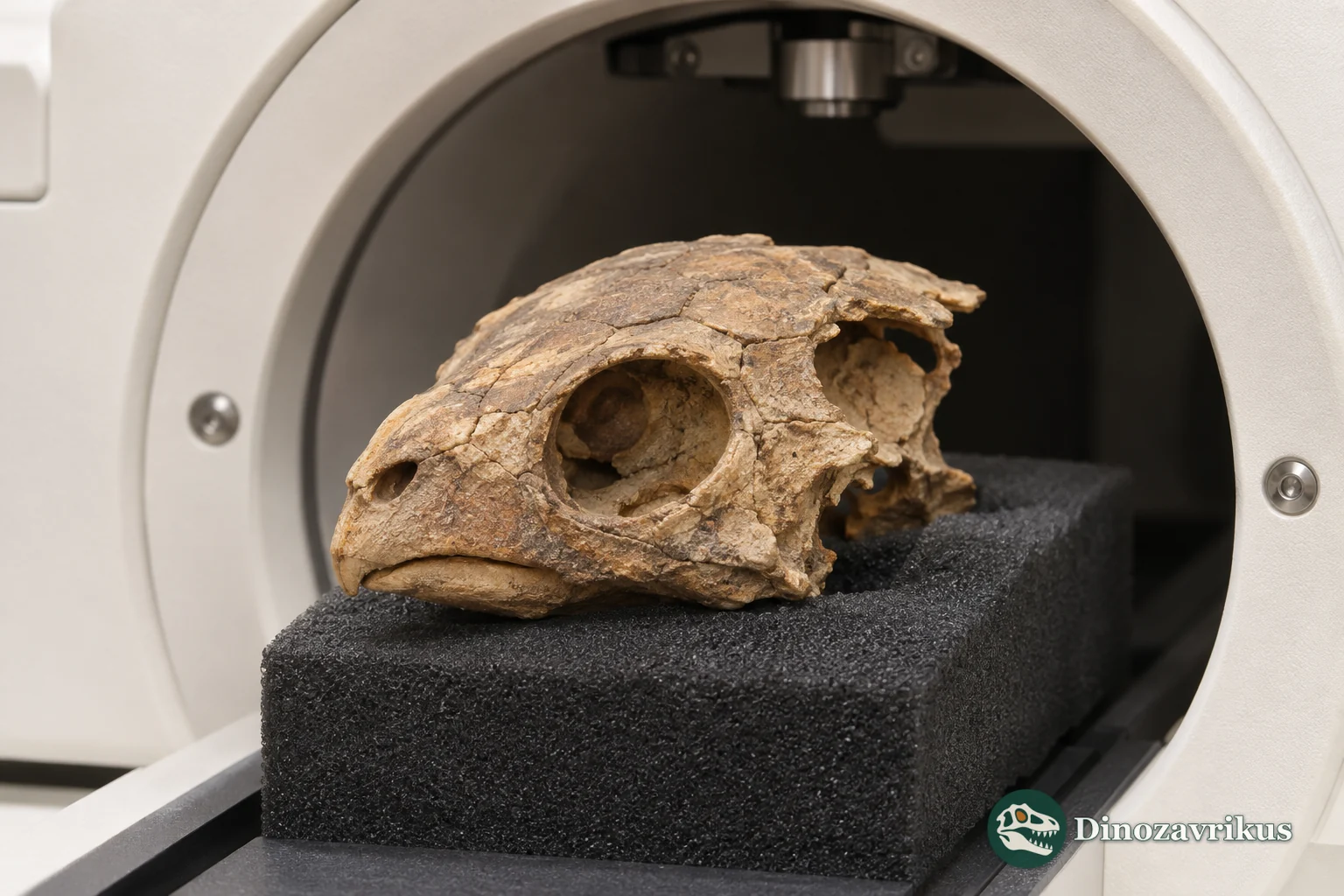
ZIN PH 7/15 is distorted by compression. The segmented CT model made some contacts between bones easier to distinguish.
The Buryat material was initially placed in the Barremian–Aptian. The 2026 revision treats its deposits as Valanginian.
A shell from the Fergana Depression
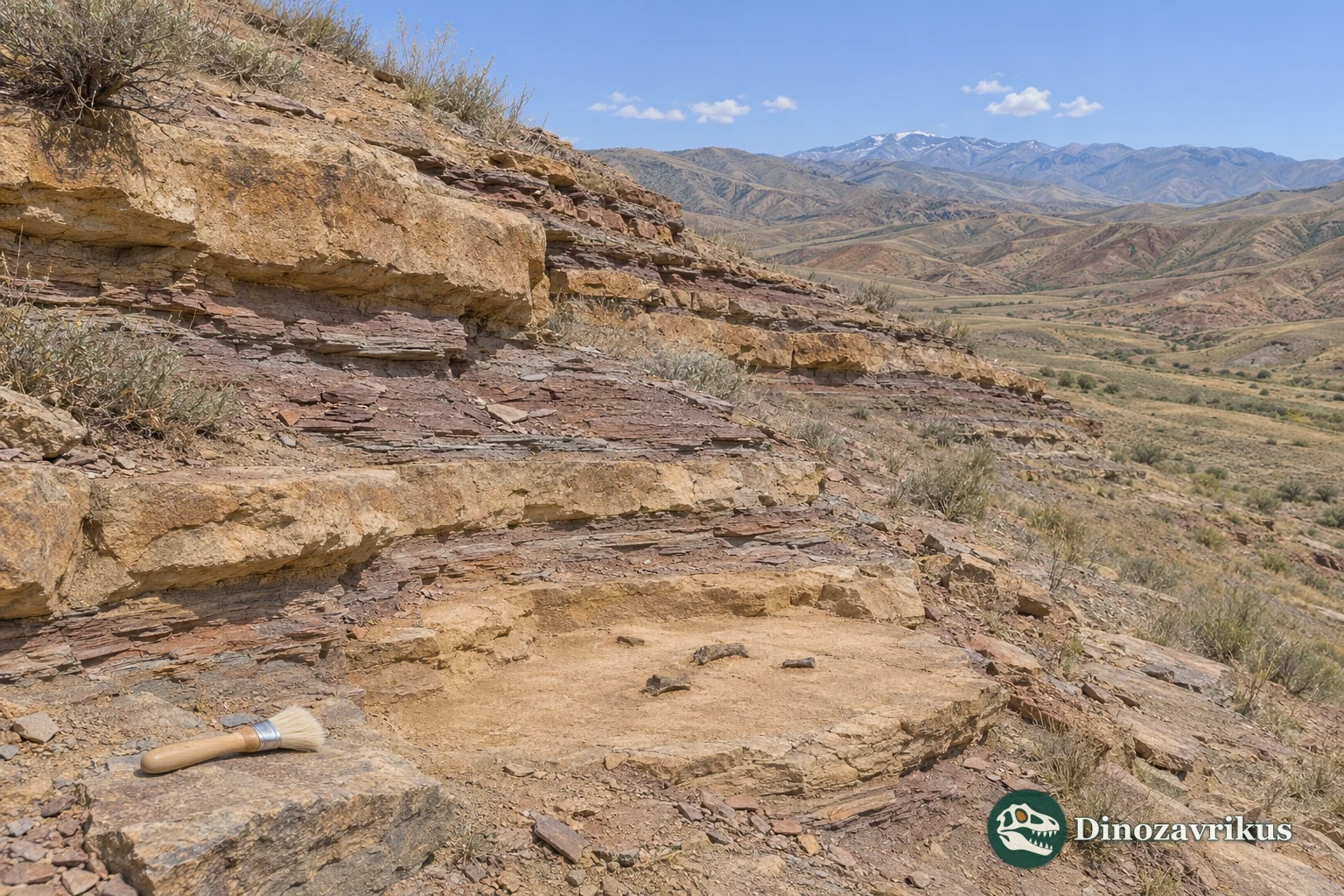
Lev Nessov and Lev Khosatzky named Kirgizemys exaratus in 1973. They used a nuchal plate, listed as ZIN PT-491, from the Albian Alamyshik Formation of southeastern Fergana as the type. Other bones show a low carapace with pronounced scute grooves, a narrow ridge down the middle and a thickened rim along the front and bridge.
Open spaces remained between some of the plastral bones. The shell is one way to distinguish this lineage from other Cretaceous Asian turtles, such as the pig-nosed turtle relative Kizylkumemys.
A skull from Transbaikalia
The type of K. dmitrievi, named in 1981, is a piece of carapace from Mogoito in Buryatia. A later specimen from the Lake Gusinoye area, ZIN PH 7/15, included an incomplete skull, lower jaw, neck vertebrae and bones of the shell and forelimb. The skull had been distorted and the right side was displaced.
In 2026, researchers described additional shell and limb material from the Murtoi Formation and revised some earlier assignments. Their study treats the beds as Valanginian, earlier than the Barremian–Aptian age used in the 2006 revision. Separate work on a segmented CT model reconsidered several features of the already-known skull, including some that had been interpreted from the exterior.
Where to draw the boundary of the genus
The 2006 authors found close similarities between the Buryat skull and Mongolian specimens originally assigned to Hangaiemys. They treated that name as a younger synonym and transferred the Mongolian species as K. hoburensis. Chinese material was also included in that interpretation. A partial shell from the Geoncheonri Formation in South Korea was referred to the genus without a species name.
Evolutionary analyses in 2026 recovered different relationships under different methods. Some arrangements implied changes to the limits of the genus. The published geographical record therefore includes identifications that are open to reassessment.
Frequently asked questions
What is the type species?
Kirgizemys exaratus, from the Albian of southeastern Fergana.
Does the type include a skull?
The 1973 type is a nuchal plate. The CT-scanned skull belongs to a specimen assigned to Kirgizemys dmitrievi.
What is the current age assigned to the Buryat material?
The 2026 revision assigns the Murtoi Formation material to the Valanginian.
Why is Hangaiemys sometimes listed separately?
It was established for Mongolian material. The 2006 revision concluded that its species belonged in Kirgizemys.